
Category: Technology and Innovation
-

Financial education: an inheritance for life.
Financial education is one of the most powerful tools we can have, because it changes the way we see and use money. It is not about becoming an expert in economics or finance, but about learning enough to make decisions with security and independence. The more you study about it, the less vulnerable it is to scams, bad advice or impulsive choices. In addition, this knowledge can be shared with family and friends, creating a cycle of awareness and care about finances. Learning to deal with money is a life lesson — and an investment that brings returns forever. -

Cathedrals of Light and Silicon: The Rise of Cyberspirituality in the Metaverse.
The silence preceding prayer has always had a physical texture. Historically, he leaned on the echo of the stone cathedrals, the aroma of incense burning slowly or the soft touch of beads between his fingers. Today, for a growing number of faithful, this same silence manifests itself in the slight buzz of a pair of virtual reality glasses and in the soft glow of an LCD screen that lights up before the eyes. The search for the sacred, far from being intimidated by the coldness of the programming codes, found in the metaverse a new and unexpected territory of expansion. It is the birth of cyberspirituality, a phenomenon that challenges our old boundaries between body, soul and pixel.
Entering a virtual temple is an experience that subverts the logic of traditional geometric space. A floating avatar can kneel before a three-dimensional digital altar, while the actual user is sitting in the armchair of his living room, thousands of miles away. Christian, Buddhist, Islamic and Neopagan communities have built true architectural masterpieces in digital space, where the laws of physics do not apply. In these places, gravity is optional, but communion is real. Virtual pastors preach to congregations of anthropomorphic avatars, while monks conduct collective meditations in digital Zen gardens that float over neon clouds. Faith, which always depended on symbols to become visible, found in the metaverse the definitive tool of visual representation.
This transition, however, does not occur without deep theological frictions. After all, how to adapt millennial rituals that intrinsically depend on the physical body? The consecrated host, the ablution with purifying water or the embrace of collective peace are tactile manifestations of belonging. In cyberspirituality, religions are forced to translate physical into symbolic in creative ways. The sharing of bread becomes an act of mutual intent; the imposition of hands becomes the alignment of two beams of digitized light. What at first may seem like an artificial simulation gains, for those who experience, a surprising emotional authenticity. For the human mind, the social presence and sensory immersion created by cutting-edge technology are capable of generating neurological responses of peace and reverence very similar to those of a brick temple.
Behind the dogmatic debates is a powerful humanitarian factor that drives this spiritual migration. For individuals suffering from social isolation, people with severely reduced mobility or those living under regimes where their beliefs are persecuted, the metaverse offers an unprecedented sanctuary of security and inclusion. Under the anonymity of an avatar, a young man can exploit his faith without fear of geographical or family judgment. Virtual space democratizes access to belonging, creating a global support network where physical distance ceases to be a barrier to mutual consolation.
It is evident that the metaverse will not replace the ancestral need for the encounter of flesh and bone, shared breathing, and the human warmth of a physical community. However, cyberspirituality reminds us that the sacred was never static. Just as the Gutenberg press transformed the reading of the scriptures and the radio brought the preaching into the homes in the last century, the immersive technologies are just the new language of a human search that never ceases. By building churches and temples of silicon, humanity proves, once again, that no matter how technological our reality is: we will always find a way to find room for mystery and transcendence. -
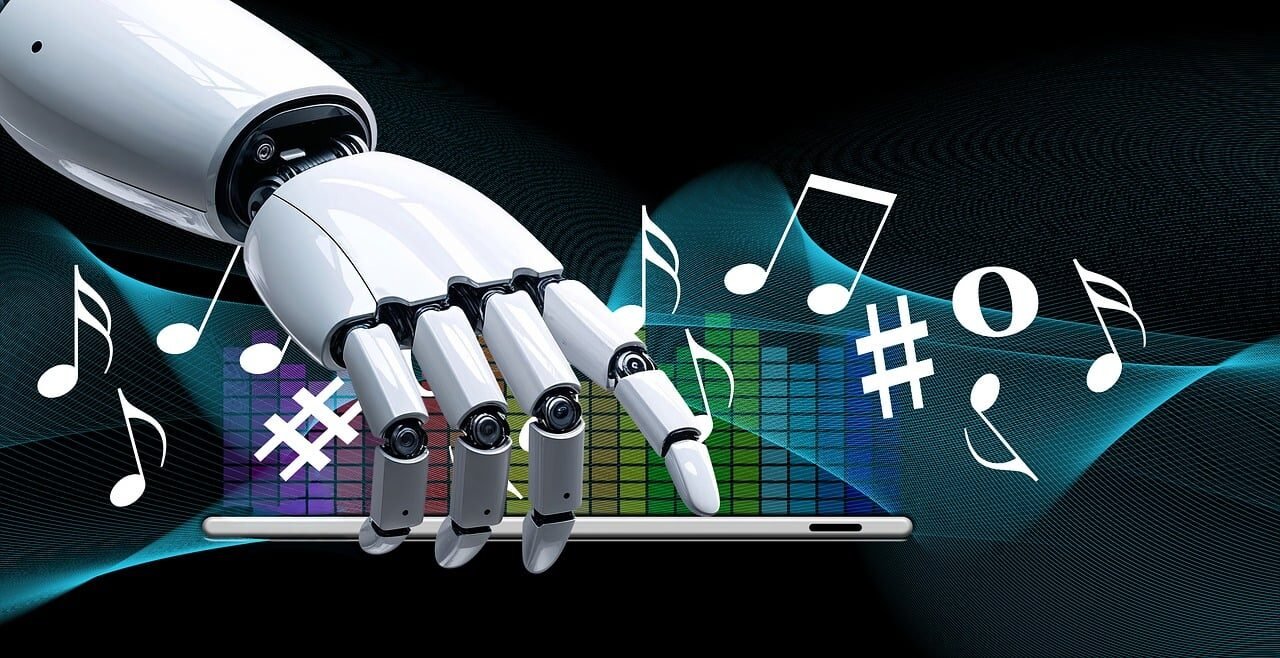
The Dictatorship of Algorithm: How Ready Playlists Mold Our Ears and Silence the Independents.
Imagine entering a coffee shop where the waiter, even before you open your mouth, already serves exactly your favorite coffee, at the perfect temperature. Comfortable, huh? Now imagine that this same waiter decides that from today, you only have the right to take infinite variations of that same grain, preventing you from knowing the taste of an exotic tea or a handmade blend from across the world. That's exactly what's happening to our relationship with music.
Today, the new generation no longer consumes albums; it consumes vibes. If you are sad, there is a soundtrack to cry in the room; if you are going to train, there is a rhythm millimetrically accelerated for your beats. At the heart of this invisible curatorship are the recommending algorithms of large streaming platforms. They decode our listening habits, map our seconds of attention, and subtly shape what we call "personal taste." The great irony of the era of musical abundance is that, with millions of songs just a click away, our auditory horizons seem to be narrowing into an ultra-personalized mesmice bubble.
This convenience has a high price, paid mainly by those at the bottom of the creative pyramid: independent artists. In the old days, the road to success passed through fanzines, community radios, basement shows and the classic mouth-to-mouth. There was a chaotic, unpredictable human factor in discovery. Today, for an independent artist to exist on the general public's radar, he must first decipher the enigma of the algorithm.
The challenge is Herculean. To be recommended, musicians are subtly pressured to conform to the rules of the digital game. This means creating songs with very short introductions to avoid skip in the first five seconds — a fatal metric that tells the system that the track "is not good" —, repetitive choruses that work well on dance videos and a production that fits perfectly into playlists of "background music". Art, before free to experience and miss, becomes cut not to disturb the ear of the middle listener. The sound of garage, experimentalism and artistic dissent struggle to breathe in an ecosystem that privileges homogeneity.
For the new talents who refuse to enter this assembly line, the feeling is to scream in the space vacuum. Without the initial push of editorial playlists or the favor of platform search engines, the work of months of composition runs the risk of accumulating only a few dozen reproductions. The algorithm creates a feedback cycle where what is already popular becomes even more giant, while the new and the different remain invisible.
However, not everything is dystopia. This algorithmic pressure has also caused a healthy resistance reaction. Attentive artists and listeners begin to rescue the value of human healing. The search for specialized newsletters, channels of content creators that prospect relics outside the commercial circuit and the return of physical media such as vinyl and cassette tape, which require active and ritualistic listening, is growing.
Music has always been a tool of human connection, rebellion and discovery. So that it doesn't just turn into a background noise designed to keep our brains anesthetized, we need to re-educate our curiosity. Drilling the algorithm bubble and actively seeking the unknown is not just supporting the artist independent of his city; it is an act of preserving our own sensitivity and cultural wealth that defines us. -
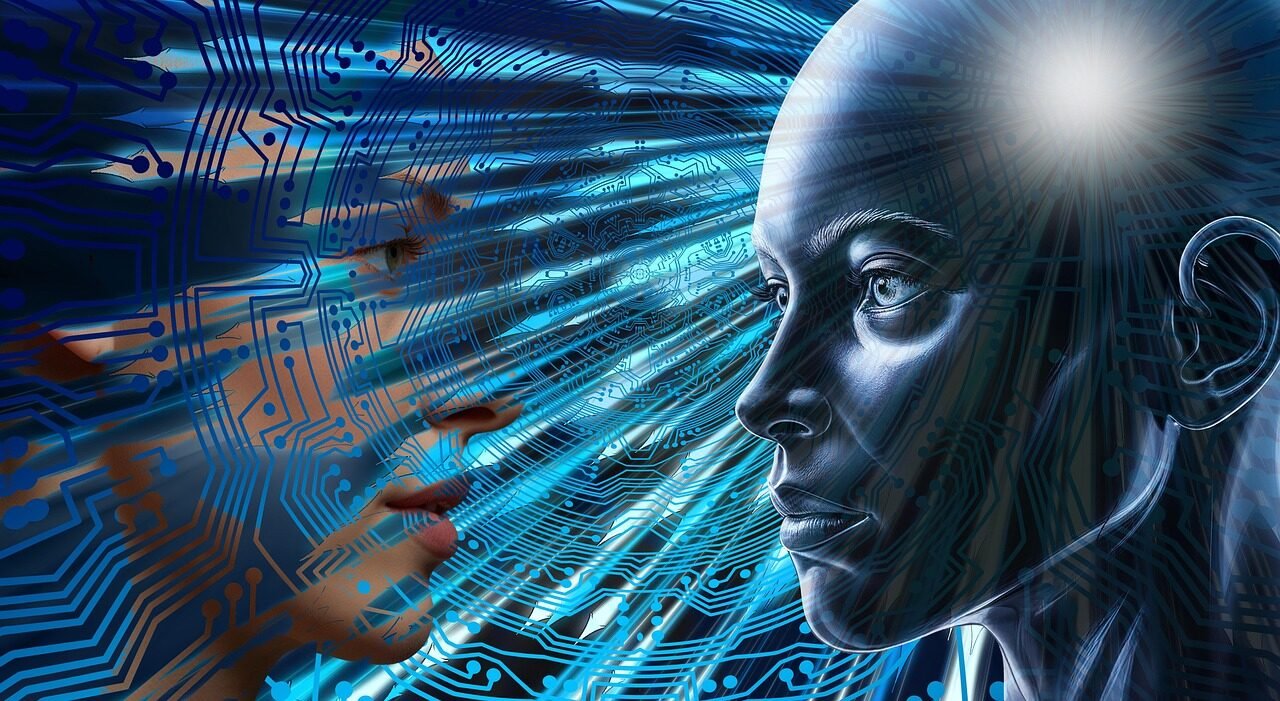
The Glass Mirror: The Digital Ego and Online Validation Price.
Centuries ago, philosopher René Descartes coined the maximum "think, therefore I exist". If we were to update the phrase to the rhythm of the present day, it would fatally turn into a symptomatic "I am seen, so I am." We live in the era of Ego Digital, a phenomenon in which our identity, self-esteem and even the perception of our own relevance in the world began to be shaped by the reflection of the screens. The search for validation on social networks — meticulously measured in likes, comments, shares and views — It stopped being a mere hobby to become a silent metric of personal value. The great challenge of our generation is no longer how to connect to the world, but how not to lose ourselves in the process.
The Architecture of Desire: Why Are We Hooked?
To understand the weight of the digital ego, you need to look behind the colorful interfaces and understand that social networks operate as high-precision psychological casinos. Each flashing notification activates a dopamine discharge into the brain, the neurotransmitter associated with pleasure and reward. It is an intermittent validation cycle: we post, wait and, when social approval comes, we feel a temporary relief.
The problem lies in the fact that the ego is a bottomless pit. Today's treat is never enough to fuel tomorrow's shortage. By transferring control of our self-image to the trial of a virtual audience — often composed of unknowns —We created an idealized avatar. We come to live not to experience the moment, but to record the moment. The trip is only good if you deliver amazing photos; the food dish is only tasty if it is aesthetically acceptable. In this dynamic, real life becomes the bastor, and the social network becomes the main stage.
The Noise of Comparison and the Effect "Palco vs. Bastidores"
One of the most devastating effects of this relentless search for approval is the trap of constant comparison. The digital ecosystem consists of filters, millimetrically calculated clippings and uninterrupted success narratives. When we navigate the feed, we're comparing our backstage — full of insecurities, billets to pay, tiredness and common days — with the lit stage and edited by someone else.
This asymmetry generates chronic anxiety and the feeling that we are always falling behind. Digital ego convinces us that we need to perform happiness and productivity all the time to maintain our relevance. When the public's response is lukewarm, digital silence is interpreted by our brain as social rejection, activating the same brain areas that process physical pain. It's too high a price to pay for virtual applause.
An uncomfortable truth: Digital approval is a volatile resource. The algorithm that distributes your content today and inflates your ego can change tomorrow, leaving your self-esteem at the mercy of lines of code that you do not control.
Axis Search: Strategies for the Mind-Tele Balance
Finding balance in this tightrope does not mean adopting a radical posture of isolation or demonizing technology. Social networks expanded borders, created communities and enabled careers. The key to psychological emancipation is to redefine our relationship of dependence with these tools through conscious and subtle steps:
The Practice of Intentionality: Before you open an app or publish something, it's worth taking a conscious pause and asking yourself: Am I posting this because I really want to share this moment or because I need someone to tell me I'm good enough? Bringing the light from consciousness to the act breaks the automatism of addiction.
Curated Content and Passive Consumption: Our mental well-being is shaped by what we consume. Doing a regular cleanup on the profiles that we follow, silence or fail to track accounts that trigger triggers inadequacy or comparison, is an act of self-defense.
Construction of Royal Anchors: Strengthening life that happens outside the screens is the best antidote against the digital ego. Cultivating hobbies that don't generate content, spending quality time with friends without a mobile phone at the table, and practicing full presence help us remember that our real existence is much richer than any online profile.
Return to the Centre
In the end, the digital ego functions as a mirage in the desert: it promises to quench our thirst for connection, but often makes us even more isolated in our own search for attention. True validation will never come from the outside inside, let alone through pixels on a glass screen.
When we collect the projections that we put in each other's eyes and strengthen our real identity, we deflate the digital ego to give way to genuine self-esteem. Technology must serve as a window to expand our world, never as a distorted mirror where we desperately seek to recognize ourselves. -
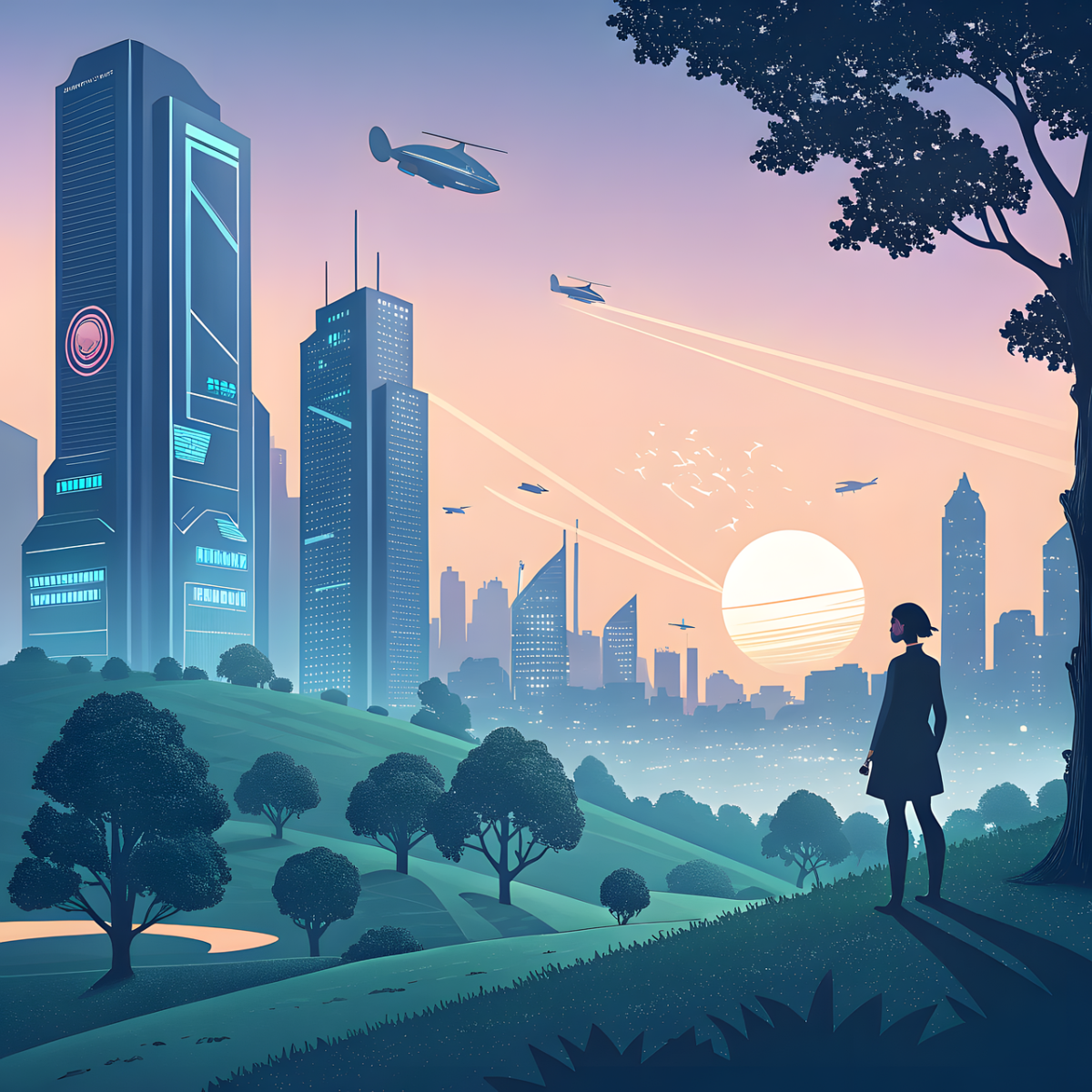
The Invisible Fabric of Tomorrow: Like 6G and IoT are restructuring Smart Cities.
Imagine walking through a metropolis where traffic lights do not follow fixed stopwatches, but react in real time to the flow of pedestrians and autonomous vehicles. A city where power systems and water distribution are able to predict leaks and cure its own structural flaws even before any citizen notices a problem. This reality, which seemed restricted to science fiction pages, gains practical contours with the arrival and maturation of 6G technology. By transcending the barriers of connectivity we know, the next generation of mobile networks arrives to act as the real nervous system of the Internet of Things (IoT), transforming urban centers into living, hyper-connected and deeply intelligent ecosystems.
Overcoming Limits: The 5G Jump to the Terahertz Era
Although 5G has opened doors for initial automation, the demands of a truly intelligent city run into physical bandwidth limitations and simultaneous processing capacity. It is in this bottleneck that 6G redefines the technological board. Operating at Terahertz (THz) frequency, the new network does not just deliver an impressive speed — which can reach the mark of up to 1 Terabit per second —, but solves the biggest nightmare of the current urban infrastructure: the density of connections.
The 6G is capable of supporting up to 10 million connected devices per square kilometer. This quantum leap allows each public lamp, manhole, pollution sensor and shared vehicle to dialogue with each other without suffering from network congestion, enabling the concept of the Internet of All Things (IOE).
Integrated Sensing: The City to See Without Cameras
One of the biggest silent revolutions of this new architecture meets the name ISAC (Integrated Sensing and Communication, or Integrated Sensing and Communication). In previous networks, sending data and mapping the physical environment required totally different hardware and frequencies. In the 6G ecosystem, the radio signal itself acts as a biological radar.
The antennas and intelligent reflective surfaces spread across the buildings begin to map the movement, measure distances and monitor environmental conditions using the ricochet of the network waves themselves. In practice, urban intelligence can optimize road traffic or monitor large agglomerations for real-time public safety, without the need to install thousands of invasive cameras, preserving citizens' visual privacy while raising efficiency to the maximum level.
Impact on Sustainability: With 6G and sensors IoT of very low energy consumption, intelligent buildings manage their own electricity consumption and integrate renewable sources into the power grid in a predictive way, drastically reducing the footprint of urban carbon.
From Automatic Reaction to Auto-Repaired Infrastructure
The great key to life in cities will be the change from reactive public management to predictive governance. Thanks to the latency in the microseconds' home and the natively integrated Artificial Intelligence at the heart of the 6G network (the so-called Edge AI), massive data processing takes place on the edge, that is, right there on the street, without having to travel to a distant cloud server.
This gives rise to self-healing systems. If an energy transformer or a central water pipe presents an anomalous microvibration, the IoT sensors detect the pattern, the network AI diagnoses wear and the system automatically redirects the flow of resources through alternative pathways, triggering the maintenance team before a blackout or rationing occurs. The urban flow never stops; it adapts.
The Challenge in Horizon and the Future That Expects Us
The transition towards this hyperconnected utopia does not happen without friction. The design of these new metropolises requires massive investments in new antennas, rigorous cybersecurity solutions to shield government data and a mature ethical debate on citizens' privacy within an ecosystem that detects everything.
However, the horizon designed by the fusion between 6G and IoT points to a path without turning back. The smart cities of the future will no longer be piled up with concrete and asphalt monitored by computer screens; they will become dynamic, efficient and human environments, where technology ceases to be an accessory and becomes the oxygen that enables sustainability and collective well-being. -

From Brush to Pixel: How Artificial Intelligence Can Be the Traditional Artist's New Ally.
The transition from fabric to glass screen has always been a land surrounded by hesitation for traditional artists. The smell of oil paint, texture of textured paper and watercolor unpredictability have a difficult physical magic to replicate. However, the current artistic scene presents a new frontier: the fusion of digital painting with the tools of Artificial Intelligence (IA). Far from being a threat to authenticity, AI can act as an incredibly versatile studio assistant, helping translate its classic baggage into the digital environment in a fluid and innovative way.
The Start Point: Scanning Your Identity
The biggest mistake a traditional artist makes when migrating to digital is trying to start over. Its greatest strength is its baggage: the understanding of color theory, anatomy, light and shadow. The migration process begins in the physical world.
Instead of fighting a blank canvas in painting software (such as Photoshop, Procreate or Krita), you can use your own graphite sketches or pen studies as a base. By scanning a linear design, integrated AI tools or image generation software (such as Midjourney or Stable Diffusion) can be used to test complex color schemes or dramatic illuminations in seconds, serving as an ultra-fast "painting study" that will guide your real digital brush strokes.
AI as Copilot of Creation and Concept
In the traditional method, changing the composition of a work in the middle of the process may mean losing work days. In the digital environment supported by AI, this creative block is dissolved. The role of AI here is that of co-creator in the planning phase, using concepts such as:
Generation of Custom References: Do you need to paint a Renaissance armor under the sunset on Mars? Instead of spending hours at Pinterest, you can guide AI to generate exact references that combine these elements, serving as inspiration for your manual painting.
Style Variation: You can feed an AI with an authorial sketch and ask it to design how that image would be if it was influenced by Impressionism or Baroque, opening up new aesthetic perspectives before you even choose digital brushes.
Mental note: The AI generates the suggestion, but the execution, refinement and human sensitivity of the final brushstroke remain entirely theirs. It accelerates the brain; you command the hand.
The Hybrid Workflow in Practice
To structure this transition in a theoretical way, we can divide the ideal workflow into four clear stages, uniting the best of both worlds:
Human Spark (Analogical): Creation of the concept, thumbnails and structural pencil drawing on paper.
The Horizon Expansion (IA): Upload from the sketch to an AI tool. Use of Img2Img techniques (image for image) with text commands (prompts) to generate atmosphere variations, color palette and textures.
Digital Structure (Software): Import of the original sketch and the best variations of AI to separate layers in your digital painting software.
Human Painting (Digital): Using a scanning table to paint on top, correct distortions that the AI usually commits (such as hands anatomy or confusing perspectives) and apply its unique personal style.
Overcoming Prejudice and Embracing Evolution
Historically, every major technological transition caused discomfort. The photograph was already seen as the end of the painting, and the appearance of Photoshop itself generated heated debates in the 1990s. Artificial intelligence is just another tool on your desktop — a digital pigment that responds to conceptual commands.
By migrating to digital painting with the support of AI, you are not abandoning your traditional art; you are expanding your studio to a dimension where experimentation time is instantaneous and the possibilities of creation are virtually endless. The brush changed, the canvas evolved, but the mind behind the work remains yours. -
The Future That Has Already Come: Like Science Fiction It anticipated our world and what it prepares for tomorrow.
For decades, science fiction has ceased to be just stories of adventures in distant galaxies to become a curious mirror and a surprising compass of the reality in which we live. Authors who wrote in the last century, when many technologies seemed impossible, managed to draw with impressive precision equipment, customs and transformations that today are part of our daily lives. — And they keep pointing paths to what is yet to come.
Many of the creations they today consider common were first described on the pages of books or on the screens of cinema. By the middle of the 20th century, for example, authors already imagined small devices, capable of storing all the information in the world and connecting people from anywhere: that's exactly what the smartphones we carry in our pocket do. They also anticipated video conferencing, artificial intelligence that responds to our commands, routine space travel, printers that create layer objects per layer and even social networks and virtual reality. In many cases, these narratives served as inspiration for scientists and inventors: by showing how useful or how dangerous a new resource would be, they helped define what was worth developing.
But science fiction is not limited to guessing devices: it also reflects the consequences of technology. Ancient authors have raised questions about privacy, about the relationship between humans and machines, about how innovation can reduce or expand inequalities — issues we face today directly.
And when we look forward, modern authors follow the same path, casting their bets on what will come. Many explore biotechnology: the possibility of curing genetic diseases, adapting the human body to live in other environments or even prolonging life in a healthy way. Others focus on sustainability, imagining technologies capable of reversing environmental damage, generating clean energy on a global scale, or creating cities that live in harmony with nature. There are also stories that deepen coexistence with conscious artificial intelligences, exploration and colonization of other planets, and profound transformations in the way we relate, work and understand what it means to be human.
More than predicting the future accurately, science fiction plays a key role: it makes us think ahead. When presenting different scenarios — the most promising and the most worrying — It helps us choose which paths we want to follow, ensuring that technology is always a tool to make life better, not a burden. The future we will live in tomorrow often begins in the imagination of those who write today. -

Food 3D Printing: The Future in Your Kitchen
Food 3D printing is no longer science fiction to become a reality in professional kitchens and innovation laboratories. This technology allows you to create complex textures and customize nutrition accurately, using "tints" made of fresh ingredients and mashed potatoes.
Nutritional Customization
One of the greatest benefits is the ability to adjust the exact amount of vitamins, proteins and calories in each dish. This is especially relevant for hospital diets or high-performance athletes, where each gram of nutrient counts for performance and recovery.
Sustainability and Design
In addition to health, 3D printing reduces waste by using only the required amount of raw material. In high gastronomy, chefs use the technique to create geometric shapes impossible to be done manually, raising the visual experience of dinner to a new artistic level.
-

Residential Management Apps for Waste Reduction
Food waste is one of the biggest global problems, but technology is helping to fight it indoors. New pantry management applications use artificial intelligence to monitor validity and suggest recipes based on what you already have in the fridge.
Intelligent Inventory
When scanning tax notes or barcodes, these apps create a digital list of your products. They send notifications before an item ruins, encouraging conscious consumption and generating a significant savings in the family's monthly budget.
Enjoying Kitchen
In addition to control, many platforms connect users to food sharing communities or offer guides on how to enjoy stalks and shells in gourmet dishes. It is digitization turning the kitchen into an environment of efficiency and respect for the environment.