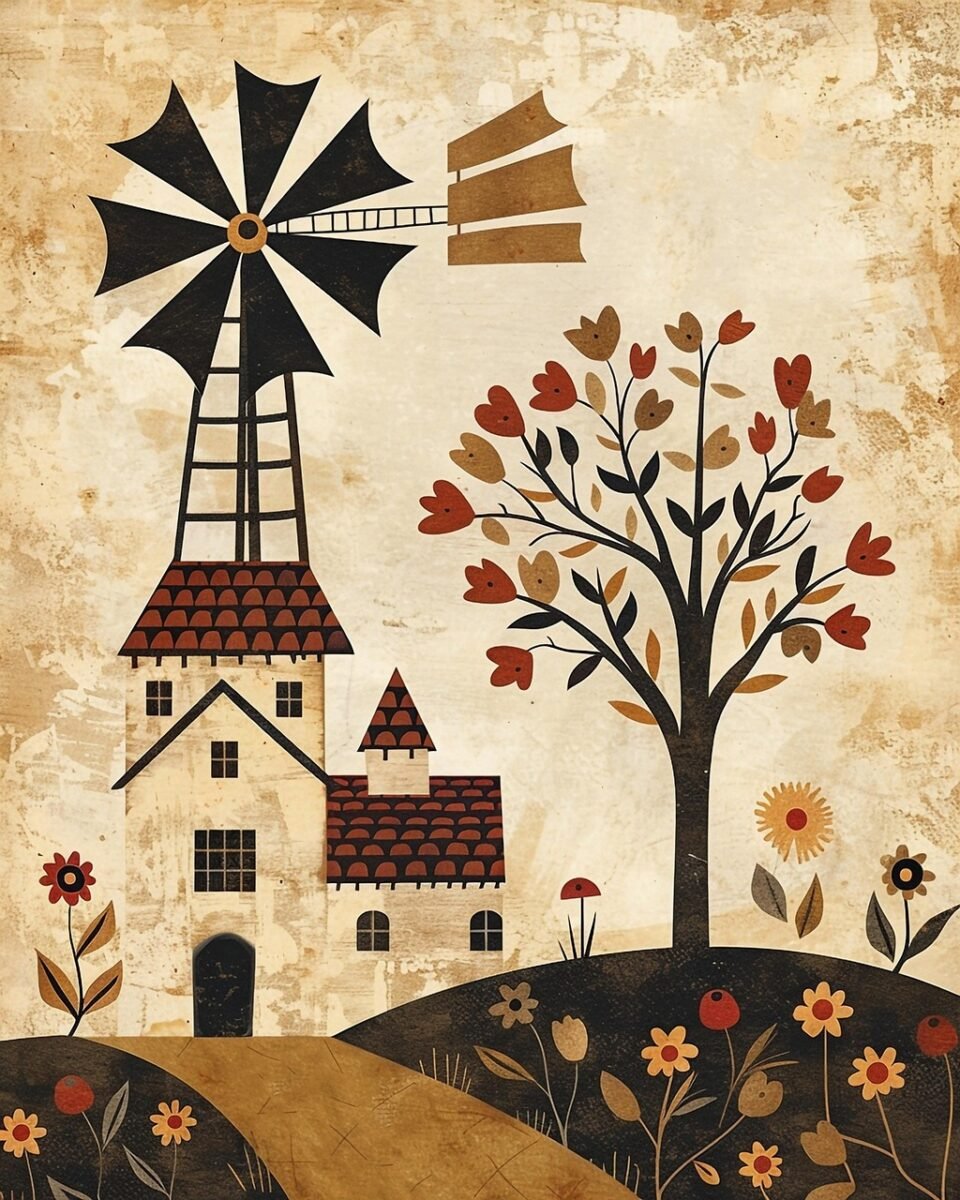
There is an ancient proverb that gains an urgent freshness these days: when the winds of change begin to blow, some people build walls to protect themselves, while others build windmills to harness the force of the windstorm. The beauty of this metaphor lies in its simplicity and its refusal to embrace naive optimism. She does not promise that the wind will be mild, nor does she deny that the storm will startle. The saying only reminds us of an inevitable truth: adversities will come. The great difference in our trajectory was never in the intensity of the problems, but in the strictly personal decision we made before them.
Generally, the first reaction of the human being to encounter the unknown is to erect a wall. Psychology explains that this answer is not a defect of character, but a gear of our own survival instinct. Faced with uncertainty, pain or threat, the human brain automatically seeks the fastest escape route, activating defense mechanisms to keep us in an apparent safety zone. The problem is that the same wall that protects us from the storm also prevents us from seeing the horizon, blocking the light and paralyzing us in the same place.
This dynamic between stagnation and movement is the engine of almost all great stories — both in fiction and real life. Think of the path of those who decide to face the world with open breast: throughout the journey, this person inevitably encounters ill-intended figures, stumbles into bureaucratic or emotional obstacles and experiences moments of deep frustration, often trying to balance their own dreams in the chaos of a confused family. It's the classic script of human life.
However, the differential of those who decide not to be defined by difficulties is the ability to repair what happens in parallel to chaos. It is in the middle of the walk that true friends, unexpected opportunities and loopholes also arise. Instead of allowing stumbling to dictate their destiny, those who choose to keep walking discover that change does not require an absence of fear, but the courage to take the next step in spite of it.
Turning opposite winds into impulse is not a simple task and does not even happen overnight. It requires a conscious effort to re-educate the look, disarm the automatic defense mechanisms and exchange rigid self-protection for flexibility. As the famous motto of hope that goes through generations would say, "everything can be, just believe" — not in the sense of a passive magic that solves everything in the blink of an eye, but in the deep conviction that we have the ability to transform the energy of the problem into the gear of our own evolution. In the end, the storm is the same for everyone; the architecture of what we do with it is what defines us.
Walls or Mills: What You Build When the Wind of Change Blows?


Leave a comment