There is an ancient proverb that gains an urgent freshness these days: when the winds of change begin to blow, some people build walls to protect themselves, while others build windmills to harness the force of the windstorm. The beauty of this metaphor lies in its simplicity and its refusal to embrace naive optimism. She does not promise that the wind will be mild, nor does she deny that the storm will startle. The saying only reminds us of an inevitable truth: adversities will come. The great difference in our trajectory was never in the intensity of the problems, but in the strictly personal decision we made before them.
Generally, the first reaction of the human being to encounter the unknown is to erect a wall. Psychology explains that this answer is not a defect of character, but a gear of our own survival instinct. Faced with uncertainty, pain or threat, the human brain automatically seeks the fastest escape route, activating defense mechanisms to keep us in an apparent safety zone. The problem is that the same wall that protects us from the storm also prevents us from seeing the horizon, blocking the light and paralyzing us in the same place.
This dynamic between stagnation and movement is the engine of almost all great stories — both in fiction and real life. Think of the path of those who decide to face the world with open breast: throughout the journey, this person inevitably encounters ill-intended figures, stumbles into bureaucratic or emotional obstacles and experiences moments of deep frustration, often trying to balance their own dreams in the chaos of a confused family. It's the classic script of human life.
However, the differential of those who decide not to be defined by difficulties is the ability to repair what happens in parallel to chaos. It is in the middle of the walk that true friends, unexpected opportunities and loopholes also arise. Instead of allowing stumbling to dictate their destiny, those who choose to keep walking discover that change does not require an absence of fear, but the courage to take the next step in spite of it.
Turning opposite winds into impulse is not a simple task and does not even happen overnight. It requires a conscious effort to re-educate the look, disarm the automatic defense mechanisms and exchange rigid self-protection for flexibility. As the famous motto of hope that goes through generations would say, "everything can be, just believe" — not in the sense of a passive magic that solves everything in the blink of an eye, but in the deep conviction that we have the ability to transform the energy of the problem into the gear of our own evolution. In the end, the storm is the same for everyone; the architecture of what we do with it is what defines us.
Tag: #Internal Growth
-
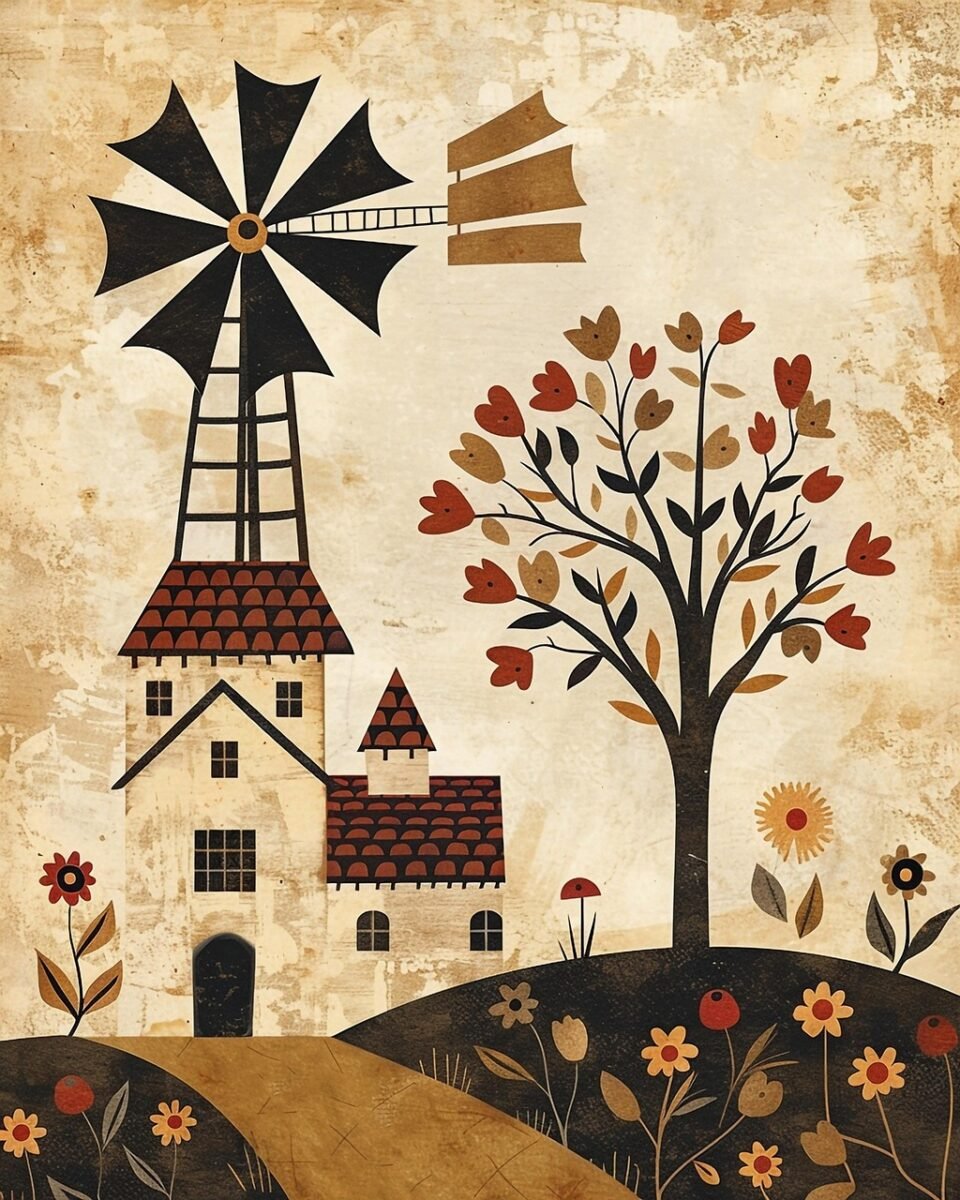
Walls or Mills: What You Build When the Wind of Change Blows?
-

The Art of Inhabiting Your Own Skin: Why Time Does Not Expect Our Apologies.
There is an invisible but deeply painful line between the safety of a predictable path and the weight of a life that does not belong to us. We often treat time as an infinite currency, a savings that we can spend pleasing third parties, postponing to a distant Monday our most legitimate wishes. However, finitude is relentless. When we realize that time is the scarcest resource we have, the idea of wasting it living someone else's expectations is no longer just a strategic error and becomes a silent form of neglect with their existence.
Living under someone else's book usually comes dressed as prudence. It is the career that brings pride to the family, the lifestyle that draws applause on social networks or the automatic repetition of decisions considered correct by all around us — except by whom, in fact, you will have to sustain them on a daily basis. This process of annulment rarely occurs through an authoritarian imposition; it settles in the silent repetition of small daily silences. From concession to concession, to preserve approval, status or an empty image of success, we end up building an impeccable facade, but without any resident inside.
To walk an authentic path, however, does not require a dramatic break with the world or a rebellion without cause. Not all external influence is harmful. Wise advice, solid traditions and good examples are fundamental to mature our choices. The real danger is not in listening to the other, but in systematically abandoning their own values in exchange for a temporary acceptance. True authenticity requires the courage to examine the heart and intuition with extreme responsibility, distinguishing what is a consistent desire from what is just a passing reaction or a whim. It's an invitation to look inside and investigate your own dissatisfaction before it crystallizes into decades of resentment.
To begin this return movement to oneself, it is worth confronting the mirror with honest questions, but without the urgency of ready answers. It is necessary to question whether today's choices still correspond to current values, or whether we are just maintaining a character by force of habit. It is worth reflecting whether we would continue in the same direction if external approval suddenly disappeared, or if the fear we feel in the face of change indicates a real danger or just the natural discomfort of stepping on unknown soil. Often, the answer is not in a leap into the abyss, but in small practical experiences: a parallel study, an established limit without fuss or an honest conversation that allows testing a new direction with your feet on the ground.
This change of posture is rarely understood immediately by the people around, and everything is fine. The search for autonomy usually begins discreetly, away from the spotlight, in the intimacy of our daily decisions. The warning that our existence is finite should not bear the burden of guilt for what has gone on, but rather return dignity and importance to the present moment. Given the finitude of time, the noise of social demands loses the volume and size. What really remains is the question of how we use today. By accepting the limit of our day, ironically, we reduce the rush to prove our worth to the world. Finally, we have gained the necessary calm to choose commitments that deserve our energy and wisdom to abandon the disputes that only serve to keep us away from who we really are. -

The Art of High Flying: Why Mind Discipline Overcomes the Natual Talent.
There is a persistent myth that the great deeds of mankind belong exclusively to the predestined. We look at who has reached the top and, almost by instinct, we attribute success to an untouchable "natural talent". However, behind any high and sustainable flight, there is rarely only one natural gift. What really holds the top is an invisible and daily gear: the decision to train the mind, insist with purpose and turn every turbulence into wisdom.
Flying high, after all, is a long-term construction. Talent can open the first doors, but it is the mental discipline that keeps us in the air when the opposing currents begin to blow.
This preparation begins with the development of a silent mental power: the almost surgical ability to maintain clarity and serenity even when we are under very high pressure. While the untrained mind is lost in the chaos of the moment, the prepared mind breathes deeply and finds the north. This calm is not passive; it is the fertile ground from which instinct springs. What we call "instinct" is nothing more than an ultra-speed response that our brain delivers after thousands of hours of constant repetition and practice. It is the sharp reflection of those who have been there many times.
For this machine to work, however, it takes an inexhaustible fuel: determination. She is the obstinate willingness to insist exactly when the result insists on not coming first. It is what makes us rise after a fall and view error not as a sentence of failure, but as pure experience. Each scar, victory or defeat accumulates a learning that no textbook can teach.
When determination ceases to be a punctual effort and becomes a daily habit, something magical happens in our perception: the challenges lose that imponence of insurmountable walls and become seen as mere curves in the path.
The path remains winding, but our ability to fly changes completely.
None of this, however, gains traction without focus. In a world designed to fragment our attention every second, the ability to eliminate distractions and keep your eye fixed on the ultimate goal functions as a magnifying lens that concentrates all our energy on a single point. The focus is what keeps the wind from moving us off course.
In the end, excellence is not an isolated event, but a continuous process of stoning. Less magical inspiration, more conscious perspiration. As we silence the external noise and assume the responsibility of training our minds every day, we discover that the sky was never the limit — It was just the starting point. -

The Survival Manual No One Gives Us: Silent Truths to Live With Lighterness.
We grew up with the strange illusion that, at some point in adulthood, everything will fit in perfectly. We expect a clear script, a magic formula or at least a detailed instruction manual. But the truth is that life looks much more like a patchwork quilt sewn into the improvisation. In the midst of this daily chaos, maturity does not come with great mystical revelations, but with the silent acceptance of some fundamental truths that make the journey infinitely lighter.
The Disengagement of Control and the Illusion of the Perfect Scenario
The first great liberation happens when we finally decide to abandon the illusion that there is perfection. We spent years trying to shape impeccable careers, relationships without grooves and millimetrically calculated routines, just to find out that the beauty of life is precisely in what escapes the script.
When we stop demanding the impossible of ourselves, it is much easier to embrace the fact that not everything depends on you. There is tremendous strength in recognizing one's own limits and giving to chance what we cannot control. If the wind changes direction, the choice is not to stop the wind, but to adjust the candles.
In this process of releasing the reins, we also understand that human relations are dynamic. Accepting that people change — and that we too have changed — That's what keeps us from holding hurt for expectations that belong to the past. The paths cross, transform and sometimes distance themselves. And it's okay. New beginnings are part of life, and every blank page that opens up is just a new opportunity to rewrite our own history, without the weight of what is left behind.
Energy Filters: Time, Limits and the Value of Silence
As the years pass, our tolerance for unnecessary noise decreases dramatically. We begin to realize with surgical clarity that time is our most valuable resource — And the one thing we can't really recover or buy. With this subtle urgency knocking on the door, we learn to say no much more naturally.
Establishing barriers is not selfishness; understanding what limits are needed is, in fact, the greatest act of self-love that we can practice. It is this filter that protects us from wearing ourselves out in sterile debates and toxic dynamics. Along with the limits comes the liberating discernment that not every opinion matters. The internet court and other people's trials lose power when you take over the reins of your own narrative.
It is at this point in the walk that a golden key turns in our minds: the absolute certainty that peace is worth much more than reason. Discussing to prove a point almost always costs too much for our mental health. Letting others think what they want and choose silence is not cowardice, it is pure strategic wisdom.
Return to Essential and Time Rhythm
Finally, when all the dust from the big charges settles, the focus turns to what really sustains our existence in everyday life. We stopped seeking major pyrotechnic events to validate our existence and began to find true happiness in the little things: the smell of fresh coffee in the morning, an uncompromising conversation with those we love or the simple comfort of a weekend without compromises.
If tiredness hits and the fog of uncertainty covers the horizon, there is no need for despair. Anxiety loves to create catastrophic scenarios about tomorrow, but life itself takes care to calm the moods. Just take a deep breath and accept that some answers simply come with time. Not everything needs to be resolved today, not every doubt needs an end now. Sometimes the best thing to do is just keep walking and let time do what it knows best: heal, lighten and organize everything in its proper place. -

The Glass Mirror: The Digital Ego and Online Validation Price.
Centuries ago, philosopher René Descartes coined the maximum "think, therefore I exist". If we were to update the phrase to the rhythm of the present day, it would fatally turn into a symptomatic "I am seen, so I am." We live in the era of Ego Digital, a phenomenon in which our identity, self-esteem and even the perception of our own relevance in the world began to be shaped by the reflection of the screens. The search for validation on social networks — meticulously measured in likes, comments, shares and views — It stopped being a mere hobby to become a silent metric of personal value. The great challenge of our generation is no longer how to connect to the world, but how not to lose ourselves in the process.
The Architecture of Desire: Why Are We Hooked?
To understand the weight of the digital ego, you need to look behind the colorful interfaces and understand that social networks operate as high-precision psychological casinos. Each flashing notification activates a dopamine discharge into the brain, the neurotransmitter associated with pleasure and reward. It is an intermittent validation cycle: we post, wait and, when social approval comes, we feel a temporary relief.
The problem lies in the fact that the ego is a bottomless pit. Today's treat is never enough to fuel tomorrow's shortage. By transferring control of our self-image to the trial of a virtual audience — often composed of unknowns —We created an idealized avatar. We come to live not to experience the moment, but to record the moment. The trip is only good if you deliver amazing photos; the food dish is only tasty if it is aesthetically acceptable. In this dynamic, real life becomes the bastor, and the social network becomes the main stage.
The Noise of Comparison and the Effect "Palco vs. Bastidores"
One of the most devastating effects of this relentless search for approval is the trap of constant comparison. The digital ecosystem consists of filters, millimetrically calculated clippings and uninterrupted success narratives. When we navigate the feed, we're comparing our backstage — full of insecurities, billets to pay, tiredness and common days — with the lit stage and edited by someone else.
This asymmetry generates chronic anxiety and the feeling that we are always falling behind. Digital ego convinces us that we need to perform happiness and productivity all the time to maintain our relevance. When the public's response is lukewarm, digital silence is interpreted by our brain as social rejection, activating the same brain areas that process physical pain. It's too high a price to pay for virtual applause.
An uncomfortable truth: Digital approval is a volatile resource. The algorithm that distributes your content today and inflates your ego can change tomorrow, leaving your self-esteem at the mercy of lines of code that you do not control.
Axis Search: Strategies for the Mind-Tele Balance
Finding balance in this tightrope does not mean adopting a radical posture of isolation or demonizing technology. Social networks expanded borders, created communities and enabled careers. The key to psychological emancipation is to redefine our relationship of dependence with these tools through conscious and subtle steps:
The Practice of Intentionality: Before you open an app or publish something, it's worth taking a conscious pause and asking yourself: Am I posting this because I really want to share this moment or because I need someone to tell me I'm good enough? Bringing the light from consciousness to the act breaks the automatism of addiction.
Curated Content and Passive Consumption: Our mental well-being is shaped by what we consume. Doing a regular cleanup on the profiles that we follow, silence or fail to track accounts that trigger triggers inadequacy or comparison, is an act of self-defense.
Construction of Royal Anchors: Strengthening life that happens outside the screens is the best antidote against the digital ego. Cultivating hobbies that don't generate content, spending quality time with friends without a mobile phone at the table, and practicing full presence help us remember that our real existence is much richer than any online profile.
Return to the Centre
In the end, the digital ego functions as a mirage in the desert: it promises to quench our thirst for connection, but often makes us even more isolated in our own search for attention. True validation will never come from the outside inside, let alone through pixels on a glass screen.
When we collect the projections that we put in each other's eyes and strengthen our real identity, we deflate the digital ego to give way to genuine self-esteem. Technology must serve as a window to expand our world, never as a distorted mirror where we desperately seek to recognize ourselves. -
The Liberation of the Eye: Whoever Finds Their Own Value Stops Begging Approval.
The desire to be accepted, valued and praised is part of the deepest human experience. It's natural and healthy to enjoy each other's recognition. However, in an age marked intensely by social networks, virtual comparisons and the incessant search for literal and metaphorical "likes", we run the risk of falling into a dangerous trap: conditioning our well-being and our identity to external judgment. The real problem arises when the need for approval becomes the main source of support for our self-image. When this happens, we begin to live in a constant emotional dependence, transforming our self-esteem into a castle of letters that collapses at the slightest sign of criticism or indifference.
To break this cycle of insecurity and frustration, a turning point towards emotional autonomy is fundamental. True self-esteem is not born from the applause of the audience, but from the fertile ground of self-knowledge. The greater and deeper the connection we establish with our own value, the smaller our dependence on others' validation will be. Understanding one's own identity, recognizing one's own qualities with honesty and accepting limitations with compassion are the fundamental steps to build a genuinely healthy relationship with oneself. It is this internal dive that protects us from the excessive fear of criticism and paralysis of not being able to make decisions without the approval of others.
The key to an emotionally free life is not in isolation or pride, but in balance. External recognition and social support are important and welcome, but should never function as the only ruler to measure who we are. The most solid and resilient self-esteem is that built from the inside out, based on non-negotiable personal values, self-respect and daily self-acceptance. After all, authentic emotional freedom happens at this very moment of awakening: when a person finally recognizes his own value, he ceases to beg for recognition outside and begins to inhabit the certainty of who he really is.

