Tag: # Self-knowledge
-

The Myth of Will Force: Because the one with the most self-control is the one who needs it the least.
There is a romanticized and almost heroic image that we cultivate on human discipline. We imagine the high-performance individual as someone with a locked jaw, veins protruding in the forehead and a superhuman ability to resist daily temptations. It is the myth of the warrior of willpower, the hero who wins daily battles against laziness, distractions and procrastination by the simple force of character.
However, the science of behavioral psychology brings a revealing and, in a way, humiliating finding to this narrative: the people who demonstratedly have the highest level of self-control are, in fact, the ones who least wage these heroic battles.
The answer to the consistency of these people is not in an unwavering ability to close their teeth, but in the fact that they have developed habits that make good behavior practically automatic. The secret that unites self-control to concrete results — as the quality of sleep, the consistency in studies and even the permanence in the university — It is not daily resistance, but habit.
The Architecture of Internal Silence
Literature reviews on the subject indicate that individuals with high self-control report less temptations in daily life. They are no better at resisting the song of the mermaid; they simply sail through waters where the mermaid does not sing. Instead of testing their own limits, these people shape the environment around them so that the tempting option is simply not before their eyes, allowing most of their day to pass through the autopilot.
This is where the routine reveals its true role, which goes far beyond the superficial clichés of productivity.
Psychologist Wendy Wood, reference in her studies on the subject, estimates that about 40% of all our daily behavior is governed by habits — automatic responses triggered by specific triggers such as a time, place or previous action —, and not by conscious and thoughtful decisions. A well-structured routine is nothing more than a chained sequence of these automatic patterns.
The real value of this automation lies not in the grandeur of the structure, but in the systematic elimination of the points of choice.
Every time a behavior requires a decision, you make room for an internal argument. — And every argument is an argument that you risk losing. When action becomes routine, debate ceases to exist. There is no deliberation, no weariness and no need to resist the alternative, because the alternative has not even been formulated by your mind.
An intelligent routine is, in essence, a way to spend energy of will only once: in the design phase of your day, and not in the daily execution of it.
The Design of the Environment and the Theater of Tiredness
The same logic applies to the physical and digital space surrounding us. Much of what appears to be an iron discipline is only the result of a well-designed environment — what researcher Angela Duckworth and her colleagues call situational strategies.
If the cell phone is on the table overnight, focusing on work will require an entire hour of continuous effort to ignore it. If the same phone is placed in another room, the effort drops to zero. The goal is always the same: to make the desired task the path of least resistance. It's infinitely easier to avoid temptation than to beat it over and over again.
Unfortunately, contemporary work culture and startup mythology interpret this concept almost in the opposite way. It sells the idea that the morning routine of 5 a.m. is the watershed between success and failure, ignoring genetic evidence that being a morning or night person is something deeply anchored in our biology.
The business ecosystem cultivates the cult of hard and visible work, where long hours at the table and apparent exhaustion function as a kind of performance. But this performance effort is just theater. Scientific research points in the opposite direction: what predicts real long-term achievement is the sober, repetitive and monotonous routine, which does not need audience or drama. Founders and professionals who last at the top are usually psychologically consistent, and the habit is precisely the engine that ensures this consistency without burning the start every morning.
A More Human Way to Live
However, the opposite extreme must be avoided. Installing a new routine is not a magical promise of absolute success. Several factors that determine one’s progress — as luck, financial resources, contact networks and health — are completely out of reach of an individual habit. Habit is a powerful lever, not the whole machine.
In addition, there is a risk of rigidity. A routine that eliminates unnecessary friction is a very useful tool; a routine defended with dogmatism becomes a prison. The same automatism that protects good behavior will protect a useless habit with the same fidelity if there is no discernment. The goal is not to stop thinking, but to stop deciding about things that should not require decision.
What this scientific perspective offers us, in the end, is a much more welcoming and realistic view of self-discipline. People who seem to have an inexhaustible willpower are not superhuman. They just organized their own lives to need it less and less.
This transition takes away from our shoulders the suffocating weight of trying to "make us stronger people" and transfers the task to something much more practical and attainable: the construction of a less stressful day. -
When Care Cages: The Subtle Limit Between Demonstrating Love and Exercise Power
At the beginning of a two-way story, excessive attention usually comes in disguised as romance. An out-of-hour call to find out where you are, an apparently naive question about a new friend, or an over-appointed opinion about your career choices. It's easy, very easy, to look at this scenario with pink lenses and whisper to yourself: "How beautiful, this person really cares about me."
However, as the days advance and initial enthusiasm gives way to routine, the line that separates affection from control begins to prove dangerously tenuous. What seemed like protection starts to sound like charging, and the legitimate interest becomes a silent court, where you need to constantly justify who you are, who you talk to, and what you do with time itself.
It is at this point that we need to pause painfully, but necessary, to face an uncomfortable truth: who controls their friendships, their choices and their freedom is not showing love, but a profound need for power.
The dynamics of control rarely begins aggressively. It infiltrates the cracks of the relationship, fueled by insecurities masked with zeal. The partner or partner does not ask you to stay away from your childhood friends overnight; instead, it points subtle defects in them, creates an unpleasant atmosphere before the encounters or makes you feel guilty for not having reserved that moment just for the couple. Little by little, your world shrinks, the walls get closer, and when you realize it, your support network dissolves and your decisions go through the other's approval filter first.
This search for dominance is not a symptom of intense love; it is the opposite of it. It is the reflection of a weakened ego that needs to transform the partner into a consumer good, a property maintained under constant surveillance to stop anxiety itself.
True love walks in a completely opposite direction. He is not born of possession, but of unrestricted respect, of genuine trust and, above all, of the recognition of the individuality of one’s love. To love someone means to look at its essence, with all its ramifications, friends, dreams and weirdness, and say: "I want you to fly high, and I'm glad to see you fly."
Real affection nourishes itself from the desire to see the other grow, expand its horizons and reach its best version. He celebrates individual achievements and understands that the happiness of the partner outside the relationship is not a threat, but a reason for shared joy. To transform those we love into a reflection adapted to calm our own internal ghosts is not to love; it is to imprison.
Freedom is not the opposite of commitment — It is the only ground where true commitment can flourish. Choosing to be with someone every day is only of real value when you have the full freedom to leave or walk around the world with your own legs. When control takes over, the choice ceases to exist and submission enters the scene.
Preserving your friendships, your hobbies, your autonomy and your voice is not a selfish attitude; it is the fundamental pillar that keeps your identity intact. If to maintain a relationship you need to decrease in size, give up who you are or live under the shadow of someone else's monitoring, the price charged is too high. Healthy relationships do not require you to renounce your freedom to prove loyalty. Genuine love is a safe haven, not a cage. -
The Subtle Art of Drawing Own Existence: Like the Environment, the Past and Intuition Mold Who We Are.
There is an invisible architecture supporting each of our daily choices. We often believe that we are moved exclusively by the willpower, that our decisions come out of a vacuum of pure rationality and that the future is only a direct consequence of what we plan on paper. However, human life is a considerably denser tissue, woven by threads we often ignore: the spaces we inhabit, the meanings we attribute to our pains and the ability to listen to what pure logic usually discards.
Understanding this dynamic requires, first of all, looking carefully at the places and presences that surround us. There is a silent phenomenon called influence by resonance, a form of deep learning that does not depend on theoretical explanations or deliberate imitation. It is essentially simple permanence. You become, inevitably and gradually, the environments you frequent, the routines you repeat and the people you share your daily life with. Willpower is a finite resource; the environment, on the other hand, works without pause. If the structure around you plays against its essence, daily resistance becomes an exhaustive burden.
This same sensitivity needs to be directed inside, especially when we look at the path marks. For many thinkers throughout history, the past is inflexible in its facts, but absolutely plastic in its meanings. This is where one of the deepest tools of self-knowledge lies: the ability to reframe painful episodes without falling into the trap of denial. Resigning a wound does not mean pretending that the blow did not exist, nor to make it up with a naive and artificial optimism. It means facing the raw fact and at the same time deciding what effect it will have on your present. Scars cease to be monuments to suffering and become portals of maturity when we ask ourselves the fundamental question: what sense do I choose to extract from it today?
Living with consciousness is transforming apparent boundaries into thresholds, exchanging opaque walls for doors that open to the unknown.
Deepening this perception also requires expanding what we allow ourselves to notice. Daily life is sprinkled with synchronicities, intuitions that arrive ready without warning and dreams that insist on following the waking state. To ignore these signs by pure attachment to rational rigor is to smallen the experience itself. Paying attention to a coincidence that reorganizes paths or recording a recurring feeling is not abandoning reason, but recognizing that our mind captures patterns much faster than our language can translate. It is to resist the automatic impulse to discard the intangible and allow the limit of logic to become a threshold for new discoveries.
To navigate this ocean of perceptions without being lost, it is indispensable to build an internal compass, a true personal pantheon. We all carry references. — are historical figures, real mentors, literary characters or philosophical concepts. When we leave these diffuse references, they act in the shadow. However, by knowingly naming who we admire and mapping accurately what virtues these figures represent — be courage in the face of uncertainty, unnegotiable integrity or a serene way of being in the world —We turned passive inspiration into active guide. In times of crisis, this pantheon is evoked, offering clarity on which posture to adopt.
With a conscious environment, an integrated past, an awakening intuition and a well-defined pantheon, decision-making gains a completely new dimension. To decide wisely is not to act by impulse nor to be paralyzed by fear of the unknown, but to dwell in the field of possible futures before choosing one of them. It means testing the scenarios internally, anticipating the weight of repentance or the relief of coherence, and realizing which invisible forces are inflating our fears.
This posture does not eliminate the uncertainties inherent in life, but returns the role to the one who decides. Instead of just reacting to the circumstances as a drifting boat, you begin to navigate with an enlarged map, aware that each choice is ultimately the deliberate act of sculpting reality itself. -
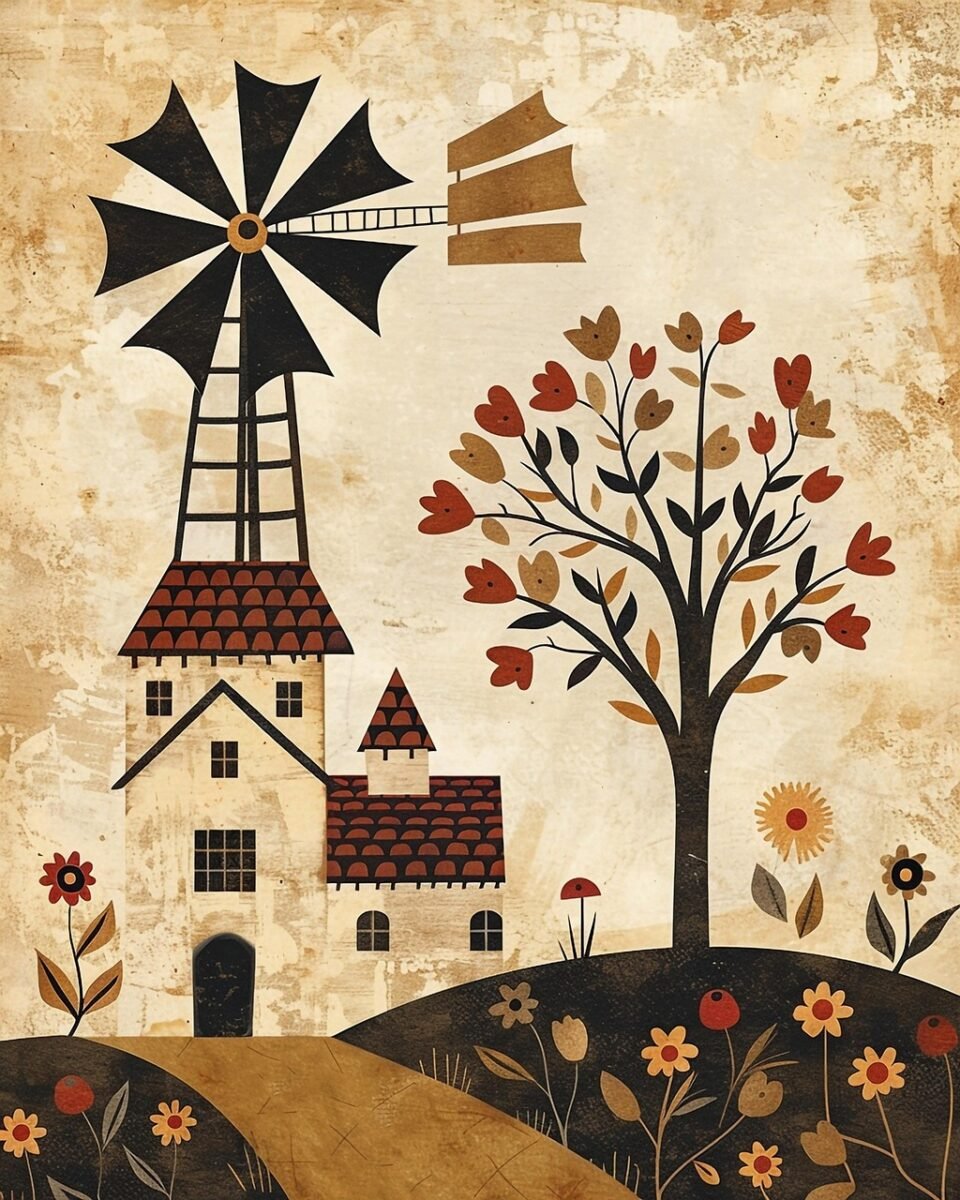
Walls or Mills: What You Build When the Wind of Change Blows?
There is an ancient proverb that gains an urgent freshness these days: when the winds of change begin to blow, some people build walls to protect themselves, while others build windmills to harness the force of the windstorm. The beauty of this metaphor lies in its simplicity and its refusal to embrace naive optimism. She does not promise that the wind will be mild, nor does she deny that the storm will startle. The saying only reminds us of an inevitable truth: adversities will come. The great difference in our trajectory was never in the intensity of the problems, but in the strictly personal decision we made before them.
Generally, the first reaction of the human being to encounter the unknown is to erect a wall. Psychology explains that this answer is not a defect of character, but a gear of our own survival instinct. Faced with uncertainty, pain or threat, the human brain automatically seeks the fastest escape route, activating defense mechanisms to keep us in an apparent safety zone. The problem is that the same wall that protects us from the storm also prevents us from seeing the horizon, blocking the light and paralyzing us in the same place.
This dynamic between stagnation and movement is the engine of almost all great stories — both in fiction and real life. Think of the path of those who decide to face the world with open breast: throughout the journey, this person inevitably encounters ill-intended figures, stumbles into bureaucratic or emotional obstacles and experiences moments of deep frustration, often trying to balance their own dreams in the chaos of a confused family. It's the classic script of human life.
However, the differential of those who decide not to be defined by difficulties is the ability to repair what happens in parallel to chaos. It is in the middle of the walk that true friends, unexpected opportunities and loopholes also arise. Instead of allowing stumbling to dictate their destiny, those who choose to keep walking discover that change does not require an absence of fear, but the courage to take the next step in spite of it.
Turning opposite winds into impulse is not a simple task and does not even happen overnight. It requires a conscious effort to re-educate the look, disarm the automatic defense mechanisms and exchange rigid self-protection for flexibility. As the famous motto of hope that goes through generations would say, "everything can be, just believe" — not in the sense of a passive magic that solves everything in the blink of an eye, but in the deep conviction that we have the ability to transform the energy of the problem into the gear of our own evolution. In the end, the storm is the same for everyone; the architecture of what we do with it is what defines us. -

The Silent Art of Being Heard: Why Connection Overcomes Volume.
There is a very common illusion in how we communicate: the idea that if we increase the tone of voice, the clarity of the message or the intensity of our arguments, we will finally be understood. We spend immense energy trying to shape our words to cross invisible barriers, not realizing that the problem is rarely in the frequency of our voice, but in the disposition of those who listen.
The truth is simple and relentless: anyone who does not want to hear you will not hear you even if you scream. The cry, in most cases, produces the opposite effect to the desired one. Instead of opening doors, it triggers defense mechanisms, erects walls and turns conversations into battlefields. When the other's mind is closed by prejudice, disinterest or emotional noise, communication fails not by lack of sound, but by lack of reception.
On the other hand, there is an almost palpable magic in true tune. Whoever really wants to understand you will understand you even if you don't say a word. This deep understanding does not depend on the lexicon or perfect oratory; it dwells in small gestures, in attentive eyes, in empathy and in shared silence. It is the presence that speaks louder than any elaborate speech.
Learning to recognize this difference is a liberating exercise of emotional maturity. It means stopping spending arguments where there is no fertile soil for listening and starting to value the spaces where our essence is welcomed effortlessly. In the end, communicating well is not about winning a debate or convincing the uninterested, but about finding and cultivating the connections where the sound — And the silence — They make sense. -
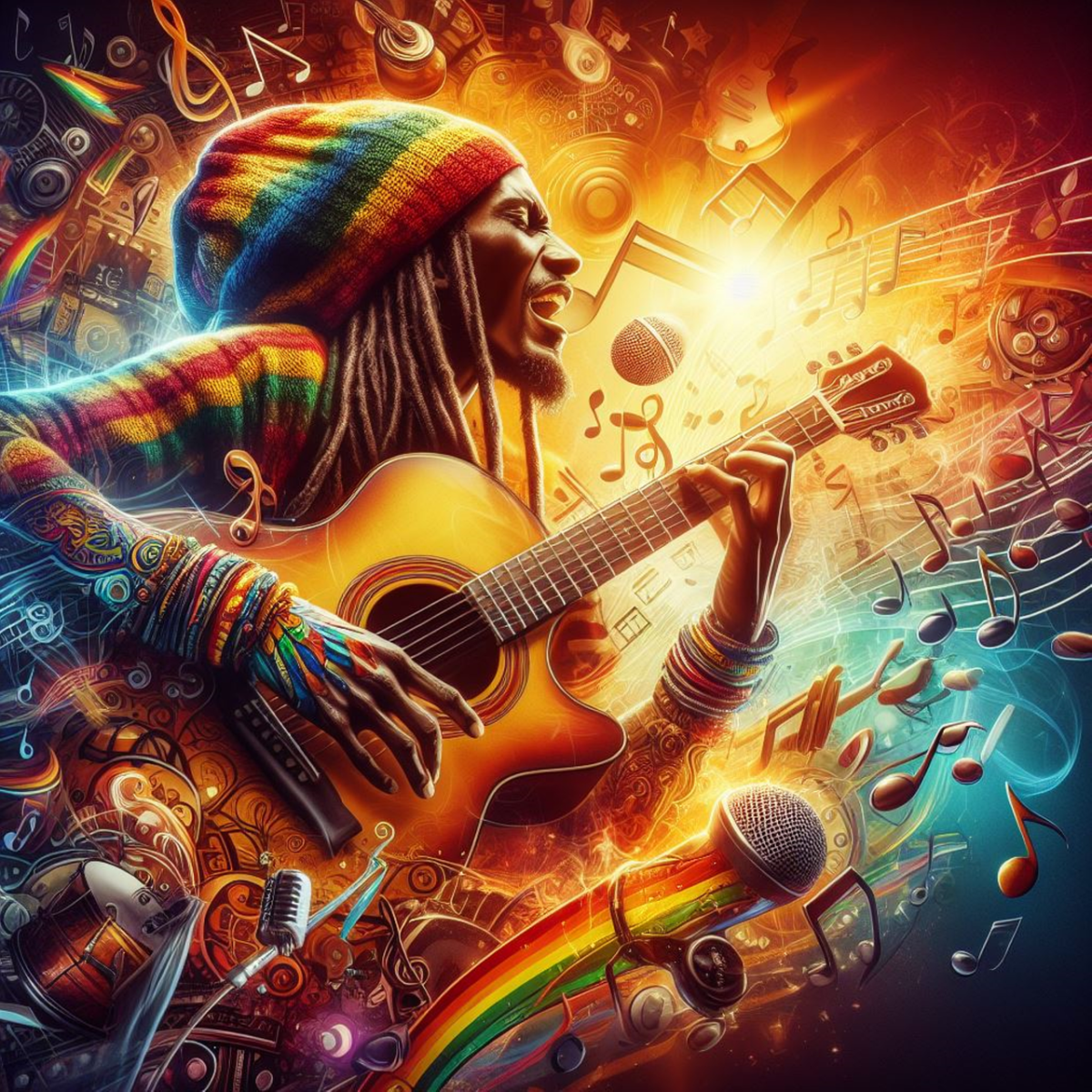
Like Maranhão, Brazil became Brazilian Jamaica
It was a mixture of chance, poorly tuned radio and much need for belonging.
In the late 1960 ’ s and early 1970 ’ s, in São Luís, some people began to pick up in short waves Caribbean seasons. Another version of the story says it was sailors and dockers who brought Jamaican Vinis through the port. One way or another, the records have arrived.
The first one was DJ Riba Macedo in 1975. He began playing the parties on the outskirts and the rhythm instantly glued to the black youth of the city. It wasn't just the music. That's what the lyrics said about poverty, racism, resistance, black pride. It sounded like their story, except with another accent.
And then came what really changed everything: the radios.
Inspired by Jamaica's sound systems, they became giant walls of sound boxes with dozens of amplifiers, lights, and a DJ in charge. Names such as the Golden Voice Canarinho of DJ Locksmith, one of the pioneers, became legendary. They dominated the clubs and the street parties. The radio dispute took thousands of people. And every booming song turned into a "melo" or a "stone" – the crowd often didn't even understand English, but baptised the music for the chorus I heard.
The reggae from there also looked different. More romantic, slower, to dance with two, quite different from the original Jamaican swing. Mixed with Bumba My Boi, Creole Drum, capoeira. It became fashion, way to talk, to dress in the colors green, yellow and red, to cut the hair.
For a long time he was marginalized and even repressed by the police, but he became too big to ignore. Today São Luís has over 200 active radiolas, hundreds of bands like the Jah Tribe, radio shows, theme bars. In 2018 the city inaugurated the Reggae Museum of Maranhão, the first outside Jamaica and the second in the world, and officially won the Reggae National Capital title.
That's why the nickname got so strong. As the director of the Museum said, Ademar Danilo: the reggae is Jamaican, of course, but it is also Maranhense now. It didn't come as a foreign invader, it came as a brother who was born elsewhere. -
The Art of Inhabiting Your Own Skin: Why Time Does Not Expect Our Apologies.
There is an invisible but deeply painful line between the safety of a predictable path and the weight of a life that does not belong to us. We often treat time as an infinite currency, a savings that we can spend pleasing third parties, postponing to a distant Monday our most legitimate wishes. However, finitude is relentless. When we realize that time is the scarcest resource we have, the idea of wasting it living someone else's expectations is no longer just a strategic error and becomes a silent form of neglect with their existence.
Living under someone else's book usually comes dressed as prudence. It is the career that brings pride to the family, the lifestyle that draws applause on social networks or the automatic repetition of decisions considered correct by all around us — except by whom, in fact, you will have to sustain them on a daily basis. This process of annulment rarely occurs through an authoritarian imposition; it settles in the silent repetition of small daily silences. From concession to concession, to preserve approval, status or an empty image of success, we end up building an impeccable facade, but without any resident inside.
To walk an authentic path, however, does not require a dramatic break with the world or a rebellion without cause. Not all external influence is harmful. Wise advice, solid traditions and good examples are fundamental to mature our choices. The real danger is not in listening to the other, but in systematically abandoning their own values in exchange for a temporary acceptance. True authenticity requires the courage to examine the heart and intuition with extreme responsibility, distinguishing what is a consistent desire from what is just a passing reaction or a whim. It's an invitation to look inside and investigate your own dissatisfaction before it crystallizes into decades of resentment.
To begin this return movement to oneself, it is worth confronting the mirror with honest questions, but without the urgency of ready answers. It is necessary to question whether today's choices still correspond to current values, or whether we are just maintaining a character by force of habit. It is worth reflecting whether we would continue in the same direction if external approval suddenly disappeared, or if the fear we feel in the face of change indicates a real danger or just the natural discomfort of stepping on unknown soil. Often, the answer is not in a leap into the abyss, but in small practical experiences: a parallel study, an established limit without fuss or an honest conversation that allows testing a new direction with your feet on the ground.
This change of posture is rarely understood immediately by the people around, and everything is fine. The search for autonomy usually begins discreetly, away from the spotlight, in the intimacy of our daily decisions. The warning that our existence is finite should not bear the burden of guilt for what has gone on, but rather return dignity and importance to the present moment. Given the finitude of time, the noise of social demands loses the volume and size. What really remains is the question of how we use today. By accepting the limit of our day, ironically, we reduce the rush to prove our worth to the world. Finally, we have gained the necessary calm to choose commitments that deserve our energy and wisdom to abandon the disputes that only serve to keep us away from who we really are. -
The Invisible Lens: Why Our Largest Discoveries Happen From the Inside.
We often cross oceans, accumulate stamps on passports and pursue distant horizons in the hope that a geographical change will cure boredom or the restlessness of the soul. However, the real transformation movement rarely requires a suitcase. The great human crossing is not to accumulate new landscapes under the feet, but to allow our own vision to suffer a metamorphosis. It's about learning to see with new eyes. When we change the lens by which we filter the world, the most familiar living room or the quietest routine gain contours of unexplored territory.
This lens, however, is shaped by what we carry in the chest — especially for our memories, which are anything but static and dusty files from a computer. To remember the past is not to rescue a tape recorded exactly as things happened; it is in fact a continuous act of recreation. We rewrote our own history to every memory, coloring yesterday with the inks of what we are today. That's why the only true paradises are the ones we've already lost. The loss involves the past in a mist of nostalgia that the brute reality could never sustain, transforming the absence into an untouchable and idealized beauty.
This incessant search for what is not within our reach inevitably extends to our relations. There is an uncomfortable and fascinating truth in the fact that we only love fully what we do not possess entirely. The moment we believe we have completely deciphered and mastered the other, the mystery fades and desire tends to fall asleep. Love feeds on space between us, the eternal attempt to understand a territory that insists on remaining partially wild and mysterious.
And if the search for the other is complex, the search for itself goes through even more winding paths, often paved by pain. No one leaves existence unharmed, and the attempt to shield the heart from suffering is a useless effort. We're only cured of a pain after we've had the courage to experience it completely. Although happiness is excellent for the body, keeping us light and vibrant, it is sadness that silently expands the boundaries of our spirit. It is in the gathering of grief that we are forced to mature, to question certainties and to rebuild our internal structures.
In this journey of self-discovery, art and literature appear as sacred portals. Opening a book is putting one's foot on the threshold of spiritual life; reading invites us to enter unknown worlds, but it alone does not constitute our spirituality. She's the map, not the territory. The true book, the one capable of changing the course of a life, already exists written latently within each of us. The external writer works only as a translator of feelings that we already had, but we still did not know how to name.
For those who venture to create, whether writing or shaping their own lives, there is a brutal difference in posture. One who is limited to being a mere passive observer of reality operates at a much lower level than one who decides, in fact, to create. Watching is recording what already exists; creating is giving soul, depth and meaning to the chaos of the world. At the end of the day, to live fully is not to watch one's existence pass through the window, but to assume the role of creator of one's own narrative, using every loss, every flash of love and every new perspective to sculpt a truly conscious life. -
The Art of Disarming the Past: How to Heal Without Needing to Forget.
There is a silent and almost cruel myth surrounding our quest for emotional well-being: the idea that, in order to be well, we need to forget what hurt us. We charge ourselves a kind of selective amnesia, as if overcoming a pain depended on our ability to delete entire chapters of our own history. However, when we try to force this forgetfulness, what usually arises is not relief, but a heavy charge, accompanied by a feeling of frustration and failure.
The truth behind psychology and human experience points to a much more welcoming path. Healing does not mean erasing the past, but regaining the freedom to live the present without old pains continuing to dictate the rules of the game.
The body speaks what memory tries to silence
Our trajectory is made of marks. Some bring the warmth of good memories; others leave deep scars. When we experience traumatic or excessively difficult experiences, these experiences are not just kept in a mental drawer. They settle in the body, alter our nervous system and shape the way we react to the world.
In everyday life, this "active past" manifests itself in subtle but persistent ways:
That unexplained tightness to the chest in the face of a new situation;
The almost instinctive barrier we lift when someone tries to get close;
A disproportionately intense reaction to a silly comment or the constant feeling that danger is just around the corner.
These behaviors are not manufacturing defects. These are defense mechanisms of an organism that has learned to survive, but that continues to operate in a state of alert. So the simplistic "just move on" advice usually fails. It is not a lack of willpower; it is an emotional baggage that still needs to be disarmed and understood, and not just ignored.
The myth of the blank leaf and the trap of guilt
The stubborn search for a blank sheet creates invisible guilt. Many people suffer twice: the first for the original pain, and the second for feeling unable to forget it. Understanding that our history is cumulative frees us from this burden. We are inevitably the sum of all that we live.
True emotional health does not require us to cut pieces of ourselves. The most healthy and sustainable way is to learn to live with history itself. When we look back and we can face our most difficult episodes without them triggering the same internal storm as before, we realize that the healing process is happening. The fact loses the power to define us.
To heal is to be able to look at your own scar and remember what happened, without having to revive the pain of the cut.
Returning command to present
The therapeutic process and the path of self-knowledge are not linear. There will be days of clarity and days when the shadows will appear denser. And it's okay. The ultimate goal was never perfection or immunity from pain, but rather the conquest of autonomy.
As we welcome our vulnerabilities and seek proper support, we begin to rebuild our sense of internal security. We learn to identify our triggers and gradually create a space between the stimulus of the past and our response in the present. That is where our freedom lies.
In the end, the cure doesn't change the facts that happened back there, but it drastically alters the weight they have today. It allows the past to finally take its place: that of a memory that is part of who we are, not that of the commander of our lives. -
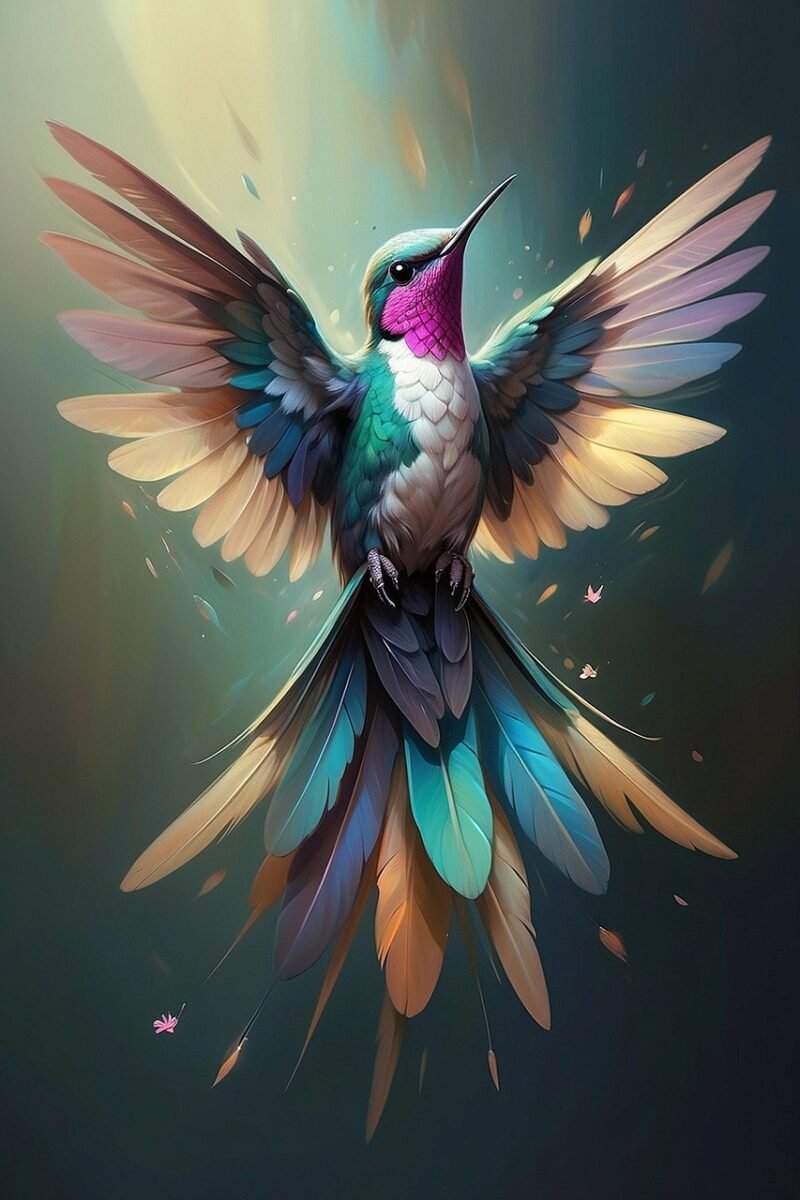
The Art of High Flying: Why Mind Discipline Overcomes the Natual Talent.
There is a persistent myth that the great deeds of mankind belong exclusively to the predestined. We look at who has reached the top and, almost by instinct, we attribute success to an untouchable "natural talent". However, behind any high and sustainable flight, there is rarely only one natural gift. What really holds the top is an invisible and daily gear: the decision to train the mind, insist with purpose and turn every turbulence into wisdom.
Flying high, after all, is a long-term construction. Talent can open the first doors, but it is the mental discipline that keeps us in the air when the opposing currents begin to blow.
This preparation begins with the development of a silent mental power: the almost surgical ability to maintain clarity and serenity even when we are under very high pressure. While the untrained mind is lost in the chaos of the moment, the prepared mind breathes deeply and finds the north. This calm is not passive; it is the fertile ground from which instinct springs. What we call "instinct" is nothing more than an ultra-speed response that our brain delivers after thousands of hours of constant repetition and practice. It is the sharp reflection of those who have been there many times.
For this machine to work, however, it takes an inexhaustible fuel: determination. She is the obstinate willingness to insist exactly when the result insists on not coming first. It is what makes us rise after a fall and view error not as a sentence of failure, but as pure experience. Each scar, victory or defeat accumulates a learning that no textbook can teach.
When determination ceases to be a punctual effort and becomes a daily habit, something magical happens in our perception: the challenges lose that imponence of insurmountable walls and become seen as mere curves in the path.
The path remains winding, but our ability to fly changes completely.
None of this, however, gains traction without focus. In a world designed to fragment our attention every second, the ability to eliminate distractions and keep your eye fixed on the ultimate goal functions as a magnifying lens that concentrates all our energy on a single point. The focus is what keeps the wind from moving us off course.
In the end, excellence is not an isolated event, but a continuous process of stoning. Less magical inspiration, more conscious perspiration. As we silence the external noise and assume the responsibility of training our minds every day, we discover that the sky was never the limit — It was just the starting point. -

The Strongest Muscle of the Soul: Why Bowing to Help is the True Exercise of Strength.
There is a silent wisdom that challenges our modern obsession with individual strength, lonely conquests and tireless search for a top where we often find ourselves isolated. We usually associate the word "strengthening" with physical effort, muscle endurance or emotional shielding that protects us from the outside world. However, the most vigorous and transforming exercise that the human heart can perform does not require weights, appliances or competitions. It happens in the subtle and deeply courageous movement of bowing to reach out to those who are fallen.
This gesture of leaning toward the other has no relation to weakness; on the contrary, it is the maximum expression of inner force. Bowing, in the noblest sense of metaphor, requires us to abandon any pedestal of superiority or indifference. It means looking into the eyes of those who go through a moment of vulnerability, not from top to bottom with a look of pity, but from equal to equal, recognizing the intrinsic dignity of that person. It is to understand that the fall of the other is human and that our stability in the present is only temporary.
As we stoop to raise someone, we activate an invisible gear that shapes our character. This daily exercise develops empathy — that rare ability to tune with other people's pain without hurry —, patience to simply listen without judging and moral courage to act, even when the flow of the world pushes us to move forward and ignore what happens next. The heart strengthens precisely in this training, expanding its ability to feel and care in a society that so often values emotional anesthesia.
The beauty of this movement is that it translates into extraordinarily simple and showless attitudes. It is not about seeking public recognition or turning the suffering of others into a stage for self-exaltation. True solidarity is manifested in the silence of listening attentive to a friend who is burdened, in the time dedicated to accompany a family member in a difficult consultation or in the delicacy of respecting the silence of those who still cannot verbalize their own pain. It's these little anchors of presence and accompaniment that hold someone's world when everything around it seems to fall apart.
In the end, human greatness is measured by our ability to respond to the fragility of others. When we choose not to look away, when we turn abstract compassion into concrete action and real presence, our whole community rises. Strengthening the heart is understanding that our own humanity is only fully realized when we become the support that the other needs to stand up again.

