Category: Behavior and Consciousness
Explorações sobre a mente humana, o ego, o despertar da consciência e o comportamento na era digital.
-

The Myth of Will Force: Because the one with the most self-control is the one who needs it the least.
There is a romanticized and almost heroic image that we cultivate on human discipline. We imagine the high-performance individual as someone with a locked jaw, veins protruding in the forehead and a superhuman ability to resist daily temptations. It is the myth of the warrior of willpower, the hero who wins daily battles against laziness, distractions and procrastination by the simple force of character.
However, the science of behavioral psychology brings a revealing and, in a way, humiliating finding to this narrative: the people who demonstratedly have the highest level of self-control are, in fact, the ones who least wage these heroic battles.
The answer to the consistency of these people is not in an unwavering ability to close their teeth, but in the fact that they have developed habits that make good behavior practically automatic. The secret that unites self-control to concrete results — as the quality of sleep, the consistency in studies and even the permanence in the university — It is not daily resistance, but habit.
The Architecture of Internal Silence
Literature reviews on the subject indicate that individuals with high self-control report less temptations in daily life. They are no better at resisting the song of the mermaid; they simply sail through waters where the mermaid does not sing. Instead of testing their own limits, these people shape the environment around them so that the tempting option is simply not before their eyes, allowing most of their day to pass through the autopilot.
This is where the routine reveals its true role, which goes far beyond the superficial clichés of productivity.
Psychologist Wendy Wood, reference in her studies on the subject, estimates that about 40% of all our daily behavior is governed by habits — automatic responses triggered by specific triggers such as a time, place or previous action —, and not by conscious and thoughtful decisions. A well-structured routine is nothing more than a chained sequence of these automatic patterns.
The real value of this automation lies not in the grandeur of the structure, but in the systematic elimination of the points of choice.
Every time a behavior requires a decision, you make room for an internal argument. — And every argument is an argument that you risk losing. When action becomes routine, debate ceases to exist. There is no deliberation, no weariness and no need to resist the alternative, because the alternative has not even been formulated by your mind.
An intelligent routine is, in essence, a way to spend energy of will only once: in the design phase of your day, and not in the daily execution of it.
The Design of the Environment and the Theater of Tiredness
The same logic applies to the physical and digital space surrounding us. Much of what appears to be an iron discipline is only the result of a well-designed environment — what researcher Angela Duckworth and her colleagues call situational strategies.
If the cell phone is on the table overnight, focusing on work will require an entire hour of continuous effort to ignore it. If the same phone is placed in another room, the effort drops to zero. The goal is always the same: to make the desired task the path of least resistance. It's infinitely easier to avoid temptation than to beat it over and over again.
Unfortunately, contemporary work culture and startup mythology interpret this concept almost in the opposite way. It sells the idea that the morning routine of 5 a.m. is the watershed between success and failure, ignoring genetic evidence that being a morning or night person is something deeply anchored in our biology.
The business ecosystem cultivates the cult of hard and visible work, where long hours at the table and apparent exhaustion function as a kind of performance. But this performance effort is just theater. Scientific research points in the opposite direction: what predicts real long-term achievement is the sober, repetitive and monotonous routine, which does not need audience or drama. Founders and professionals who last at the top are usually psychologically consistent, and the habit is precisely the engine that ensures this consistency without burning the start every morning.
A More Human Way to Live
However, the opposite extreme must be avoided. Installing a new routine is not a magical promise of absolute success. Several factors that determine one’s progress — as luck, financial resources, contact networks and health — are completely out of reach of an individual habit. Habit is a powerful lever, not the whole machine.
In addition, there is a risk of rigidity. A routine that eliminates unnecessary friction is a very useful tool; a routine defended with dogmatism becomes a prison. The same automatism that protects good behavior will protect a useless habit with the same fidelity if there is no discernment. The goal is not to stop thinking, but to stop deciding about things that should not require decision.
What this scientific perspective offers us, in the end, is a much more welcoming and realistic view of self-discipline. People who seem to have an inexhaustible willpower are not superhuman. They just organized their own lives to need it less and less.
This transition takes away from our shoulders the suffocating weight of trying to "make us stronger people" and transfers the task to something much more practical and attainable: the construction of a less stressful day. -
Where the Light can enter.
I'm a vase, shaped by falls and mistakes,
A curious compound, standing among deserts.
Every crack, crack, slip I've lived,
It's carved landscape, only mine at last.
Not polished marble, not mold without fail,
But fragments harvested, made to hold.
For through these breaches, where light may enter,
A soft thread keeps fear from hovering.
With a serious spirit, slowly and with faith,
Good intentions make these pieces grow
In a whole, though marked and imperfect,
Connected by an end to hope of respect.
So I stand, testimony of grace,
A soul of flaps, in time and space.
My own being, failures woven with strength,
Illuminated by the light of intent to hold me. -
When Care Cages: The Subtle Limit Between Demonstrating Love and Exercise Power
At the beginning of a two-way story, excessive attention usually comes in disguised as romance. An out-of-hour call to find out where you are, an apparently naive question about a new friend, or an over-appointed opinion about your career choices. It's easy, very easy, to look at this scenario with pink lenses and whisper to yourself: "How beautiful, this person really cares about me."
However, as the days advance and initial enthusiasm gives way to routine, the line that separates affection from control begins to prove dangerously tenuous. What seemed like protection starts to sound like charging, and the legitimate interest becomes a silent court, where you need to constantly justify who you are, who you talk to, and what you do with time itself.
It is at this point that we need to pause painfully, but necessary, to face an uncomfortable truth: who controls their friendships, their choices and their freedom is not showing love, but a profound need for power.
The dynamics of control rarely begins aggressively. It infiltrates the cracks of the relationship, fueled by insecurities masked with zeal. The partner or partner does not ask you to stay away from your childhood friends overnight; instead, it points subtle defects in them, creates an unpleasant atmosphere before the encounters or makes you feel guilty for not having reserved that moment just for the couple. Little by little, your world shrinks, the walls get closer, and when you realize it, your support network dissolves and your decisions go through the other's approval filter first.
This search for dominance is not a symptom of intense love; it is the opposite of it. It is the reflection of a weakened ego that needs to transform the partner into a consumer good, a property maintained under constant surveillance to stop anxiety itself.
True love walks in a completely opposite direction. He is not born of possession, but of unrestricted respect, of genuine trust and, above all, of the recognition of the individuality of one’s love. To love someone means to look at its essence, with all its ramifications, friends, dreams and weirdness, and say: "I want you to fly high, and I'm glad to see you fly."
Real affection nourishes itself from the desire to see the other grow, expand its horizons and reach its best version. He celebrates individual achievements and understands that the happiness of the partner outside the relationship is not a threat, but a reason for shared joy. To transform those we love into a reflection adapted to calm our own internal ghosts is not to love; it is to imprison.
Freedom is not the opposite of commitment — It is the only ground where true commitment can flourish. Choosing to be with someone every day is only of real value when you have the full freedom to leave or walk around the world with your own legs. When control takes over, the choice ceases to exist and submission enters the scene.
Preserving your friendships, your hobbies, your autonomy and your voice is not a selfish attitude; it is the fundamental pillar that keeps your identity intact. If to maintain a relationship you need to decrease in size, give up who you are or live under the shadow of someone else's monitoring, the price charged is too high. Healthy relationships do not require you to renounce your freedom to prove loyalty. Genuine love is a safe haven, not a cage. -

Support the Animal Cause: Your Money Save Life Donation!
🐾
Each rescue, veterinary treatment and meal is only possible thanks to the generosity of those who care. Often, the costs of castrations, vaccines, exams and emergency hospitalizations outweigh the resources available, and direct financial assistance is the fastest and most effective means of ensuring the necessary care for street animals.
How to contribute:
You can easily and quickly make your donation using the keys below:
Pix: reas63@hotmail.com
PayPal: reas63@hotmail.com
Their collaboration guarantees food, medication, and a dignified new beginning for those who have only love to give.
Any value makes a huge difference in the life of a rescued pet. Thank you so much for supporting this cause! -

Inner Strength and Resilience
The path may rise, a jagged stone,
Or shadows stretch where light has flown.
But in your spirit, bright and keen,
A hidden strength, a vibrant scene.
Each block that bars, each winding chase,
You reshape with a knowing grace.
The wall alleys a lunching place,
A whiskey hop, a forward pace.
With every stump, every test,
You find the moment to invest
In finding chances, put to rest
The bear that binds, the doubt oppressed.
So run the course, with steady stride,
Where Hurdles Wait, and Fears resides.
For every challenge, deep inside,
The golden opening will abide.
A path may rise, a jagged stone,
Or shadows stretch where light has flown.
But in your spirit, bright and keen,
A hidden strength, a vibrant scene.
Each block that bars, each winding chase,
You reshape with a knowing grace.
The wall alleys a lunching place,
A whiskey hop, a forward pace.
With every stump, every test,
You find the moment to invest
In finding chances, put to rest
The bear that binds, the doubt oppressed.
So run the course, with steady stride,
Where Hurdles Wait, and Fears resides.
For every challenge, deep inside,
The golden opening will abide. -
Walls or Mills: What You Build When the Wind of Change Blows?
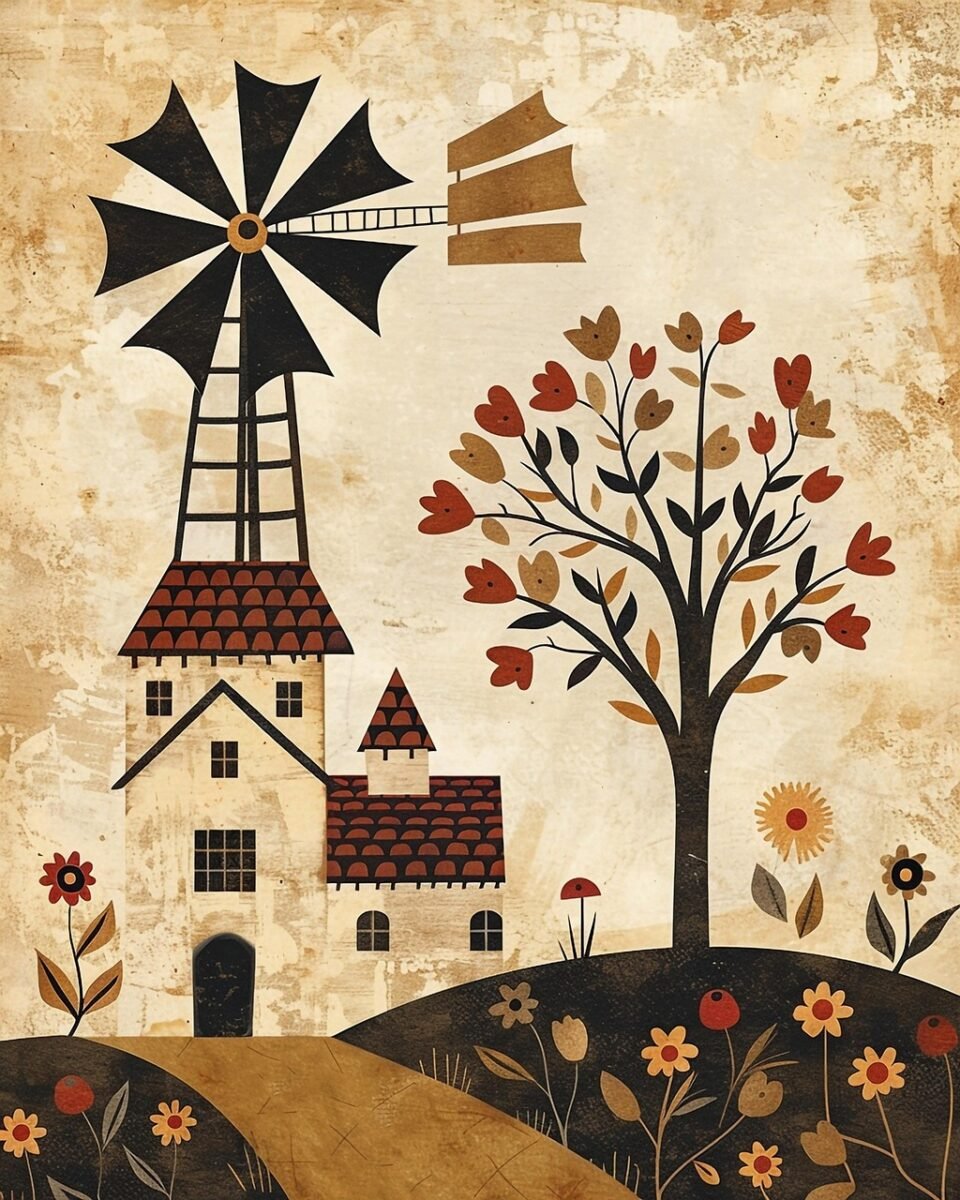
There is an ancient proverb that gains an urgent freshness these days: when the winds of change begin to blow, some people build walls to protect themselves, while others build windmills to harness the force of the windstorm. The beauty of this metaphor lies in its simplicity and its refusal to embrace naive optimism. She does not promise that the wind will be mild, nor does she deny that the storm will startle. The saying only reminds us of an inevitable truth: adversities will come. The great difference in our trajectory was never in the intensity of the problems, but in the strictly personal decision we made before them.
Generally, the first reaction of the human being to encounter the unknown is to erect a wall. Psychology explains that this answer is not a defect of character, but a gear of our own survival instinct. Faced with uncertainty, pain or threat, the human brain automatically seeks the fastest escape route, activating defense mechanisms to keep us in an apparent safety zone. The problem is that the same wall that protects us from the storm also prevents us from seeing the horizon, blocking the light and paralyzing us in the same place.
This dynamic between stagnation and movement is the engine of almost all great stories — both in fiction and real life. Think of the path of those who decide to face the world with open breast: throughout the journey, this person inevitably encounters ill-intended figures, stumbles into bureaucratic or emotional obstacles and experiences moments of deep frustration, often trying to balance their own dreams in the chaos of a confused family. It's the classic script of human life.
However, the differential of those who decide not to be defined by difficulties is the ability to repair what happens in parallel to chaos. It is in the middle of the walk that true friends, unexpected opportunities and loopholes also arise. Instead of allowing stumbling to dictate their destiny, those who choose to keep walking discover that change does not require an absence of fear, but the courage to take the next step in spite of it.
Turning opposite winds into impulse is not a simple task and does not even happen overnight. It requires a conscious effort to re-educate the look, disarm the automatic defense mechanisms and exchange rigid self-protection for flexibility. As the famous motto of hope that goes through generations would say, "everything can be, just believe" — not in the sense of a passive magic that solves everything in the blink of an eye, but in the deep conviction that we have the ability to transform the energy of the problem into the gear of our own evolution. In the end, the storm is the same for everyone; the architecture of what we do with it is what defines us. -

Proteins or Fibers at breakfast? The Study That Reveals the Perfect Combination to Lose Weight.
When it comes to weight loss, morning meal is usually the center of intense debates. After all, what works best to start the day: a protein-reinforced dish to stop hunger or a meal overflowing fibers to regulate the organism? A recent cross-interruption study decided to put these two approaches to the test, subjecting the participants to 28 days of each protocol and delivering valuable discoveries on how our metabolism actually responds to each nutrient.
During the experiment, researchers provided all meals of volunteers in two well-defined regimens. The first protocol focused on a high fiber content, ensuring about 30 grams daily from ingredients such as wheat bran, lentils and beans. The second directed 30% of all daily calories to high-quality protein sources, such as eggs, meat and dairy products. In both diets, the distribution of calories followed a strategic logic: 45% of the total daily was concentrated at breakfast, 35% at lunch and only 20% at dinner.
The results showed that both paths lead to weight loss, but by completely distinct and fascinating pathways. The hyperprotein diet stood out for direct control of hunger. By stimulating the release of gastrointestinal hormones linked to reduced appetite, high protein intake significantly reduced the desire to eat throughout the day, facilitating the maintenance of a caloric deficit spontaneously.
On the other hand, the fiber-rich protocol had a slight advantage in overall weight loss due to its profound impact on metabolic health. Fermentable fibers served as a banquet for beneficial bacteria of the digestive tract, especially bifidobacteria. This proliferation strengthened the integrity of the intestinal barrier, combated low-grade inflammation and boosted butyrate production. — a short-chain fatty acid directly associated with increased insulin sensitivity. In practical terms, while the protein silences the stomach, the fiber rearranges the metabolic gear of the body.
The great lesson that the study leaves us is that we don't have to choose a side. Proteins and fibers act in a complementary way: a safe anxiety and hunger peaks, while the other nourishes the microbiota and optimizes energy expenditure. Bringing this discovery into daily routine is simpler than it seems. The most efficient way for those seeking to lose weight with health is to unite the best of both worlds at the first meal.
Set up a smart breakfast ensuring between 20 and 30 grams of protein — through eggs, natural yogurt or thin cheeses — combined with good sources of fiber such as oats, seeds or nuts. This synergy not only prolongs the sensation of satiety for hours and stabilizes blood glucose levels, but also ensures that your intestine works in favor of your goals. -
The Silent Art of Being Heard: Why Connection Overcomes Volume.
There is a very common illusion in how we communicate: the idea that if we increase the tone of voice, the clarity of the message or the intensity of our arguments, we will finally be understood. We spend immense energy trying to shape our words to cross invisible barriers, not realizing that the problem is rarely in the frequency of our voice, but in the disposition of those who listen.
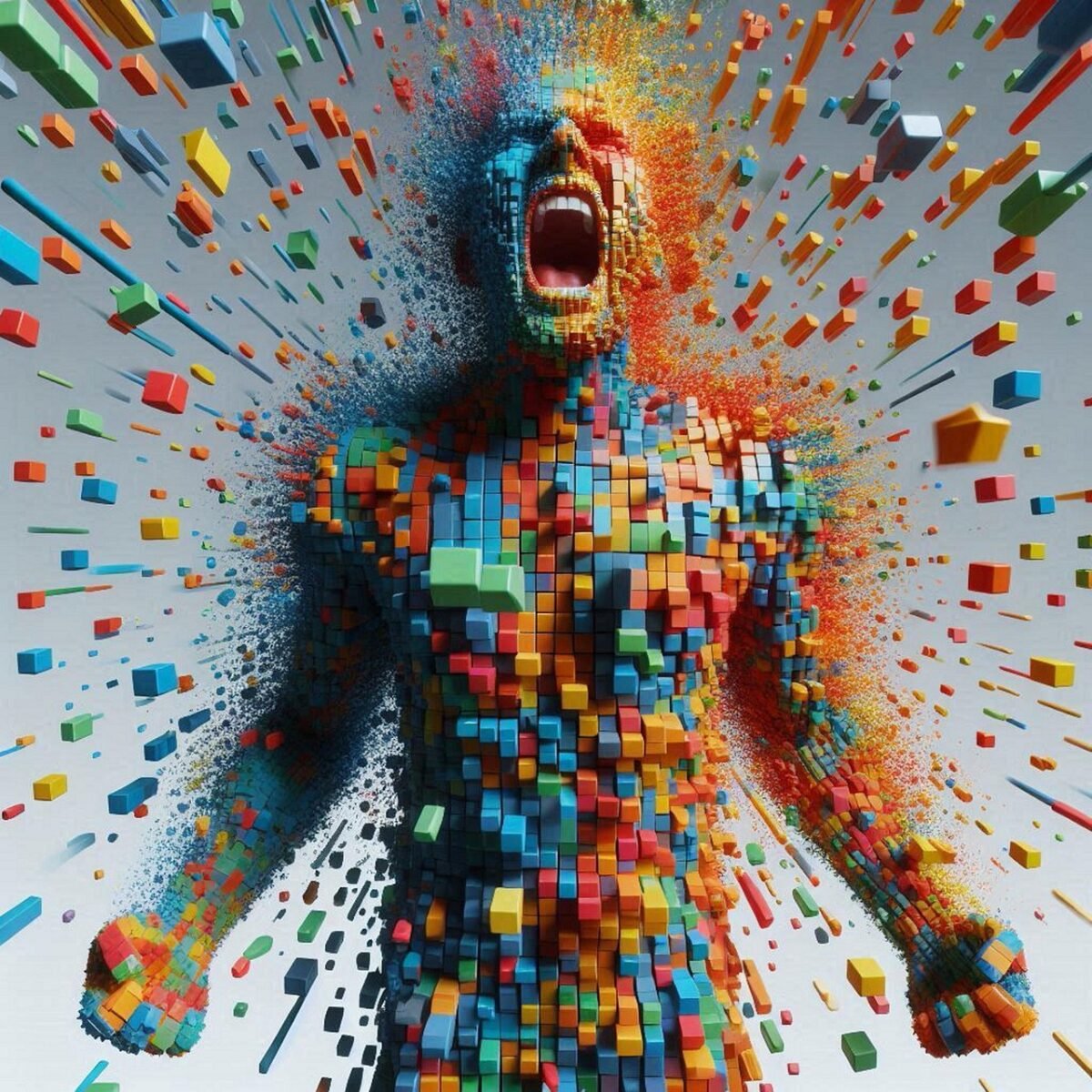
The truth is simple and relentless: anyone who does not want to hear you will not hear you even if you scream. The cry, in most cases, produces the opposite effect to the desired one. Instead of opening doors, it triggers defense mechanisms, erects walls and turns conversations into battlefields. When the other's mind is closed by prejudice, disinterest or emotional noise, communication fails not by lack of sound, but by lack of reception.
On the other hand, there is an almost palpable magic in true tune. Whoever really wants to understand you will understand you even if you don't say a word. This deep understanding does not depend on the lexicon or perfect oratory; it dwells in small gestures, in attentive eyes, in empathy and in shared silence. It is the presence that speaks louder than any elaborate speech.
Learning to recognize this difference is a liberating exercise of emotional maturity. It means stopping spending arguments where there is no fertile soil for listening and starting to value the spaces where our essence is welcomed effortlessly. In the end, communicating well is not about winning a debate or convincing the uninterested, but about finding and cultivating the connections where the sound — And the silence — They make sense. -

The Search for Meaning in the Digital Age: Completion of BioBit Journey
The journey through BioBit. online was an exploration of the intersections between technology, human behavior and art, seeking to understand how digital innovations are redefining our existence. Philosophically, the search for meaning in the digital age is the challenge of maintaining our essence and values in a world in constant acceleration and transformation. Throughout these 40 articles, we navigate through complex themes, from artificial intelligence to music therapy, always with the aim of finding a balance between technical progress and human flowering.
Poetically, this journey is an invitation to be the conscious navigators of an ocean of data, seeking the stars of truth and beauty amid digital noise. BioBit is a trail of light, an attempt to map tomorrow's territory with today's tools, never losing sight of the poetry that inhabits each connection and every discovery. The meaning is not in the final destination, but in the walking itself, in the curiosity that moves us and in the ability to marvel at the infinite possibilities of a future that we are building together, bit by bit, beat by beat.
Informatively, the closure of this series of articles marks the beginning of a new phase of reflection and action. The technologies discussed here — blockchain, AI, sound synthesis, digital theater — not only are isolated concepts, but parts of a global ecosystem that requires our active and ethical participation. At BioBit.online, we will continue to follow these developments, offering a careful and critical curatorship so you can navigate the digital age with autonomy and purpose. We thank you for accompanying us on this journey and invite you to continue exploring, questioning and creating your own meaning in this vast digital universe.
The future is an open invitation. Finding the meaning in the digital age is learning to read between the lines of the code and listening to the melody that pulses behind each screen. The journey continues.
-
Post-Humanism and the Future of Species: What Comes After Us?
Posthumanism is a philosophical current that questions the limits of traditional humanism, suggesting that our species is in a process of deep transformation mediated by technology. Philosophically, it is about overcoming the vision of man as the absolute center of the universe, recognizing our interdependence with machines and the environment. Posthumanism invites us to imagine a future where biological capabilities are expanded by genetic engineering and artificial intelligence, forcing us to redefine what it means to be a person and what rights should be attributed to hybrid or synthetic beings.
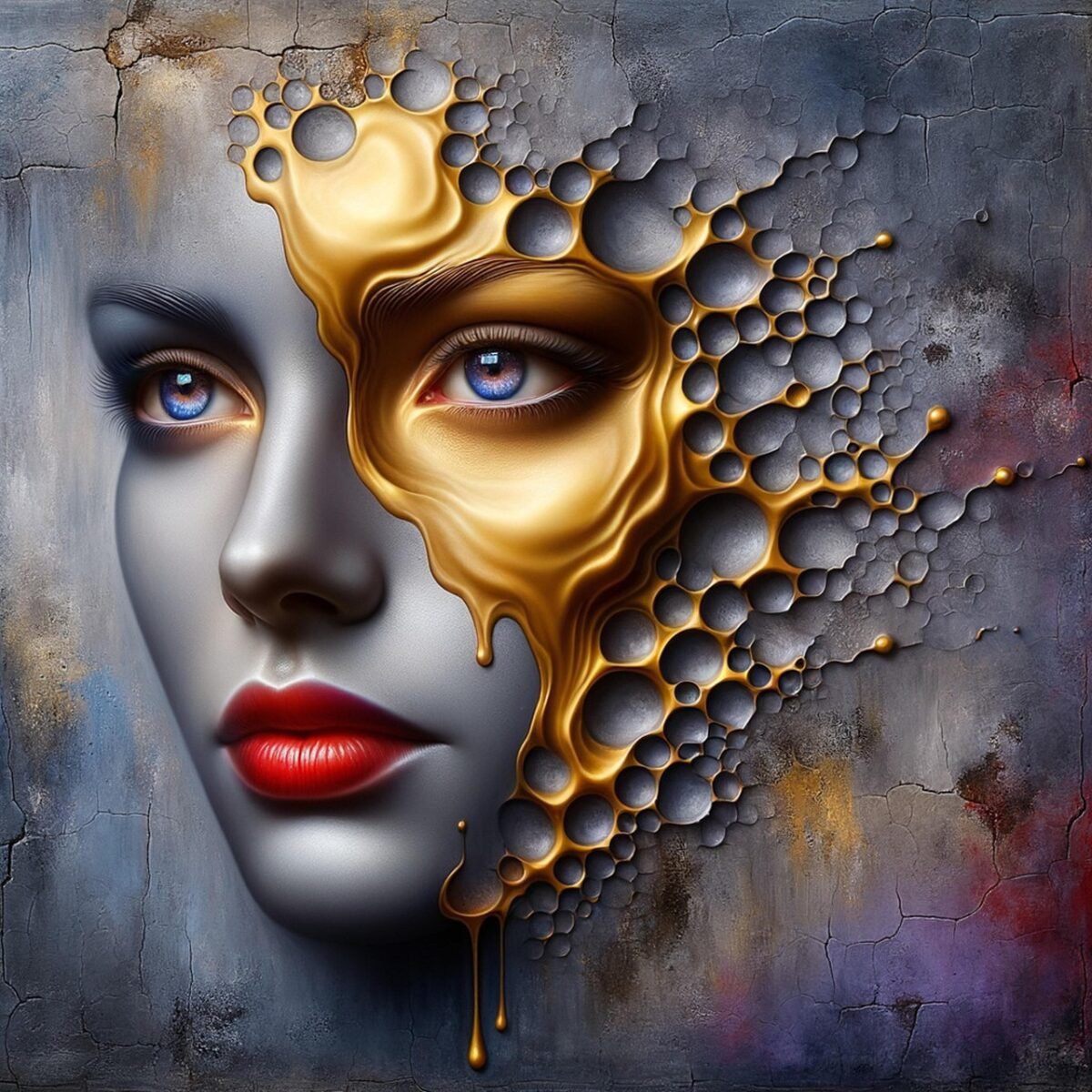
Poetically, post-humanism is the unfolding of a new form of life, a metamorphosis where the skin becomes interface and the mind expands beyond the skull. It is the beauty of being the architects of our own evolution, drawing new senses and new ways to feel and perceive the cosmos. In that future, death can become only a technical problem to be solved, and our consciousness can navigate into data oceans, free from the limitations of the flesh. It is the poetry of transcendence, the moment when we stop being only human to become something vast, complex and eternal.
Informatively, post-humanist discussions cover areas such as transhumanism, bioethics and the philosophy of technology. Authors such as Rosi Braidotti and Nick Bostrom explore the social and existential implications of these changes, alerting to the risks of inequality and dehumanization. At BioBit.online, we analyze how emerging technologies are shaping this new era and how we can ensure that the transition to post-human preserves fundamental values such as empathy, justice and diversity, ensuring that the future is a flourishing space for all forms of intelligence.
What comes after us is a construction that starts now. Posthumanism is not the end of humanity, but the beginning of a journey beyond our biological and conceptual boundaries.