
Financial education is one of the most powerful tools we can have, because it changes the way we see and use money. It is not about becoming an expert in economics or finance, but about learning enough to make decisions with security and independence. The more you study about it, the less vulnerable it is to scams, bad advice or impulsive choices. In addition, this knowledge can be shared with family and friends, creating a cycle of awareness and care about finances. Learning to deal with money is a life lesson — and an investment that brings returns forever.
Tag: technology
-

Financial education: an inheritance for life.
-

Cathedrals of Light and Silicon: The Rise of Cyberspirituality in the Metaverse.
The silence preceding prayer has always had a physical texture. Historically, he leaned on the echo of the stone cathedrals, the aroma of incense burning slowly or the soft touch of beads between his fingers. Today, for a growing number of faithful, this same silence manifests itself in the slight buzz of a pair of virtual reality glasses and in the soft glow of an LCD screen that lights up before the eyes. The search for the sacred, far from being intimidated by the coldness of the programming codes, found in the metaverse a new and unexpected territory of expansion. It is the birth of cyberspirituality, a phenomenon that challenges our old boundaries between body, soul and pixel.
Entering a virtual temple is an experience that subverts the logic of traditional geometric space. A floating avatar can kneel before a three-dimensional digital altar, while the actual user is sitting in the armchair of his living room, thousands of miles away. Christian, Buddhist, Islamic and Neopagan communities have built true architectural masterpieces in digital space, where the laws of physics do not apply. In these places, gravity is optional, but communion is real. Virtual pastors preach to congregations of anthropomorphic avatars, while monks conduct collective meditations in digital Zen gardens that float over neon clouds. Faith, which always depended on symbols to become visible, found in the metaverse the definitive tool of visual representation.
This transition, however, does not occur without deep theological frictions. After all, how to adapt millennial rituals that intrinsically depend on the physical body? The consecrated host, the ablution with purifying water or the embrace of collective peace are tactile manifestations of belonging. In cyberspirituality, religions are forced to translate physical into symbolic in creative ways. The sharing of bread becomes an act of mutual intent; the imposition of hands becomes the alignment of two beams of digitized light. What at first may seem like an artificial simulation gains, for those who experience, a surprising emotional authenticity. For the human mind, the social presence and sensory immersion created by cutting-edge technology are capable of generating neurological responses of peace and reverence very similar to those of a brick temple.
Behind the dogmatic debates is a powerful humanitarian factor that drives this spiritual migration. For individuals suffering from social isolation, people with severely reduced mobility or those living under regimes where their beliefs are persecuted, the metaverse offers an unprecedented sanctuary of security and inclusion. Under the anonymity of an avatar, a young man can exploit his faith without fear of geographical or family judgment. Virtual space democratizes access to belonging, creating a global support network where physical distance ceases to be a barrier to mutual consolation.
It is evident that the metaverse will not replace the ancestral need for the encounter of flesh and bone, shared breathing, and the human warmth of a physical community. However, cyberspirituality reminds us that the sacred was never static. Just as the Gutenberg press transformed the reading of the scriptures and the radio brought the preaching into the homes in the last century, the immersive technologies are just the new language of a human search that never ceases. By building churches and temples of silicon, humanity proves, once again, that no matter how technological our reality is: we will always find a way to find room for mystery and transcendence. -
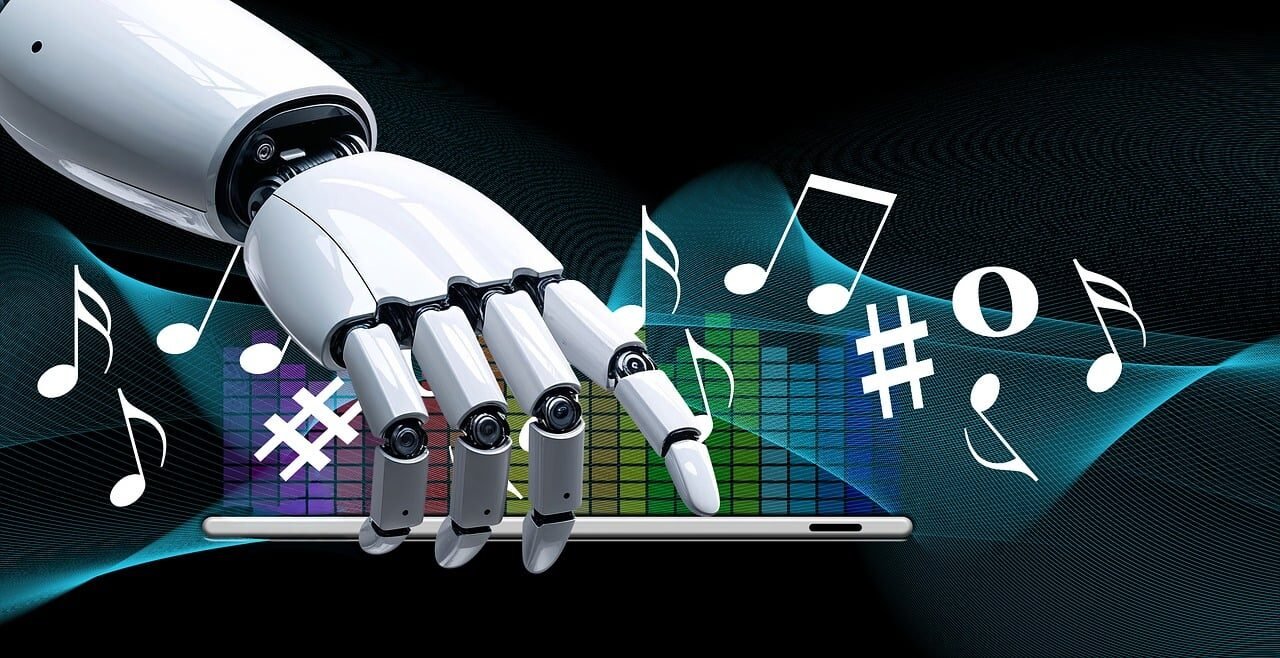
The Dictatorship of Algorithm: How Ready Playlists Mold Our Ears and Silence the Independents.
Imagine entering a coffee shop where the waiter, even before you open your mouth, already serves exactly your favorite coffee, at the perfect temperature. Comfortable, huh? Now imagine that this same waiter decides that from today, you only have the right to take infinite variations of that same grain, preventing you from knowing the taste of an exotic tea or a handmade blend from across the world. That's exactly what's happening to our relationship with music.
Today, the new generation no longer consumes albums; it consumes vibes. If you are sad, there is a soundtrack to cry in the room; if you are going to train, there is a rhythm millimetrically accelerated for your beats. At the heart of this invisible curatorship are the recommending algorithms of large streaming platforms. They decode our listening habits, map our seconds of attention, and subtly shape what we call "personal taste." The great irony of the era of musical abundance is that, with millions of songs just a click away, our auditory horizons seem to be narrowing into an ultra-personalized mesmice bubble.
This convenience has a high price, paid mainly by those at the bottom of the creative pyramid: independent artists. In the old days, the road to success passed through fanzines, community radios, basement shows and the classic mouth-to-mouth. There was a chaotic, unpredictable human factor in discovery. Today, for an independent artist to exist on the general public's radar, he must first decipher the enigma of the algorithm.
The challenge is Herculean. To be recommended, musicians are subtly pressured to conform to the rules of the digital game. This means creating songs with very short introductions to avoid skip in the first five seconds — a fatal metric that tells the system that the track "is not good" —, repetitive choruses that work well on dance videos and a production that fits perfectly into playlists of "background music". Art, before free to experience and miss, becomes cut not to disturb the ear of the middle listener. The sound of garage, experimentalism and artistic dissent struggle to breathe in an ecosystem that privileges homogeneity.
For the new talents who refuse to enter this assembly line, the feeling is to scream in the space vacuum. Without the initial push of editorial playlists or the favor of platform search engines, the work of months of composition runs the risk of accumulating only a few dozen reproductions. The algorithm creates a feedback cycle where what is already popular becomes even more giant, while the new and the different remain invisible.
However, not everything is dystopia. This algorithmic pressure has also caused a healthy resistance reaction. Attentive artists and listeners begin to rescue the value of human healing. The search for specialized newsletters, channels of content creators that prospect relics outside the commercial circuit and the return of physical media such as vinyl and cassette tape, which require active and ritualistic listening, is growing.
Music has always been a tool of human connection, rebellion and discovery. So that it doesn't just turn into a background noise designed to keep our brains anesthetized, we need to re-educate our curiosity. Drilling the algorithm bubble and actively seeking the unknown is not just supporting the artist independent of his city; it is an act of preserving our own sensitivity and cultural wealth that defines us. -
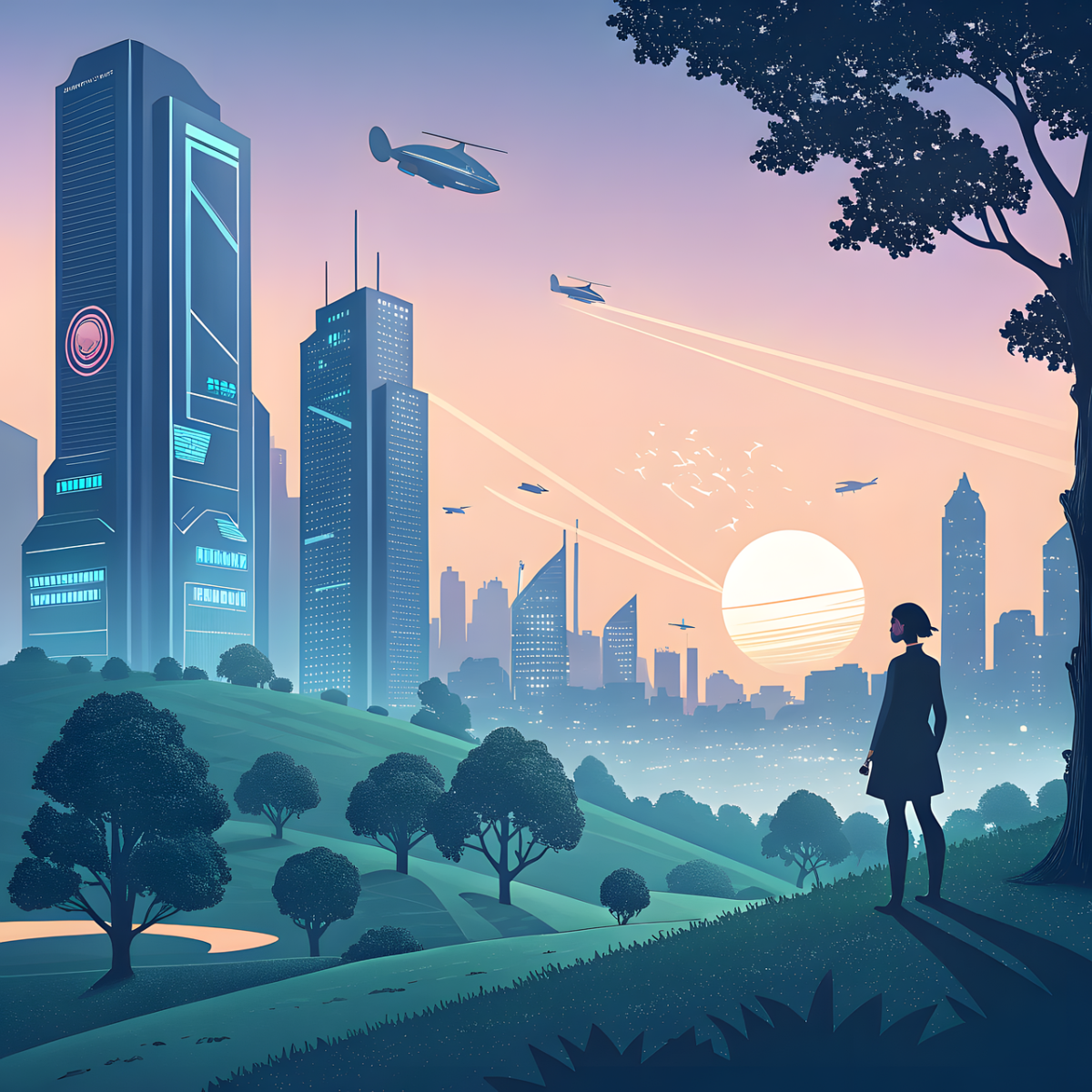
The Invisible Fabric of Tomorrow: Like 6G and IoT are restructuring Smart Cities.
Imagine walking through a metropolis where traffic lights do not follow fixed stopwatches, but react in real time to the flow of pedestrians and autonomous vehicles. A city where power systems and water distribution are able to predict leaks and cure its own structural flaws even before any citizen notices a problem. This reality, which seemed restricted to science fiction pages, gains practical contours with the arrival and maturation of 6G technology. By transcending the barriers of connectivity we know, the next generation of mobile networks arrives to act as the real nervous system of the Internet of Things (IoT), transforming urban centers into living, hyper-connected and deeply intelligent ecosystems.
Overcoming Limits: The 5G Jump to the Terahertz Era
Although 5G has opened doors for initial automation, the demands of a truly intelligent city run into physical bandwidth limitations and simultaneous processing capacity. It is in this bottleneck that 6G redefines the technological board. Operating at Terahertz (THz) frequency, the new network does not just deliver an impressive speed — which can reach the mark of up to 1 Terabit per second —, but solves the biggest nightmare of the current urban infrastructure: the density of connections.
The 6G is capable of supporting up to 10 million connected devices per square kilometer. This quantum leap allows each public lamp, manhole, pollution sensor and shared vehicle to dialogue with each other without suffering from network congestion, enabling the concept of the Internet of All Things (IOE).
Integrated Sensing: The City to See Without Cameras
One of the biggest silent revolutions of this new architecture meets the name ISAC (Integrated Sensing and Communication, or Integrated Sensing and Communication). In previous networks, sending data and mapping the physical environment required totally different hardware and frequencies. In the 6G ecosystem, the radio signal itself acts as a biological radar.
The antennas and intelligent reflective surfaces spread across the buildings begin to map the movement, measure distances and monitor environmental conditions using the ricochet of the network waves themselves. In practice, urban intelligence can optimize road traffic or monitor large agglomerations for real-time public safety, without the need to install thousands of invasive cameras, preserving citizens' visual privacy while raising efficiency to the maximum level.
Impact on Sustainability: With 6G and sensors IoT of very low energy consumption, intelligent buildings manage their own electricity consumption and integrate renewable sources into the power grid in a predictive way, drastically reducing the footprint of urban carbon.
From Automatic Reaction to Auto-Repaired Infrastructure
The great key to life in cities will be the change from reactive public management to predictive governance. Thanks to the latency in the microseconds' home and the natively integrated Artificial Intelligence at the heart of the 6G network (the so-called Edge AI), massive data processing takes place on the edge, that is, right there on the street, without having to travel to a distant cloud server.
This gives rise to self-healing systems. If an energy transformer or a central water pipe presents an anomalous microvibration, the IoT sensors detect the pattern, the network AI diagnoses wear and the system automatically redirects the flow of resources through alternative pathways, triggering the maintenance team before a blackout or rationing occurs. The urban flow never stops; it adapts.
The Challenge in Horizon and the Future That Expects Us
The transition towards this hyperconnected utopia does not happen without friction. The design of these new metropolises requires massive investments in new antennas, rigorous cybersecurity solutions to shield government data and a mature ethical debate on citizens' privacy within an ecosystem that detects everything.
However, the horizon designed by the fusion between 6G and IoT points to a path without turning back. The smart cities of the future will no longer be piled up with concrete and asphalt monitored by computer screens; they will become dynamic, efficient and human environments, where technology ceases to be an accessory and becomes the oxygen that enables sustainability and collective well-being. -
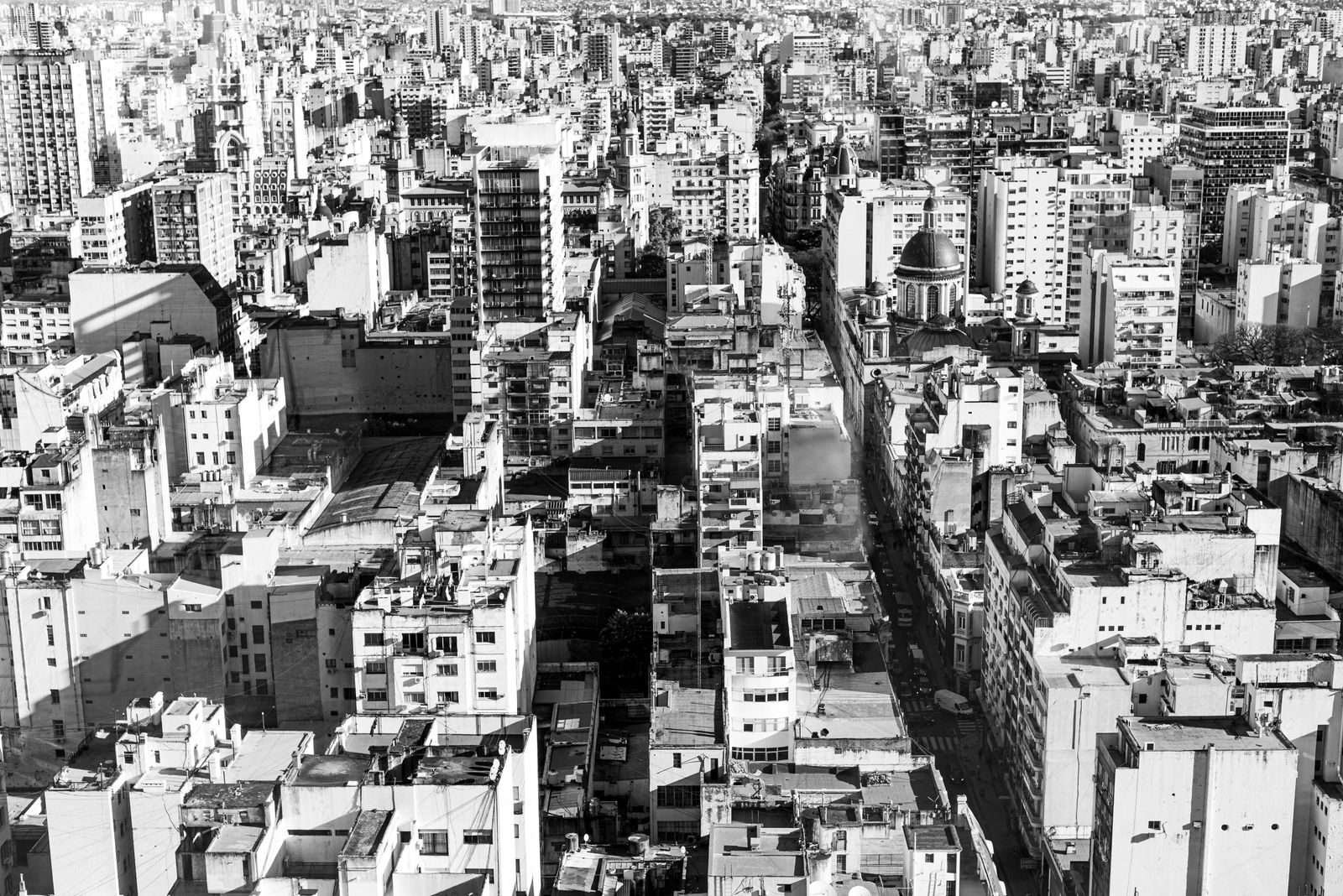
The shine of the Neons on the Broken Asphalt: The Paradox of Urban Distopia.
The future that once inhabited only the pages of science fiction or film screens seems, every day, more integrated with our present. When we think of the projections of a hypertechnological tomorrow, the mind draws colossal skyscrapers tearing up charged clouds, holographic ads covering entire facades and artificial intelligences shaping every aspect of everyday life. However, the true core of the dystopic concept lies not in the presence of technology, but in the abyss that opens between technical advancement and human and urban degradation. It is the classic axiom of the cyberpunk genre summed up brilliantly by writer William Gibson: "The future is already here — It's just not evenly distributed."
In this scenario of violent contrasts, technology advances at large paces as urban infrastructure and social fabric go into frank decay. The cities of the future dystopian function as fractured organisms. At the top, or in hypervigidated and exclusive areas, the elite enjoys advanced biotechnology, total automation and immersive virtual realities that offer a perfect escape from reality. On the streets below, however, the scenario is completely abandoned. The cracked asphalt divides space with exposed fiber optic cables, and public lighting fails is replaced by the incessant glow of corporate neons who sell products that the overwhelming majority of the population can never afford.
This urban decay is the physical reflection of deep social decay. As the state retreats or merges into the interests of monopolistic megacorporations, basic social guarantees disappear. Extreme automation and artificial intelligence, which could free humanity from degrading work, become tools of mass exclusion, pushing massive portions of the population to unemployment or to the precarious informality of a technological subsistence economy. Connectivity, ironically, does not generate unity; it generates isolation. Individuals navigate hyperconnected neural networks as they walk through superpopulous and unhealthy alleys, living a collective loneliness where real human contact is a luxury in extinction.
The urban environment also charges its price. The uncontrolled industrial advance and climate neglect transform the climate of metropolises into a perpetual cycle of acid rain, visual pollution and toxic mist. Nature is privatized; trees and clean air become commodities accessible only to those who can afford the air-conditioned summits of high-class neighborhoods. For ordinary citizens, survival requires adaptation to a hostile ecosystem, where obsolete air filtration devices and second-hand cybernetic prostheses are remedied analogically, creating an aesthetic of "high technology, low quality of life".
Looking at this dystopic future should not be an exercise of mere pessimism, but rather an urgent alert. Technological advancement, isolated from an ethical and social commitment, is not synonymous with progress; it is only the sophistication of inequality. As machines become more intelligent and efficient, the true measure of our development will remain the way we take care of the space we share and the people who inhabit it. After all, it's no use touching the stars with your fingertips if your feet remain stuck in the mud of a fractured society.