
Imagine walking through a metropolis where traffic lights do not follow fixed stopwatches, but react in real time to the flow of pedestrians and autonomous vehicles. A city where power systems and water distribution are able to predict leaks and cure its own structural flaws even before any citizen notices a problem. This reality, which seemed restricted to science fiction pages, gains practical contours with the arrival and maturation of 6G technology. By transcending the barriers of connectivity we know, the next generation of mobile networks arrives to act as the real nervous system of the Internet of Things (IoT), transforming urban centers into living, hyper-connected and deeply intelligent ecosystems.
Overcoming Limits: The 5G Jump to the Terahertz Era
Although 5G has opened doors for initial automation, the demands of a truly intelligent city run into physical bandwidth limitations and simultaneous processing capacity. It is in this bottleneck that 6G redefines the technological board. Operating at Terahertz (THz) frequency, the new network does not just deliver an impressive speed — which can reach the mark of up to 1 Terabit per second —, but solves the biggest nightmare of the current urban infrastructure: the density of connections.
The 6G is capable of supporting up to 10 million connected devices per square kilometer. This quantum leap allows each public lamp, manhole, pollution sensor and shared vehicle to dialogue with each other without suffering from network congestion, enabling the concept of the Internet of All Things (IOE).
Integrated Sensing: The City to See Without Cameras
One of the biggest silent revolutions of this new architecture meets the name ISAC (Integrated Sensing and Communication, or Integrated Sensing and Communication). In previous networks, sending data and mapping the physical environment required totally different hardware and frequencies. In the 6G ecosystem, the radio signal itself acts as a biological radar.
The antennas and intelligent reflective surfaces spread across the buildings begin to map the movement, measure distances and monitor environmental conditions using the ricochet of the network waves themselves. In practice, urban intelligence can optimize road traffic or monitor large agglomerations for real-time public safety, without the need to install thousands of invasive cameras, preserving citizens' visual privacy while raising efficiency to the maximum level.
Impact on Sustainability: With 6G and sensors IoT of very low energy consumption, intelligent buildings manage their own electricity consumption and integrate renewable sources into the power grid in a predictive way, drastically reducing the footprint of urban carbon.
From Automatic Reaction to Auto-Repaired Infrastructure
The great key to life in cities will be the change from reactive public management to predictive governance. Thanks to the latency in the microseconds' home and the natively integrated Artificial Intelligence at the heart of the 6G network (the so-called Edge AI), massive data processing takes place on the edge, that is, right there on the street, without having to travel to a distant cloud server.
This gives rise to self-healing systems. If an energy transformer or a central water pipe presents an anomalous microvibration, the IoT sensors detect the pattern, the network AI diagnoses wear and the system automatically redirects the flow of resources through alternative pathways, triggering the maintenance team before a blackout or rationing occurs. The urban flow never stops; it adapts.
The Challenge in Horizon and the Future That Expects Us
The transition towards this hyperconnected utopia does not happen without friction. The design of these new metropolises requires massive investments in new antennas, rigorous cybersecurity solutions to shield government data and a mature ethical debate on citizens' privacy within an ecosystem that detects everything.
However, the horizon designed by the fusion between 6G and IoT points to a path without turning back. The smart cities of the future will no longer be piled up with concrete and asphalt monitored by computer screens; they will become dynamic, efficient and human environments, where technology ceases to be an accessory and becomes the oxygen that enables sustainability and collective well-being.
Blog
-
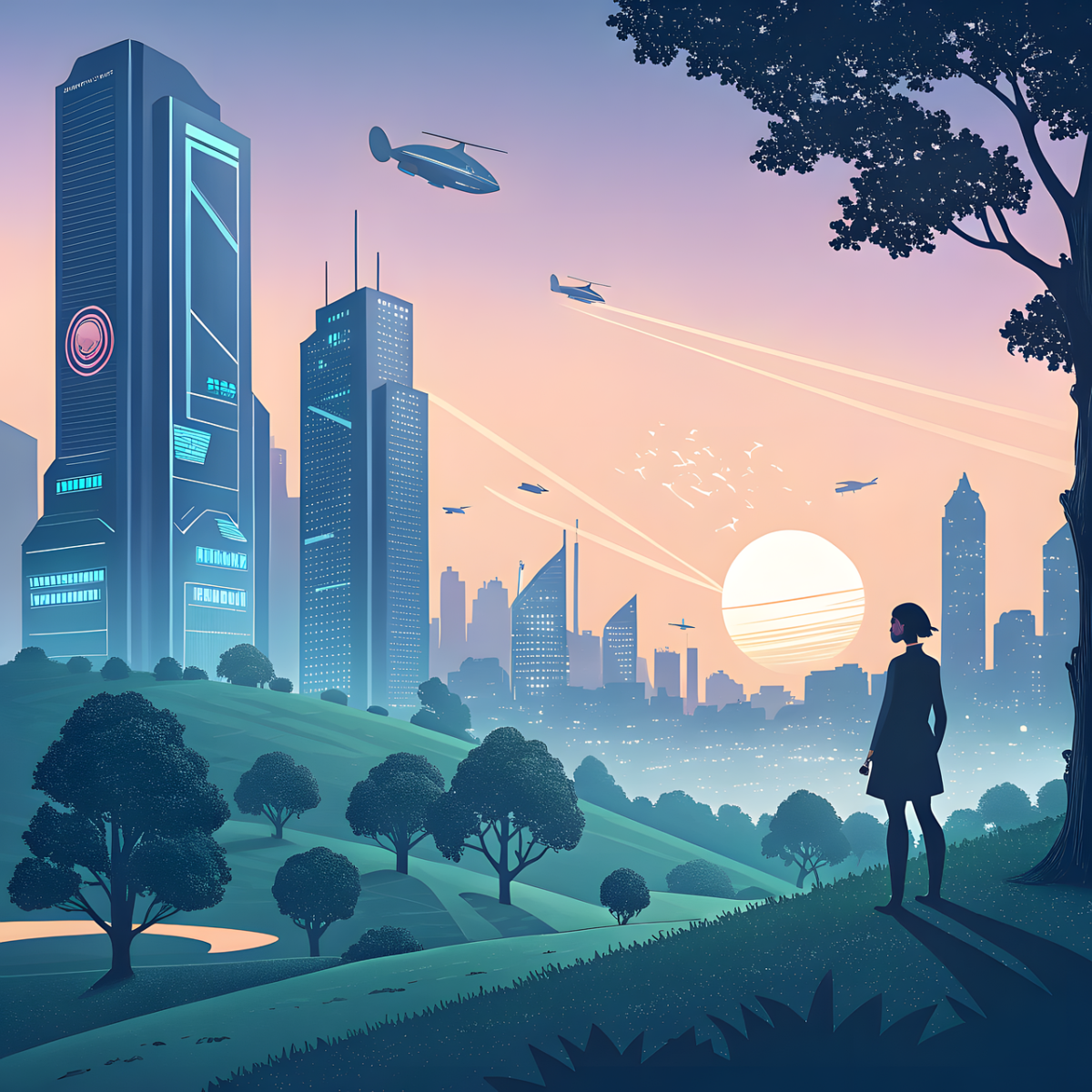
The Invisible Fabric of Tomorrow: Like 6G and IoT are restructuring Smart Cities.
-

From Brush to Pixel: How Artificial Intelligence Can Be the Traditional Artist's New Ally.
The transition from fabric to glass screen has always been a land surrounded by hesitation for traditional artists. The smell of oil paint, texture of textured paper and watercolor unpredictability have a difficult physical magic to replicate. However, the current artistic scene presents a new frontier: the fusion of digital painting with the tools of Artificial Intelligence (IA). Far from being a threat to authenticity, AI can act as an incredibly versatile studio assistant, helping translate its classic baggage into the digital environment in a fluid and innovative way.
The Start Point: Scanning Your Identity
The biggest mistake a traditional artist makes when migrating to digital is trying to start over. Its greatest strength is its baggage: the understanding of color theory, anatomy, light and shadow. The migration process begins in the physical world.
Instead of fighting a blank canvas in painting software (such as Photoshop, Procreate or Krita), you can use your own graphite sketches or pen studies as a base. By scanning a linear design, integrated AI tools or image generation software (such as Midjourney or Stable Diffusion) can be used to test complex color schemes or dramatic illuminations in seconds, serving as an ultra-fast "painting study" that will guide your real digital brush strokes.
AI as Copilot of Creation and Concept
In the traditional method, changing the composition of a work in the middle of the process may mean losing work days. In the digital environment supported by AI, this creative block is dissolved. The role of AI here is that of co-creator in the planning phase, using concepts such as:
Generation of Custom References: Do you need to paint a Renaissance armor under the sunset on Mars? Instead of spending hours at Pinterest, you can guide AI to generate exact references that combine these elements, serving as inspiration for your manual painting.
Style Variation: You can feed an AI with an authorial sketch and ask it to design how that image would be if it was influenced by Impressionism or Baroque, opening up new aesthetic perspectives before you even choose digital brushes.
Mental note: The AI generates the suggestion, but the execution, refinement and human sensitivity of the final brushstroke remain entirely theirs. It accelerates the brain; you command the hand.
The Hybrid Workflow in Practice
To structure this transition in a theoretical way, we can divide the ideal workflow into four clear stages, uniting the best of both worlds:
Human Spark (Analogical): Creation of the concept, thumbnails and structural pencil drawing on paper.
The Horizon Expansion (IA): Upload from the sketch to an AI tool. Use of Img2Img techniques (image for image) with text commands (prompts) to generate atmosphere variations, color palette and textures.
Digital Structure (Software): Import of the original sketch and the best variations of AI to separate layers in your digital painting software.
Human Painting (Digital): Using a scanning table to paint on top, correct distortions that the AI usually commits (such as hands anatomy or confusing perspectives) and apply its unique personal style.
Overcoming Prejudice and Embracing Evolution
Historically, every major technological transition caused discomfort. The photograph was already seen as the end of the painting, and the appearance of Photoshop itself generated heated debates in the 1990s. Artificial intelligence is just another tool on your desktop — a digital pigment that responds to conceptual commands.
By migrating to digital painting with the support of AI, you are not abandoning your traditional art; you are expanding your studio to a dimension where experimentation time is instantaneous and the possibilities of creation are virtually endless. The brush changed, the canvas evolved, but the mind behind the work remains yours. -

The Future That Has Already Come: Like Science Fiction It anticipated our world and what it prepares for tomorrow.
For decades, science fiction has ceased to be just stories of adventures in distant galaxies to become a curious mirror and a surprising compass of the reality in which we live. Authors who wrote in the last century, when many technologies seemed impossible, managed to draw with impressive precision equipment, customs and transformations that today are part of our daily lives. — And they keep pointing paths to what is yet to come.
Many of the creations they today consider common were first described on the pages of books or on the screens of cinema. By the middle of the 20th century, for example, authors already imagined small devices, capable of storing all the information in the world and connecting people from anywhere: that's exactly what the smartphones we carry in our pocket do. They also anticipated video conferencing, artificial intelligence that responds to our commands, routine space travel, printers that create layer objects per layer and even social networks and virtual reality. In many cases, these narratives served as inspiration for scientists and inventors: by showing how useful or how dangerous a new resource would be, they helped define what was worth developing.
But science fiction is not limited to guessing devices: it also reflects the consequences of technology. Ancient authors have raised questions about privacy, about the relationship between humans and machines, about how innovation can reduce or expand inequalities — issues we face today directly.
And when we look forward, modern authors follow the same path, casting their bets on what will come. Many explore biotechnology: the possibility of curing genetic diseases, adapting the human body to live in other environments or even prolonging life in a healthy way. Others focus on sustainability, imagining technologies capable of reversing environmental damage, generating clean energy on a global scale, or creating cities that live in harmony with nature. There are also stories that deepen coexistence with conscious artificial intelligences, exploration and colonization of other planets, and profound transformations in the way we relate, work and understand what it means to be human.
More than predicting the future accurately, science fiction plays a key role: it makes us think ahead. When presenting different scenarios — the most promising and the most worrying — It helps us choose which paths we want to follow, ensuring that technology is always a tool to make life better, not a burden. The future we will live in tomorrow often begins in the imagination of those who write today. -

The Theatre of Modern Shadows: How Silent Power Draws Who You Are
People know what they're doing and often understand why their immediate choices are. What hardly anyone sees, however, are the profound and invisible consequences of their daily acts. We live in an ecosystem where power no longer presents itself with a crown or uniform; it operates in a subtle, capillarated way, shaping behaviors, defining identities and determining even our perception of what truth is.
This dynamic is evident in our most banal routines. When you access social networks under the legitimate justification of keeping yourself informed and connected, you are also feeding, without realizing, voracious algorithmic gears that collect behavior data in real time. Every unpretentious like, every second stopped in a video, turns into valuable, packaged and negotiated information. The direct consequence of this is the narrowing of your own reality: the machine actively interferes with what you have the right to see or fail to see later, creating custom bubbles that limit critical thinking.
This contemporary surveillance is the direct evolution of deep historical structures. Current debates on authority, privacy and the direction of democracy echo the same logics that gave rise to the birth of modern - day prisons and surveillance systems centuries ago. The big difference is that the stone walls turned into lines of code. Historically, society has always used institutions to decide what is considered "normal" and what needs to be rigidly isolated. It is this same mechanism of power that, over time, dictated the rules to separate what most classify as "are" from what it labels as "crazy", controlling the bodies and minds that deviate from the productive pattern.
The great trap of our age lies in the false dualism between oppression and freedom. Often, movements and technologies that emerge with promises of total liberation end up creating new and sophisticated forms of oppression. The utopia of unrestricted connectivity has become the digital panoptic.
Given this scenario, resistance requires a change of perspective. It is necessary to understand that power does not belong to a single person, government or centralized institution; it is spread throughout the social relations network. Just as the control is decentralized, so must the counter-offensive. True autonomy is not born from great noisy revolutions, but from small daily and conscious actions. It's these everyday micro-resistances. — the deviation of the automated flow, the break of algorithmic habit and the refusal to accept the imposed normality — that function as the only real way to escape total control and rescue our own humanity. -

Longevity Monitored: The Best Technologies to Take Care of Your Elderly Pet.
They age faster than we'd like. When the white hairs begin to dominate the snout and the rhythm of the games decreases, our dogs and cats enter the senior phase — a moment of life that requires careful looking and redoubled care. The good news is that technology has become a great ally of preventive veterinary medicine. Today, the so-called pet tech offers innovative tools that help monitor the health of elderly animals in real time, ensuring that they live this phase with maximum comfort, dignity and well-being.
One of the main innovations in the market is smart collars. Unlike common GPS trackers, these devices function as real smart clocks for pets. They track sleep patterns, levels of physical activity, heart and respiratory rate, and even the amount of times the animal scratches or licks itself. For an elderly dog or cat, a subtle change in sleep pattern or a drastic decrease in movement may be the first sign of joint pain (such as osteoarthritis) or the beginning of cognitive dysfunction. When generating detailed reports through applications, these collars allow tutors to detect anomalies even before the symptoms are evident to the naked eye.
Gold Tip: Many of these applications allow you to export health data directly to the WhatsApp or e-mail from the veterinarian, facilitating clinical follow-up at a distance.
Another revolutionary and highly specific technology for cats is intelligent sandboxes. Cats are masters at hiding pain and malaise, and kidney or urinary problems are extremely common in feline old age. These devices monitor the weight of the animal at each use, the frequency of visits to the box and even the volume of discarded urine. Some more advanced versions use color sensors to identify blood or changes in urine pH. Any abrupt alteration generates an immediate alert in the tutor's cell phone, which is crucial to prevent severe obstruction or chronic renal failure.
In addition to wearables and sanitary devices, the technology has also transformed the indoor routine with automatic feeders and water coolers with microchip reading. In homes with more than one animal, ensuring that the elderly pet is feeding properly and consuming their medicated food (without the youngest pet stealing it) has always been a challenge. These feeders only open the lid when the sensor identifies the microchip of the correct animal. In addition, they record exactly how many grams of food and how many milliliters of water have been consumed throughout the day, helping in strict weight control and hydration, vital factors for animals with diabetes or heart disease.
Finally, we must not forget the continuous glucose monitors (CGM) and portable blood pressure sensors, which were once exclusively human and today already have veterinary adaptations for home use under medical guidance. They avoid the stress of frequent visits to the clinic only for routine exams, something that can mask results (effect of the "white coat") and wear the elderly animal. Investing in these technologies does not mean replacing the role of the veterinarian, but extending the eyes of medicine into the home. After all, to repay the unconditional love of our best friends in old age is to guarantee them a painless routine, closely monitored and full of personalized care. -
Financial Education: The Way to Independence and Prosperity
Financial education has become an essential ability to navigate the complexity of the modern market. Understanding basic concepts such as compound interest, inflation and investment diversification is crucial to ensuring long-term security and prosperity.
The Power of Compound Interests
Small economies invested regularly can turn into large amounts over the decades. Time is the biggest ally of the investor, and starting early, even with little, makes a monumental difference in the accumulation of assets and in the conquest of financial independence.
Planning and Discipline
Having a clear budget and maintaining discipline in spending are the pillars of a healthy financial life. By prioritizing debt payments and creating an emergency reserve, the individual gains tranquility to make more strategic decisions and seize market opportunities.
-

Gig Economy: The Future of Work in the Connected Society
Remote work and digital collaboration tools have created "Gig Economy", where independent professionals offer their services globally. This model offers flexibility, but also challenges financial stability and labor rights.
The End of Geographical Borders
Companies can now hire the best talent anywhere in the world, optimizing costs and increasing the diversity of ideas. For the worker, this means the possibility of winning in stronger currencies and managing his own career autonomously.
Adaptation Required
To thrive in this new economy, professionals need to constantly invest in requalification and master digital tools. Adaptation capacity and continuous learning have become the most valuable assets in the contemporary labor market.
-

Circular economy: The Sustainable Future of Production and Consumption
The circular economy proposes a new model of production and consumption based on the regeneration of natural systems and waste disposal. Unlike traditional linear economy, this model focuses on keeping products and materials in use for as long as possible.
Benefits for Companies
Adopting circular practices can reduce operational costs and open new revenue flows through recycling and reuse. In addition, companies that prioritize sustainability gain competitive advantage and attract increasingly conscious consumers.
Positive Environmental Impact
The transition to a circular economy is essential for combating climate change and resource shortages. By redesigning industrial processes, we can create an economic system that is resilient, prosperous and respectful of the boundaries of our planet.
-
The Digital Economy: How Technology Is Molding the Global Market
The digital economy is transforming the way value is generated and distributed globally. From cryptocurrency to on-demand service platforms, new technologies are challenging traditional economic models and creating unprecedented opportunities for innovation.
The Role of Fintechs
Financial startups are democratizing access to banking and investment services. With lower rates and simplified processes, fintechs allow a larger portion of the population to actively participate in the financial market, boosting local economic growth.
Challenges of Regulation
As technology advances, governments face the challenge of regulating new assets and markets without suffocating innovation. The balance between legal certainty and economic freedom will be fundamental to the success of nations in the new global economy.
-
Music and AI: The New Border of Digital Composition
Artificial intelligence is inaugurating a new era in musical composition. From algorithms that generate complex melodies to automated mastering tools, technology is expanding the boundaries of creativity and allowing new artists to experience previously inaccessible sounds.
AI as Creative Tool
Unlike many think, the AI did not come to replace the musician, but to serve as a tireless collaborator. With it, it is possible to analyze harmonic patterns and suggest melodic paths that challenge human intuition, resulting in fascinating hybrid compositions.
Democratization of Production
Today, with a computer and AI-based software, anyone can produce studio-quality music. This democratization is giving voice to a global generation of independent producers who are shaping the sound of the future.
-

Blockchain in Music: Transparency and New Business Models
Blockchain technology is beginning to solve one of the oldest problems in the music industry: transparency in royalty payments. Through smart contracts, artists can receive their winnings directly and instantly at each execution.
NFTs and Exclusive Experiences
Non-fungal tokens (NFTs) allow musicians to sell unique digital works, limited editions of albums or even exclusive backstage access. This creates a new direct economy between creator and fan, eliminating intermediaries and increasing the artist's profitability.
Creative Sovereignty
By using decentralized technologies, the musician retains greater control over his intellectual property. The future points to a fairer music market, where technology ensures that the value generated returns to those who actually create art.
-

Shows on Metaverse: The Immersive Experience of Live Music
Virtual Reality (VR) and Augmented Reality (AR) are taking the live show experience into the fans' homes. Concerts in metaverses and 360-degree immersive performances offer a new form of interaction that transcends physical distance.
Digital Presence
Artists can now perform world tours without leaving a motion capture studio. These digital events allow real-time interactions with fans' avatars, creating a sense of community and spectacle that redefines the concept of "going to a show".
The Future of Entertainment
The integration of spatial audio and interactive visual elements makes each presentation unique. As RV devices become more accessible, the barrier between the physical and digital stages will continue to decrease, creating hybrid sensory experiences.

