
It was a mixture of chance, poorly tuned radio and much need for belonging.
In the late 1960 ’ s and early 1970 ’ s, in São Luís, some people began to pick up in short waves Caribbean seasons. Another version of the story says it was sailors and dockers who brought Jamaican Vinis through the port. One way or another, the records have arrived.
The first one was DJ Riba Macedo in 1975. He began playing the parties on the outskirts and the rhythm instantly glued to the black youth of the city. It wasn't just the music. That's what the lyrics said about poverty, racism, resistance, black pride. It sounded like their story, except with another accent.
And then came what really changed everything: the radios.
Inspired by Jamaica's sound systems, they became giant walls of sound boxes with dozens of amplifiers, lights, and a DJ in charge. Names such as the Golden Voice Canarinho of DJ Locksmith, one of the pioneers, became legendary. They dominated the clubs and the street parties. The radio dispute took thousands of people. And every booming song turned into a "melo" or a "stone" – the crowd often didn't even understand English, but baptised the music for the chorus I heard.
The reggae from there also looked different. More romantic, slower, to dance with two, quite different from the original Jamaican swing. Mixed with Bumba My Boi, Creole Drum, capoeira. It became fashion, way to talk, to dress in the colors green, yellow and red, to cut the hair.
For a long time he was marginalized and even repressed by the police, but he became too big to ignore. Today São Luís has over 200 active radiolas, hundreds of bands like the Jah Tribe, radio shows, theme bars. In 2018 the city inaugurated the Reggae Museum of Maranhão, the first outside Jamaica and the second in the world, and officially won the Reggae National Capital title.
That's why the nickname got so strong. As the director of the Museum said, Ademar Danilo: the reggae is Jamaican, of course, but it is also Maranhense now. It didn't come as a foreign invader, it came as a brother who was born elsewhere.
Category: Entertainment
Posts about cinema, theater, TV, games and internet.
-
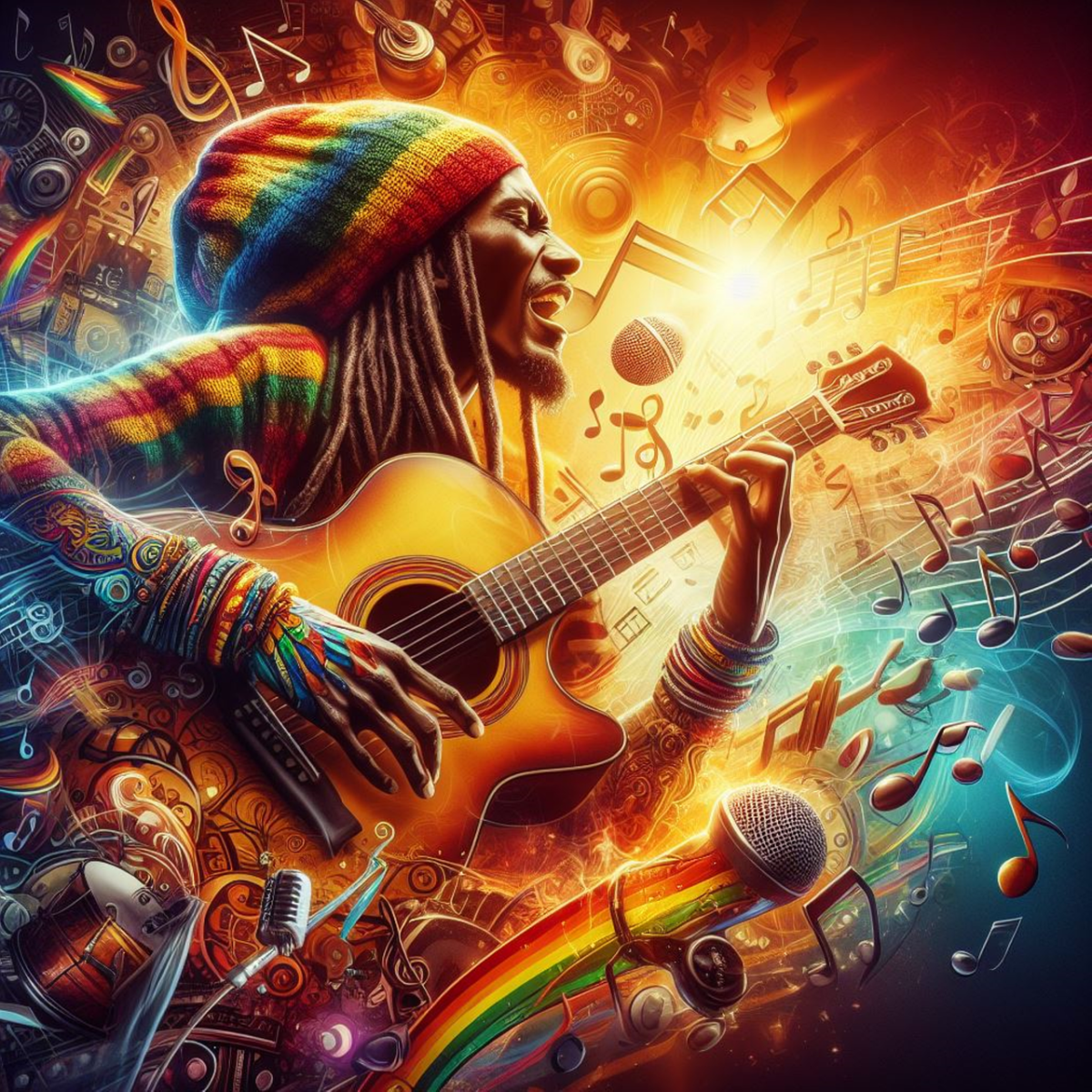
Like Maranhão, Brazil became Brazilian Jamaica
-
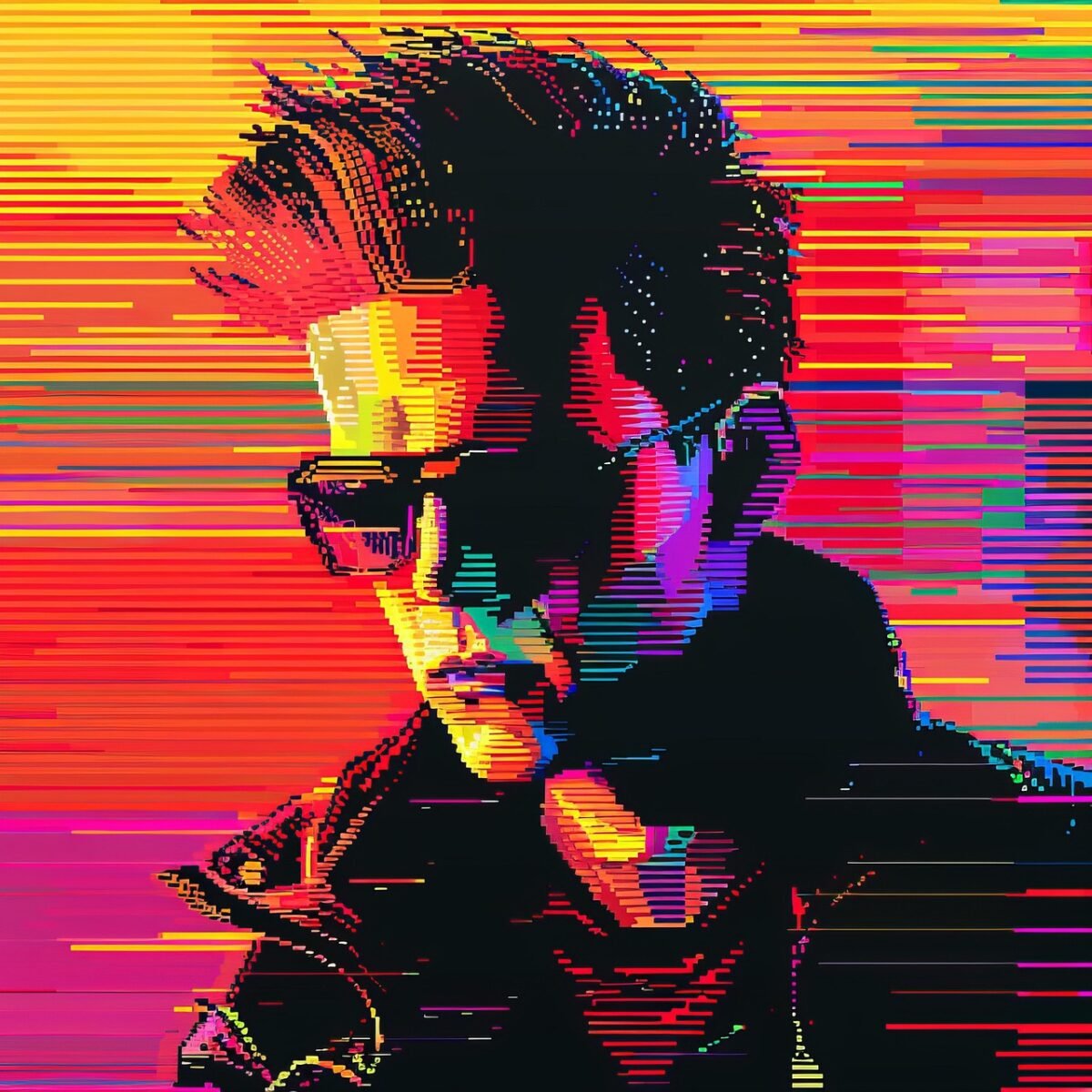
The Beauty of Error: Glitch Aesthetic and Digital Failure Poetics
The esthetics of glitch, historically seen as a technical failure to be corrected, emerged as one of the most authentic forms of artistic expression of the digital age. In the ecosystem of algorithmic perfection and impeccable design, error becomes an act of resistance and a celebration of imperfection. Philosophically, the glitch reminds us of the fragility of the systems that sustain our virtual reality: when the image is fragmented or the audio is distorted, the invisible infrastructure of the code is revealed. It is the moment when the machine "breathes" and shows its own nature, breaking the illusion of absolute digital transparency.
Poetically, glitch is the beauty of the unexpected, a choreography of misaligned pixels and saturated colors that arise from chaos. It is the art of finding harmony in disorder and meaning in noise. There is an intrinsic nostalgia in these distortions, referring to an era of analog technologies and unstable signals. Informatively, in 2026, "Glitch Art" consolidated itself as a cultural movement that influences from high fashion to interface design, proposing that true innovation often arises from a deviation on the planned path. The error ceased to be a sign of obsolescence to become an avant-garde symbol.
Technically, glitch aesthetics involves deliberate data manipulation (datamoshing) and file corruption to generate unique visual results. The ethical and aesthetic challenge is to maintain the spontaneity of error in a world where even failure can be simulated and marketed. Technology should be able to embrace the unforeseen as a source of creativity. In the end, the esthetics of glitch teach us that in an increasingly encoded world, it is our faults and the failures of our machines that make us truly unique — a celebration of beauty that resides in the broken.
-
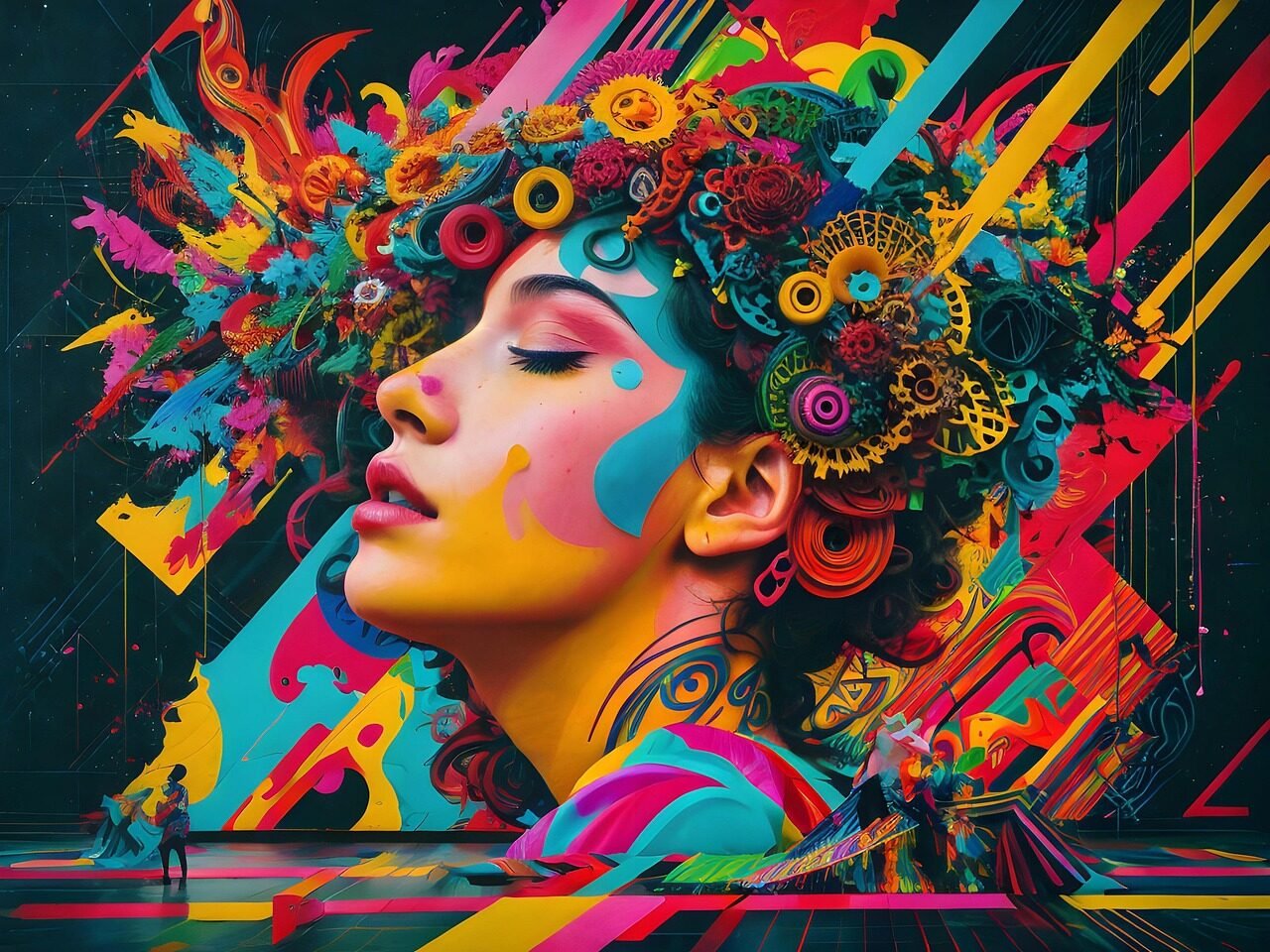
The Next Evolution: Cybernetics, Transhumanism and Man-Machine Fusion
Human evolution, historically dictated by the slow pace of biological natural selection, is being accelerated by direct integration with the machine. With the advancement of brain-computer interfaces and neural prostheses, the boundary between the organism and hardware becomes porous. Philosophically, transhumanism puts us before overcoming the fundamental limitations of the human condition: aging, physical fragility and finite cognitive capacity. If we can build up skills or expand our senses through external sensors, what still defines the "human" in a cybernetic being?
Poetically, cybernetics is the search for immortality by translating meat into code. It is the vision of a body that is no longer a destination, but a project in constant updating. There is a sublime and terrifying beauty in the idea that our consciousness may one day inhabit substrates more perennial than carbon. Informatively, in 2026, the first commercial high-bandwidth implants began to allow individuals to control digital environments with thought alone, inaugurating the era of "synthetic telepathy" and real-time increased AI cognition.
Technically, the future lies in reconstructive nanotechnology and synthetic biology, where silicon and DNA work in symbiosis to eradicate genetic diseases and extend longevity. The ethical challenge is the emergence of a new ontological inequality: who will have access to updates that define the "superior human"? Technology should not be a tool of segregation, but of emancipation from biological pain. In the end, cybernetics teaches us that the next stage of our journey will not be found on new continents, but in the rediscovery and expansion of our own infinite potential.
-
The End of Secret: Privacy in the Era of Radical Transparency and Predictive Surveillance
Privacy, historically understood as the right to be left alone, is becoming an anachronistic concept in a world of radical transparency. In the ubiquitous surveillance ecosystem, each digital trail is collected, processed and transformed into a predictive profile. Philosophically, the erosion of anonymity alters human behavior: if we know that we are being constantly observed, do we still have the freedom to be authentic or do we move on to the algorithm? Radical transparency is not only a technical feature, but a new existential condition where the boundary between the public and the private is permanently dissolved.
Poetically, living in the age of transparency is inhabiting a glass house under a sun that never sets. It's the loss of the shadow, the place where mystery and individuality used to flourish. There is an inherent vulnerability to being an open book for artificial intelligence systems that know us better than we do ourselves. Informatively, in 2026, the debate on "data sovereignty" reached its peak, with the emergence of homomorphic encryption technologies and decentralized networks that try to return to the individual control over his digital narrative, as opposed to the data extraction model of large corporations.
Technically, the future of privacy lies in "Differential Privacy" and Zero Knowledge Proof (Zero-Knowledge Proofs) systems, which allow you to validate information without revealing the underlying data. The ethical challenge is to balance collective security and algorithmic efficiency with the fundamental right to forgetfulness and obscurity. Technology must evolve to protect intimacy, not just to expose it. In the end, the era of radical transparency teaches us that privacy is not about hiding secrets, but about the power to decide what to share — the last frontier of human autonomy in cyberspace.
-
The Look Market: Attention Economy and Digital Vice Design Traps
Attention, historically an abundant and spontaneous resource, has become the scarcest and most valuable commodity of the 21st century. In the ecosystem of digital platforms, each second of focus is disputed by machine learning algorithms trained to explore psychological vulnerabilities. Philosophically, the economy of attention puts us in the face of a crisis of autonomy: if our choices of information consumption are shaped by dopaminergic reinforcements of "infinite scrolling", are we still the owners of our will? The design of addiction not only seeks engagement, but captures consciousness, transforming the user of subject into product.
Poetically, the economy of attention is a storm of noise that obscures the silence necessary for reflection. It is the fragmentation of time into micro-moments of stimulus that prevent us from inhabiting the present. There is a melancholy in the perception that our memories are being replaced by ephemeral feeds. Informatively, in 2026, global movements of "cognitive ecology" emerged, proposing interfaces that respect human rhythm and limit the exploitation of emotional triggers. The regulation of persuasive design has become a central human rights agenda, aiming to protect the mental health of a generation immersed in uninterrupted notifications.
Technically, addiction design uses "gamification" and "variable reward" techniques to keep the brain in a constant search state. The future challenge is the development of an "ethical care AI" that acts as a protective filter, helping the user prioritize what really matters instead of what is merely urgent or addictive. Technology must cease to be a drain of mental energy to become a support for intellectual depth. In the end, the economy of attention teaches us that true freedom in the digital age is not access to information, but the ability to choose where to look.
-

In addition to the Office: The Future of Work in Cyberspace and the Dissolution of Geographical Borders
The work, historically linked to physical displacement and geographical presence, is dissolving into global data flows. With the consolidation of spatial collaboration tools and artificial intelligence, the "office" ceased to be an address to become a state of connection. Philosophically, the future of work in cyberspace challenges us to separate our productivity from our physical identity: if we operate through avatars and autonomous agents, who is the true holder of labor? This transition marks the end of the industrial era of "beating the ground" and the beginning of an asynchronous result economy and cross-border collaboration.
Poetically, working in cyberspace is inhabiting an architecture of ideas. It is the possibility of collaborating in real time with minds in different time zones, united by interfaces that cancel the distance. There is a new freedom to draw your own routine, but also a risk of isolation in digital bubbles. Informatively, in 2026, the concept of "digital nomad" evolved to the "synthetic worker", where humans supervise AI fleets that perform operational tasks, allowing the focus to shift to the strategy, creativity and resolution of complex problems that the machine still cannot decipher.
Technically, the future lies in Extended Reality (XR) and haptic feedback, allowing manual and technical work to be performed remotely with surgical precision. The ethical challenge is the maintenance of mental health and disconnection: in a world where the office is everywhere, how can we ensure that the house remains a refuge? The work in cyberspace requires new labor laws and a new digital label that respects human boundaries. In the end, the future of work teaches us that value is no longer in the presence, but in the contribution — a global network of talents woven by fiber optic cables and creative ambition.
-
Code Cities: Digital Architecture and the Soul of New Urban Centers
The city, historically the stage of stone and concrete, is becoming a living organism of data. With the integration of ubiquitous sensors and high-speed networks, architecture ceases to be static to become responsive. Philosophically, the "intelligent city" forces us to rethink the urban social contract: if the environment around us anticipates our needs, where does convenience end and predictive surveillance begin? Public space is being coded, and digital architecture proposes a new way to inhabit, where the flow of information is as vital as the flow of people.
Poetically, intelligent cities are terrestrial constellations of light and silicon. It is the vision of facades that change opacity according to the sun or humor of the square, and of streets that light up only when they feel the step of a walker. There is an invisible harmony in chaos organized by traffic and energy algorithms. Informatively, in 2026, global metropolises began to implement the Digital Twin (Digital Twin), an exact virtual replica of the city that allows to simulate natural disasters, migratory flows and climate impacts even before they occur in the physical world. Urban infrastructure thus becomes a constantly updated software interface.
Technically, the future of architecture lies in urban-scale 3D printing and the use of biosynthetic materials that absorb CO2. Cities cease to be passive consumers of resources to become circular ecosystems, where artificial intelligence optimizes every drop of water and every kilowatt. The ethical challenge is to ensure that this efficiency does not erase the spontaneity and diversity that make urban life human. In the end, digital architecture teaches us that the city of the future is not only made of glass and steel, but of connections — a neural network of concrete and code that breathes along with its inhabitants.
-

Fabrics of Light: Digital Fashion and Identity Beyond Matter
Fashion, historically the mirror of physical identity and social status, is crossing the mirror into the domain of the intangible. With the rise of metaverses and increased reality, the "clothing" is no longer just a thermal protection or a textile adornment to become a software. Philosophically, digital fashion frees us from the limitations of biology and gravity: how is self-expression defined when we can wear flames, liquid light or textures that change according to our mood? This transition marks the birth of "fluid identity", where the virtual self is no longer bound by the proportions or laws of physics of the material world.
Poetically, dressing on the digital is an act of sculpture of light. It is the possibility of being a walking work of art in shared environments, where the fabric is replaced by pixels and shaders. There is a radical freedom to unlink the aesthetics of industrial mass production. Informatively, the market for skins and digital clothing moved billions in 2026, with large luxury homes creating exclusive NFT collections that will never touch a cotton fiber. Sustainability appears here as a powerful technical argument: digital fashion allows unbridled consumption of trends without the environmental cost of resource extraction, water pollution or textile disposal, offering an ethical alternative to the fast fashion culture.
Technically, the future of digital fashion lies in the integration of Augmented Reality (AR) through smart glasses, allowing us to see each other's digital garments superimposed on the physical world. The challenge now is interoperability: how to ensure that a digital costume acquired on a platform can be "dressed" throughout the digital ecosystem? Digital fashion is not just about aesthetics; it is about the property of our image in a world where we spend more time being watched by lenses than by human eyes. In the end, digital fashion teaches us that identity is, and always has been, a construction — Now, we just swap the loom for the code.
-

The Phantom in the Machine: Algorithmic Literature and Digital Authoring Redefinition
Writing has always been considered the last stronghold of the human soul, the direct translation of thought into symbols that pass through time. However, when comparing the literature generated by large-scale language models (LLMs), we are obliged to redefine the concept of authorship. Philosophically, AI does not "write" in the human sense of expressing an experience; it performs a probabilistic synthesis of the entire library of civilization. The dilemma lies in the intention: can there be literature without a subject who suffers, love or theme death behind words? We are migrating from an era of "writers" to an era of "curators of prompts", where creativity moves from execution to ethical and aesthetic conception.
Poetically, algorithmic literature is a thousand-faced mirror. It can emulate the style of Guimarães Rosa or the precision of Clarice Lispector, creating pastiches that challenge our ability to distinguish. There is a ghostly beauty in reading verses that sound deeply human, but were generated by an architecture of transformers. Informatively, in 2026, the publishing market saw the emergence of "fluid novels", where the reader can adjust the tone, level of complexity vocabular or even the fate of the characters in real time, turning the book into an interactive and personalized experience that never ends. The original author becomes the architect of a universe of possibilities, and no longer the owner of a unique narrative.
Technically, the evolution to multimodal models allows AI to generate not only the text, but also the voice sounds of the narrator and illustrations that adapt to the rhythm of reading. The future challenge is the preservation of cultural diversity: how to prevent literature from becoming a statistical average of what has already been written, eliminating the rupture and error that characterize the great works of vanguard? The literature of the future will be a symbiosis, where the machine offers the immensity of the repertoire and the human offers the spark of subversion. In the end, words continue to be what they always were. — bridges to each other — Even if the other one, this time, is an algorithm that has learned to imitate us perfectly.
-
The Reimagined Light: Computer Photography and the Death of the Pure Optical Record
Photography, since its birth in the 19th century, was defined as the "writing of light". Capturing an instant was an act of freezing physical reality on a chemical or electronic medium. However, we are crossing the border into the era of computational photography, where the image ceases to be a pure optical record to become a statistical inference. Philosophically, this changes our perception of testimony: If a smartphone reconstructs the texture of the skin or the sharpness of the moon through neural networks, are we facing a photo or a digital painting based on data? The "truth" of the image now lies in algorithmic likelihood, and no longer in fidelity to the original photon.
Poetically, computer photography is the victory of imagination over physics. It allows us to see in the absolute dark, revealing colors that the human eye does not reach, and focus on multiple planes simultaneously, challenging the laws of traditional optics. It's like the camera not only looks at the world, but dreams of it in high resolution. Informatively, the modern 200 megapixel sensors combine with neural processing units (NPUs) that perform trillions of operations per second to perform pixel binning and semantic segmentation, identifying each element of the scene. — sky, face, vegetation — and applying individualized aesthetic treatments in milliseconds.
Technically, the future points to "photography without lenses", where light field sensors and reconstruction algorithms can generate perfect images from raw diffraction data. The editing ceases to be a later process to become part of the capture act: the user can change the lighting of a portrait or the position of the sun after clicking. In the end, computational photography teaches us that reality is a subjective construction. In a world where each pixel is a mathematical decision, the art of photography becomes the art of curing simulation, proving that beauty, even digital, still needs the human look to be recognized as such.
-
The Silicon Symphony: Music, Algorithms and the New Frontier of Artistic Emotion
Music, in its purest essence, has always been the language of the ineffable, a bridge between silence and emotion. However, as we enter the second half of this decade, the harmony between man and the machine reaches a point of aesthetic singularity. Generating artificial intelligence is not only composing melodies; it is deconstructing the very notion of "creative genius". Philosophically, we are forced to question: if a symphony capable of bringing the listener to tears was generated by a silicon processor, is the emotion felt less real? Is art in the process of creation or the experience of reception? This shift of the creative axis puts us before a new digital romanticism, where mathematical perfection seeks to emulate human pain and joy.
Poetically, the music generated by algorithms is like an echo of a future that we haven't inhabited yet. It is made of fragments of the entire sound history of mankind, reorganized into patterns of infinite beauty. There is a strange nostalgia in listening to chords that evoke Chopin and synthesizers that resemble Kraftwerk, all fused into a fluid and changeable sound mass. Informatively, streaming platforms in 2026 began to offer "real-time adaptive music", where the soundtrack of your life changes according to your wearable heart rate or the rhythm of your walk. We no longer listen to static albums; we consume live sound flows that never repeat in the same way.
Technically, the use of opposing generating networks (ANGs) allows music producers to create timbres and instruments that never existed in the physical world. The human voice, now perfectly synthesized, can sing in forgotten languages or in frequencies that challenge the anatomy of the vocal cords. The future of music is co-creation: the artist defines the ethical and aesthetic parameters, while the AI explores the infinite possibilities within this space. In the end, music remains what it always was — an attempt to organize the chaos of the universe into something the heart can understand, even if now the conductors are made of code.
-
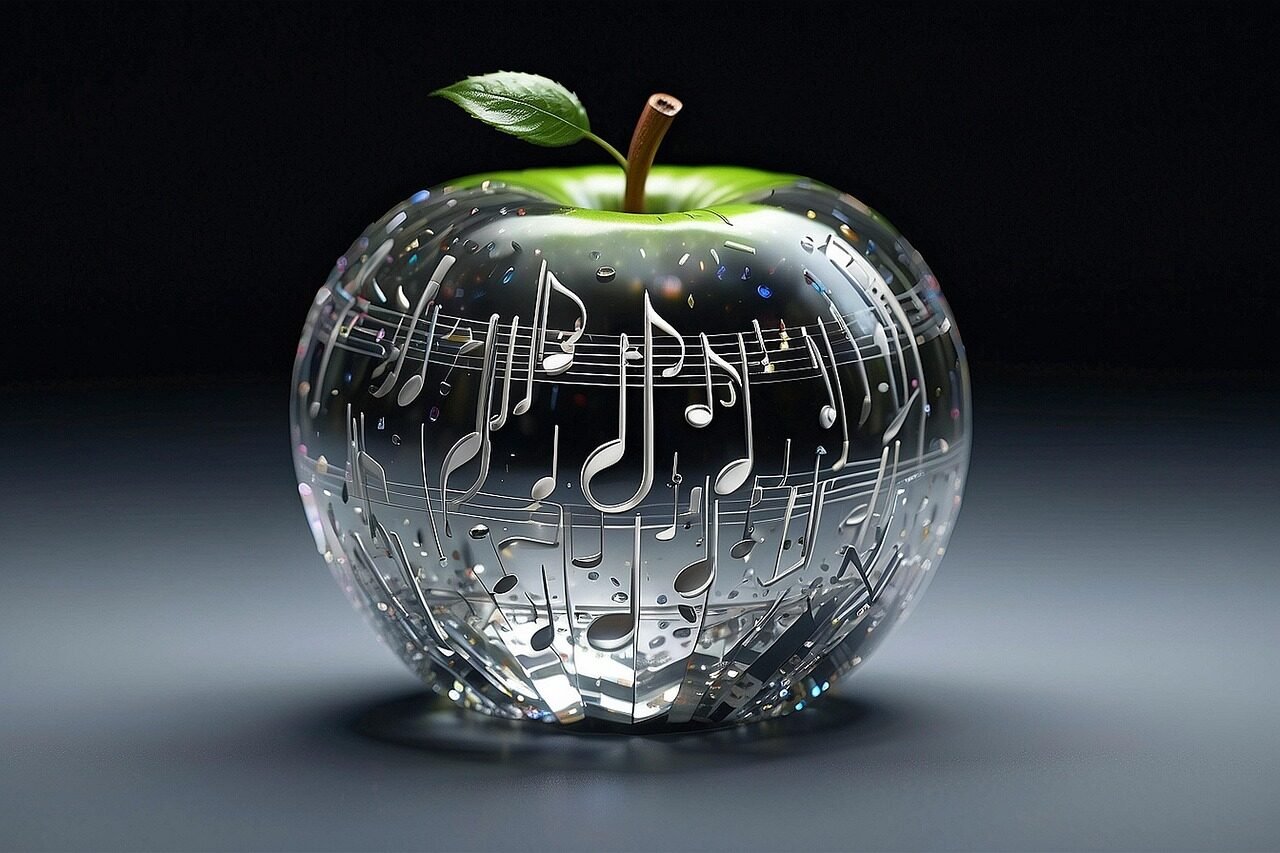
The Mirror Labyrinth: The Ethics of Algorithms in the Healing of Digital Truth
The Internet, which once promised to be the digital agora of absolute freedom, became a maze of mirrors ruled by silent algorithms. Philosophically, we live under the regime of "invisible healing," where our perception of truth is shaped by lines of code that prioritize engagement over precision. The ethical dilemma lies in the opacity of these systems: how can we exercise free will if the options presented to us were filtered by a mathematical logic that seeks to maximize screen time? The network architecture has ceased to be neutral to become an active agent in the construction of identities and polarization of discourses.
Poetically, the algorithm is the new destination. He knows our desires even before we formulate them, creating an artificial serendipity that comforts us, but also traps us in confirmation bubbles. There is a digital melancholy in the fact that our "spontaneous" discoveries are actually the result of probability calculations. Informatively, the European Union and other global bodies implemented in 2026 strict guidelines on algorithmic explanatoryness, requiring platforms to reveal why a particular content has been suggested. However, the complexity of deep learning neural networks (Deep Learning) makes this transparency an almost insurmountable technical challenge, creating a vacuum of responsibility between code creator and machine action.
Technically, the transition to Web 3.0 and decentralized systems seeks to restore data sovereignty to the user, but the computational power needed to process large volumes of information still favors the giants of technology. The future of internet ethics depends on the creation of "humanist algorithms", which not only seek profit through attention but promote cognitive diversity and mental well-being. As we navigate today, we participate in an invisible social contract where our privacy is the currency of exchange for a convenience that often costs us our own intellectual autonomy.

