Category: Entertainment

Posts about cinema, theater, TV, games and internet.

  • The Fragmented Mirror: Television and the Dissolution of Collective Time

    The Fragmented Mirror: Television and the Dissolution of Collective Time

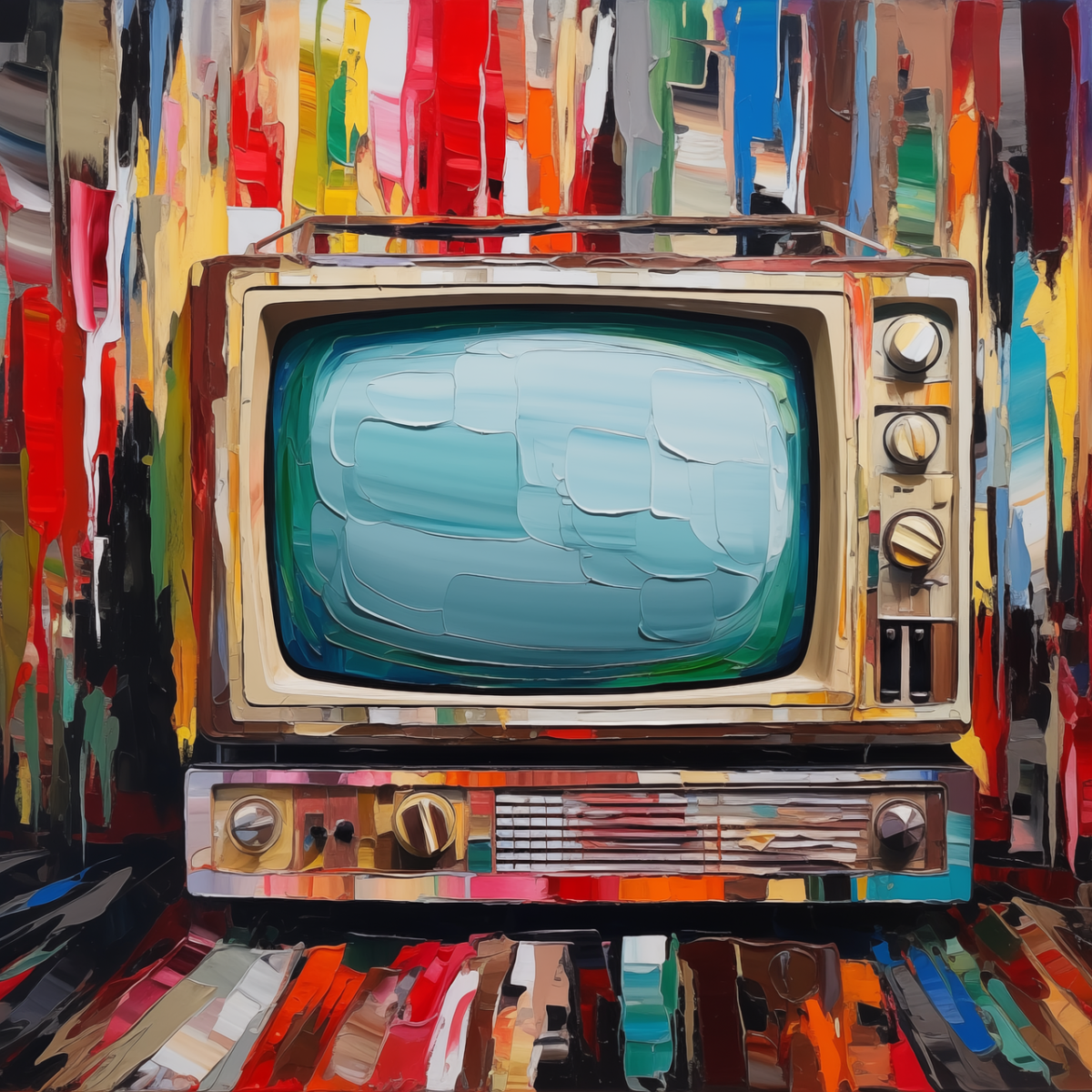
    Television, once the central altar of the living room, became a kaleidoscope of fragments. Where before there was the "programming program" — a time shared by an entire nation — Today there is the dictatorship of "on demand". Philosophically, this transition marks the end of synchronous collective experience. We're becoming consumer islands, where each viewer inhabits a narrative bubble cured by recommendation algorithms. TV is no longer a window to the world, but a mirror that reflects only what we already like, eliminating the surprise factor and confrontation with the different.

    Poetically, there is a melancholy beauty in the blue light emanating from the screens in lonely homes. The brightness of the TV now competes with the second screen of the smartphone, creating a divided and superficial attention. The television narrative adapted to this fragmentation, betting on frantic rhythms and constant hooks to avoid abandonment. Informatively, the streaming market reached its saturation point in 2026, forcing unprecedented consolidation. The platforms now use AI to predict not only what you want to watch, but at what exact moment of fatigue or euphoria you will open the app, even adjusting the color of the covers of the movies to attract your look.

    Technically, evolution to 8K and HDR10+ brought a hyper-reality that challenges human biology. The image is so clear that the brain sometimes struggles to process depth, creating what some theorists call "aesthetics of excess." The future of TV lies in total integration with the smart house, where the screen disappears to become part of the surfaces, and the narrative expands beyond the edges of the television, interacting with lighting and ambient sound to create an absolute sensory immersion. Television, therefore, did not die; it just dissolved in the architecture of our everyday reality.
  • The Poetics of the Ephemeral: The Theatre in the Age of Total Connectivity

    The Poetics of the Ephemeral: The Theatre in the Age of Total Connectivity

    Theater is the art of now, a pact of presence between the actor and the viewer that dissolves as soon as the lights go out. However, in the age of infinite technical reproducibility, the stage faces an ontological challenge: how to maintain the aura of "here and now" when everything can be captured and transmitted? The answer lies in the exploitation of the ephemeral. Contemporary theater does not fight technology, but uses it to amplify the fragility of the human moment. By integrating mapped projections and motion sensors, the scenario ceases to be static to become a breathing organism along with the performer.

    Philosophically, the theater reminds us of our own finitude. Unlike cinema, where performance is immortalized in frames, in theater every mistake, every breath and every silence are unique. It is a poetic resistance against the dictatorship of the algorithm that seeks to predict each of our steps. On stage, the unforeseen is what gives the scene truth. Informatively, we are seeing the emergence of "hybrid spectacles", where the audience at home can influence the enlightenment or direction of history through applications, creating a new form of participatory dramaturgy that expands the physical walls of the auditorium to the infinite space of the network.

    Informatively, the implementation of technologies such as 5G is allowing latencies so low that actors on different continents can counterstage on the same virtual stage, with holograms that interact in real time. This redefines the concept of "theatric company" and opens doors to unprecedented global collaboration. The theater of the future will therefore be a celebration of the human connection mediated by light, where the digital does not replace the body, but serves as an extension of the voice and gesture, proving that, even in a silicon world, the heart remains the center of all narrative.

  • The Metaphysics of Virtual Worlds: Freedom and Solitude in Open World Games

    The Metaphysics of Virtual Worlds: Freedom and Solitude in Open World Games

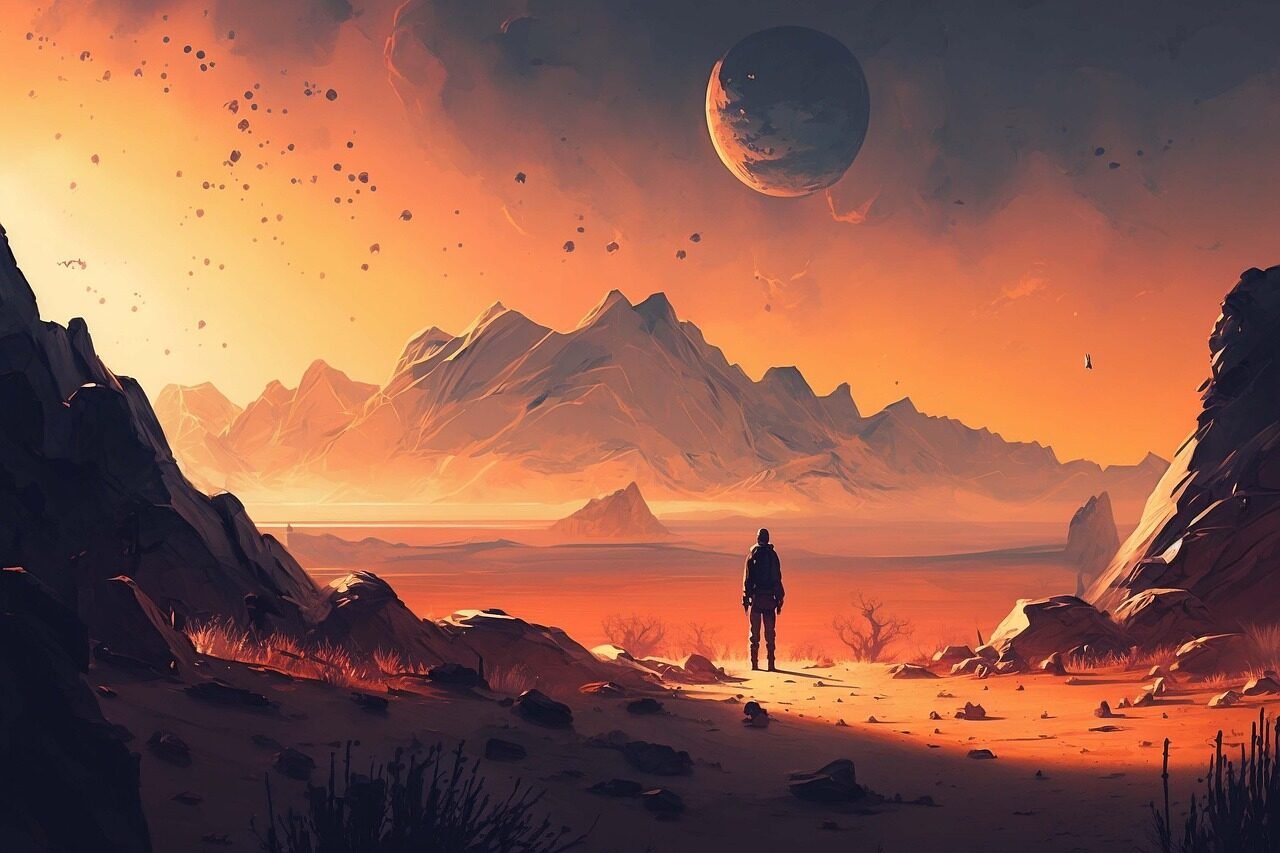
    What does it mean to inhabit a world that has no physical extension, but which pulses with the vivacity of a shared reality? Modern open world games are not just software engineering feats; they are existing laboratories. As we cross the digital borders of vast continents generated procedurally, we are confronted with the loneliness of the hero and the immensity of the code. Philosophically, these spaces invite us to question the nature of free will: are we truly free in our choices, or are we just browsing through a tree of pre-determined decisions by invisible architects?

    The poetry of these worlds lies in the unnecessary detail — the balance of the leaves of a tree that no one observes, the solar cycle that illuminates forgotten ruins. There is an inherent melancholy in knowing that each mountain on the horizon is a mathematical object, but that the emotion we feel when climbing it is genuinely human. It is the perfect synthesis between logos (the logic of the system) and pathos (the passion of experience). Informatively, the game industry now uses artificial intelligence systems to populate these worlds with dynamic ecosystems, where fauna and flora react autonomously, creating a sense of "presence" that was previously impossible.

    Technically, we are seeing the transition to the Metaverse not as a social network, but as an overlap of realities. Last generation graphics engines allow light to behave physically correctly (Ray Tracing), bringing digital aesthetics closer to biological perception. The player is no longer a mere observer, but a co-author of the narrative. The future of the games points to a dissolution of the barriers between the "me" and the "avatar", where identity becomes fluid and entertainment becomes a spiritual journey through territories of pure imagination.

  • Image Ontology: Cinema in the Age of Digital Simulation

    Image Ontology: Cinema in the Age of Digital Simulation

    The seventh art has always been a mirror of the human soul, but what happens when this mirror becomes polished by algorithms? We live in a moment of poetic and technical transition, where the cinematic image ceases to be just a record of reality to become a mathematical construction of subconscious desires. Contemporary cinema not only seeks to tell a story, but to create an ecosystem of sensations that challenge the viewer's perception of what is real and what is simulated.

    Philosophically, the digital image puts us before Plato's dilemma: are we just observing shadows in a cave of high-definition pixels? Field depth is now calculated, and light, once captured by the celluloid, is today a perfect emulation of nonexistent photons. This change alters our relationship with nostalgia and memory. If a scene can be generated perfectly by an AI, what is the value of human error, the "noise" that made classic cinema so viscerally close to our own imperfection?

    Informatively, the industry has invested billions in real-time rendering technologies, such as Unreal Engine, which allow directors to visualize entire worlds even before the first daily recording. This democratizes creation, but also centralizes aesthetic power in the hands of those who dominate software tools. The future of cinema lies in the symbiosis between artistic intuition and computational precision, where the script is a living organism, able to adapt to the emotional reactions of the public through biometric interfaces that are already being tested in media laboratories.

    So as we watch a movie today, we are not just consuming entertainment; we are participating in an ontological experiment. The screen is a portal to a new form of existence, where the poetry of light merges with the logic of the bit, creating a language that we are still learning to speak, but that we already feel pulsar in each high resolution frame.

  • Interactive Theatre: The New Border of Performing Arts

    Interactive Theatre: The New Border of Performing Arts

    The theater is reinventing itself in the digital age. Meet the productions that mix live performance with interactive elements and increased reality.

  • The Evolution of Games: From Pixel Art to Immersive Experiences

    The Evolution of Games: From Pixel Art to Immersive Experiences

    Electronic games have evolved from simple pastimes to complex immersive experiences. See how the narrative in the games is reaching the level of the great film productions.

  • Internet culture: Mainstream Content Creator Impact

    Internet culture: Mainstream Content Creator Impact

    Social media has changed the way we discover new talents. Discover how content creators are influencing the traditional entertainment industry.

  • The Future of Digital Entertainment: Trends for 2026

    The Future of Digital Entertainment: Trends for 2026

    Technology is transforming the way we consume entertainment. From streaming to virtual reality, discover trends that are shaping the future of cinema, games and TV.

  • AI in Cinema: How Algorithms Are Writing the Future of Screens

    AI in Cinema: How Algorithms Are Writing the Future of Screens

    Artificial intelligence is not only in the codes, but also in the scripts. Explore how AI is being used to create innovative narratives in cinema and TV.

EnglishenEnglishEnglish