
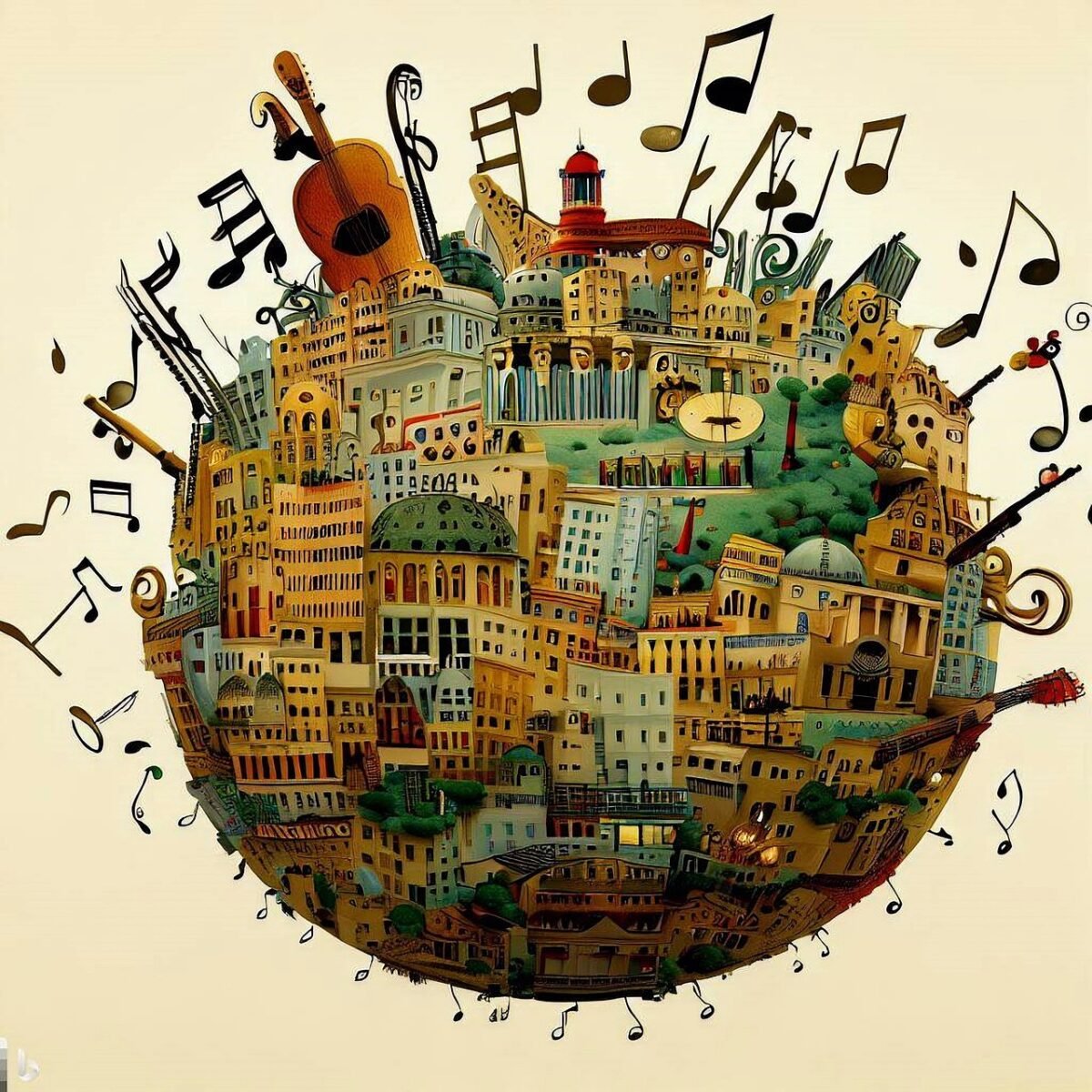
Music, in its purest essence, has always been the language of the ineffable, a bridge between silence and emotion. However, as we enter the second half of this decade, the harmony between man and the machine reaches a point of aesthetic singularity. Generating artificial intelligence is not only composing melodies; it is deconstructing the very notion of "creative genius". Philosophically, we are forced to question: if a symphony capable of bringing the listener to tears was generated by a silicon processor, is the emotion felt less real? Is art in the process of creation or the experience of reception? This shift of the creative axis puts us before a new digital romanticism, where mathematical perfection seeks to emulate human pain and joy.
Poetically, the music generated by algorithms is like an echo of a future that we haven't inhabited yet. It is made of fragments of the entire sound history of mankind, reorganized into patterns of infinite beauty. There is a strange nostalgia in listening to chords that evoke Chopin and synthesizers that resemble Kraftwerk, all fused into a fluid and changeable sound mass. Informatively, streaming platforms in 2026 began to offer "real-time adaptive music", where the soundtrack of your life changes according to your wearable heart rate or the rhythm of your walk. We no longer listen to static albums; we consume live sound flows that never repeat in the same way.
Technically, the use of opposing generating networks (ANGs) allows music producers to create timbres and instruments that never existed in the physical world. The human voice, now perfectly synthesized, can sing in forgotten languages or in frequencies that challenge the anatomy of the vocal cords. The future of music is co-creation: the artist defines the ethical and aesthetic parameters, while the AI explores the infinite possibilities within this space. In the end, music remains what it always was — an attempt to organize the chaos of the universe into something the heart can understand, even if now the conductors are made of code.


Leave a comment