
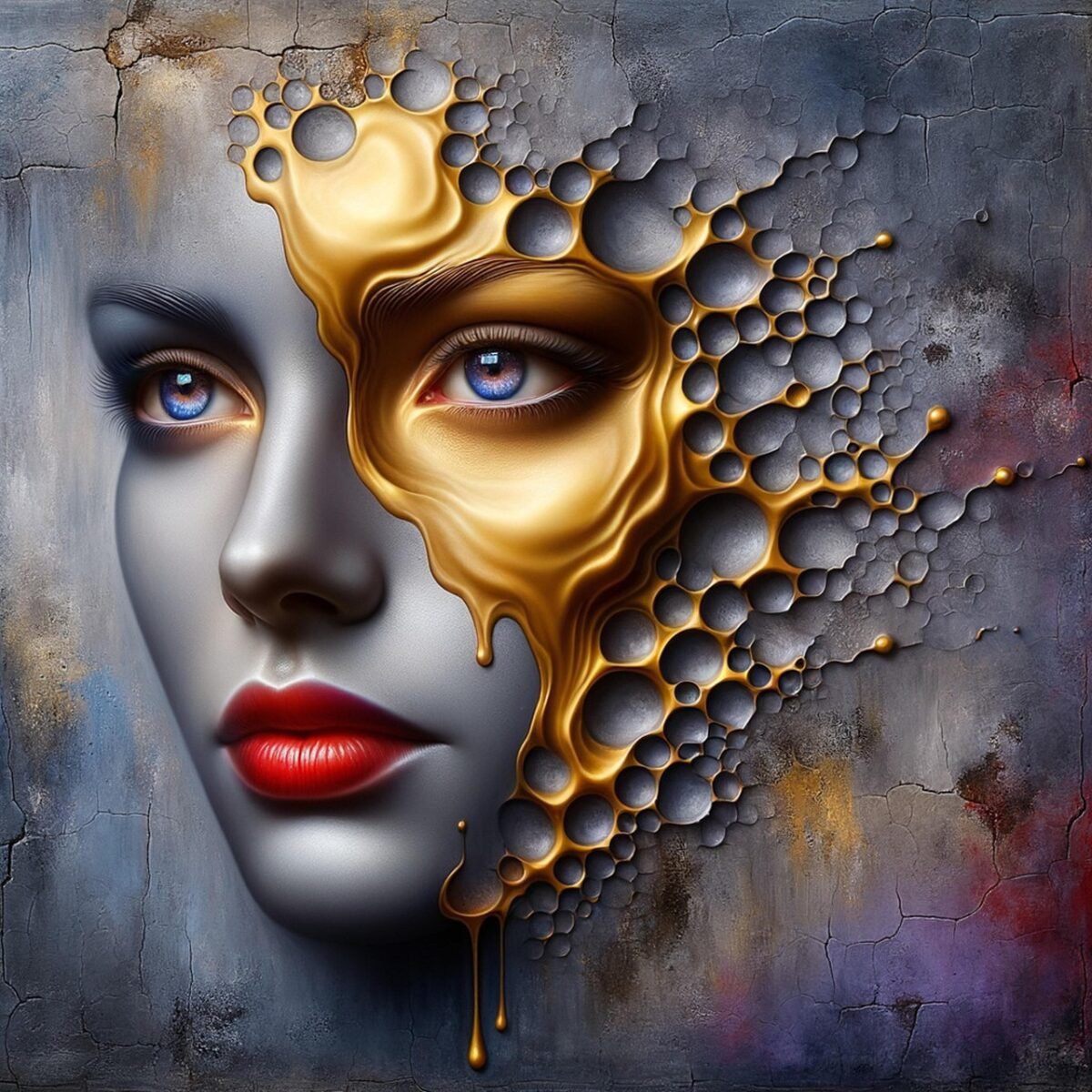
Posthumanism is a philosophical current that questions the limits of traditional humanism, suggesting that our species is in a process of deep transformation mediated by technology. Philosophically, it is about overcoming the vision of man as the absolute center of the universe, recognizing our interdependence with machines and the environment. Posthumanism invites us to imagine a future where biological capabilities are expanded by genetic engineering and artificial intelligence, forcing us to redefine what it means to be a person and what rights should be attributed to hybrid or synthetic beings.
Poetically, post-humanism is the unfolding of a new form of life, a metamorphosis where the skin becomes interface and the mind expands beyond the skull. It is the beauty of being the architects of our own evolution, drawing new senses and new ways to feel and perceive the cosmos. In that future, death can become only a technical problem to be solved, and our consciousness can navigate into data oceans, free from the limitations of the flesh. It is the poetry of transcendence, the moment when we stop being only human to become something vast, complex and eternal.
Informatively, post-humanist discussions cover areas such as transhumanism, bioethics and the philosophy of technology. Authors such as Rosi Braidotti and Nick Bostrom explore the social and existential implications of these changes, alerting to the risks of inequality and dehumanization. At BioBit.online, we analyze how emerging technologies are shaping this new era and how we can ensure that the transition to post-human preserves fundamental values such as empathy, justice and diversity, ensuring that the future is a flourishing space for all forms of intelligence.
What comes after us is a construction that starts now. Posthumanism is not the end of humanity, but the beginning of a journey beyond our biological and conceptual boundaries.


Leave a comment