
Tag: No more approval

  • The Self-Covering Illusion: Why Change Begins in Acceptance

    The Self-Covering Illusion: Why Change Begins in Acceptance

    ​A lógica mais comum diz que a mudança nasce da insatisfação. Você percebe o que está errado, cobra-se, pressiona-se e, a partir daí, melhora. Afinal, nos disseram a vida toda que quem não se cobra, acomoda-se.

    ​No entanto, usar essa premissa para justificar a permanência em algo que nos faz mal — ou para se eximir da responsabilidade sobre o efeito das próprias ações nos outros — é uma distorção profunda. O ponto real é exatamente o oposto: a aceitação é o que torna a mudança possível, não o que a dispensa.

    ​O Confronto com a Alta Performance

    ​A frase de Carl Rogers, “Quando me aceito como sou, então eu mudo”, costuma causar um incômodo imediato. Ela contraria a lógica da economia da autocobrança, que hoje dita o ritmo do mundo através de metas rígidas, aplicativos de monitoramento e do discurso incessante de alta performance.

    ​Essa máxima traz à tona uma verdade desconfortável: boa parte do esforço que gastamos em não nos aceitar não produz mudança nenhuma. O ódio a si mesmo, a culpa crônica e a punição psicológica não transformam; apenas paralisam ou esgotam. Lutamos tanto contra quem somos no presente que não sobra energia para construir quem poderíamos ser no futuro.

    ​O Ponto de Virada

    ​Aceitar-se não é sinônimo de conformismo ou de passividade. É, na verdade, o único ponto de partida realista. É parar de gastar energia fingindo que a realidade é diferente do que é, para finalmente poder agir sobre ela de forma lúcida e saudável.

    ​Se você tem tentado mudar alguma coisa em sua vida há tempo demais sem ver resultados reais, vale a pena pausar a cobrança e encarar o que está diante de você.

    O que exatamente você ainda se recusa a admitir sobre a sua situação atual?
  • The Subtle Art of Drawing Own Existence: Like the Environment, the Past and Intuition Mold Who We Are.

    The Subtle Art of Drawing Own Existence: Like the Environment, the Past and Intuition Mold Who We Are.


    There is an invisible architecture supporting each of our daily choices. We often believe that we are moved exclusively by the willpower, that our decisions come out of a vacuum of pure rationality and that the future is only a direct consequence of what we plan on paper. However, human life is a considerably denser tissue, woven by threads we often ignore: the spaces we inhabit, the meanings we attribute to our pains and the ability to listen to what pure logic usually discards.
    Understanding this dynamic requires, first of all, looking carefully at the places and presences that surround us. There is a silent phenomenon called influence by resonance, a form of deep learning that does not depend on theoretical explanations or deliberate imitation. It is essentially simple permanence. You become, inevitably and gradually, the environments you frequent, the routines you repeat and the people you share your daily life with. Willpower is a finite resource; the environment, on the other hand, works without pause. If the structure around you plays against its essence, daily resistance becomes an exhaustive burden.
    This same sensitivity needs to be directed inside, especially when we look at the path marks. For many thinkers throughout history, the past is inflexible in its facts, but absolutely plastic in its meanings. This is where one of the deepest tools of self-knowledge lies: the ability to reframe painful episodes without falling into the trap of denial. Resigning a wound does not mean pretending that the blow did not exist, nor to make it up with a naive and artificial optimism. It means facing the raw fact and at the same time deciding what effect it will have on your present. Scars cease to be monuments to suffering and become portals of maturity when we ask ourselves the fundamental question: what sense do I choose to extract from it today?
    Living with consciousness is transforming apparent boundaries into thresholds, exchanging opaque walls for doors that open to the unknown.
    Deepening this perception also requires expanding what we allow ourselves to notice. Daily life is sprinkled with synchronicities, intuitions that arrive ready without warning and dreams that insist on following the waking state. To ignore these signs by pure attachment to rational rigor is to smallen the experience itself. Paying attention to a coincidence that reorganizes paths or recording a recurring feeling is not abandoning reason, but recognizing that our mind captures patterns much faster than our language can translate. It is to resist the automatic impulse to discard the intangible and allow the limit of logic to become a threshold for new discoveries.
    To navigate this ocean of perceptions without being lost, it is indispensable to build an internal compass, a true personal pantheon. We all carry references. — are historical figures, real mentors, literary characters or philosophical concepts. When we leave these diffuse references, they act in the shadow. However, by knowingly naming who we admire and mapping accurately what virtues these figures represent — be courage in the face of uncertainty, unnegotiable integrity or a serene way of being in the world —We turned passive inspiration into active guide. In times of crisis, this pantheon is evoked, offering clarity on which posture to adopt.
    With a conscious environment, an integrated past, an awakening intuition and a well-defined pantheon, decision-making gains a completely new dimension. To decide wisely is not to act by impulse nor to be paralyzed by fear of the unknown, but to dwell in the field of possible futures before choosing one of them. It means testing the scenarios internally, anticipating the weight of repentance or the relief of coherence, and realizing which invisible forces are inflating our fears.
    This posture does not eliminate the uncertainties inherent in life, but returns the role to the one who decides. Instead of just reacting to the circumstances as a drifting boat, you begin to navigate with an enlarged map, aware that each choice is ultimately the deliberate act of sculpting reality itself.

  • Walls or Mills: What You Build When the Wind of Change Blows?

    Walls or Mills: What You Build When the Wind of Change Blows?


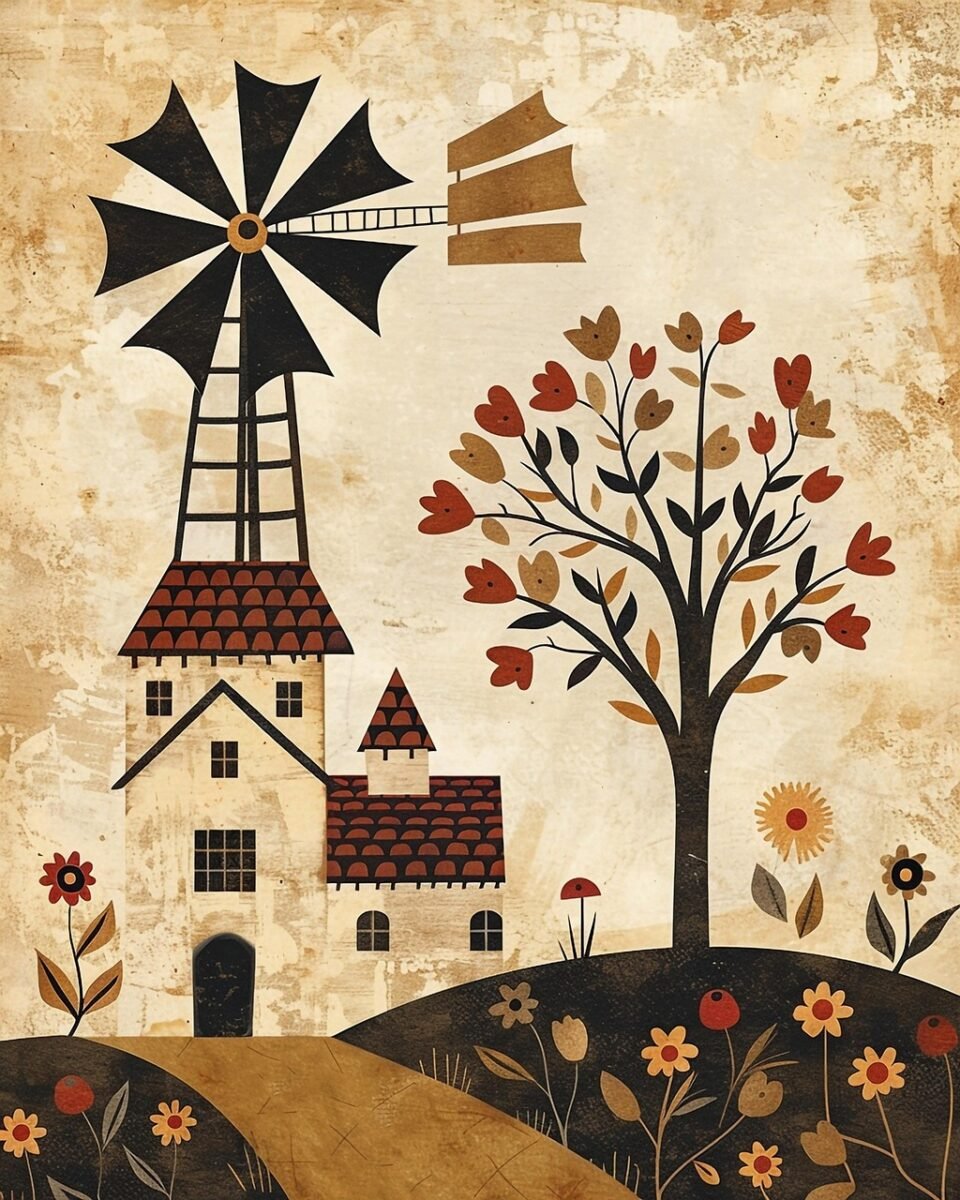
    There is an ancient proverb that gains an urgent freshness these days: when the winds of change begin to blow, some people build walls to protect themselves, while others build windmills to harness the force of the windstorm. The beauty of this metaphor lies in its simplicity and its refusal to embrace naive optimism. She does not promise that the wind will be mild, nor does she deny that the storm will startle. The saying only reminds us of an inevitable truth: adversities will come. The great difference in our trajectory was never in the intensity of the problems, but in the strictly personal decision we made before them.
    Generally, the first reaction of the human being to encounter the unknown is to erect a wall. Psychology explains that this answer is not a defect of character, but a gear of our own survival instinct. Faced with uncertainty, pain or threat, the human brain automatically seeks the fastest escape route, activating defense mechanisms to keep us in an apparent safety zone. The problem is that the same wall that protects us from the storm also prevents us from seeing the horizon, blocking the light and paralyzing us in the same place.
    This dynamic between stagnation and movement is the engine of almost all great stories — both in fiction and real life. Think of the path of those who decide to face the world with open breast: throughout the journey, this person inevitably encounters ill-intended figures, stumbles into bureaucratic or emotional obstacles and experiences moments of deep frustration, often trying to balance their own dreams in the chaos of a confused family. It's the classic script of human life.
    However, the differential of those who decide not to be defined by difficulties is the ability to repair what happens in parallel to chaos. It is in the middle of the walk that true friends, unexpected opportunities and loopholes also arise. Instead of allowing stumbling to dictate their destiny, those who choose to keep walking discover that change does not require an absence of fear, but the courage to take the next step in spite of it.
    Turning opposite winds into impulse is not a simple task and does not even happen overnight. It requires a conscious effort to re-educate the look, disarm the automatic defense mechanisms and exchange rigid self-protection for flexibility. As the famous motto of hope that goes through generations would say, "everything can be, just believe" — not in the sense of a passive magic that solves everything in the blink of an eye, but in the deep conviction that we have the ability to transform the energy of the problem into the gear of our own evolution. In the end, the storm is the same for everyone; the architecture of what we do with it is what defines us.

  • The Silent Art of Being Heard: Why Connection Overcomes Volume.

    The Silent Art of Being Heard: Why Connection Overcomes Volume.


    There is a very common illusion in how we communicate: the idea that if we increase the tone of voice, the clarity of the message or the intensity of our arguments, we will finally be understood. We spend immense energy trying to shape our words to cross invisible barriers, not realizing that the problem is rarely in the frequency of our voice, but in the disposition of those who listen.
    The truth is simple and relentless: anyone who does not want to hear you will not hear you even if you scream. The cry, in most cases, produces the opposite effect to the desired one. Instead of opening doors, it triggers defense mechanisms, erects walls and turns conversations into battlefields. When the other's mind is closed by prejudice, disinterest or emotional noise, communication fails not by lack of sound, but by lack of reception.
    On the other hand, there is an almost palpable magic in true tune. Whoever really wants to understand you will understand you even if you don't say a word. This deep understanding does not depend on the lexicon or perfect oratory; it dwells in small gestures, in attentive eyes, in empathy and in shared silence. It is the presence that speaks louder than any elaborate speech.
    Learning to recognize this difference is a liberating exercise of emotional maturity. It means stopping spending arguments where there is no fertile soil for listening and starting to value the spaces where our essence is welcomed effortlessly. In the end, communicating well is not about winning a debate or convincing the uninterested, but about finding and cultivating the connections where the sound — And the silence — They make sense.

  • The Art of High Flying: Why Mind Discipline Overcomes the Natual Talent.

    The Art of High Flying: Why Mind Discipline Overcomes the Natual Talent.


    There is a persistent myth that the great deeds of mankind belong exclusively to the predestined. We look at who has reached the top and, almost by instinct, we attribute success to an untouchable "natural talent". However, behind any high and sustainable flight, there is rarely only one natural gift. What really holds the top is an invisible and daily gear: the decision to train the mind, insist with purpose and turn every turbulence into wisdom.
    Flying high, after all, is a long-term construction. Talent can open the first doors, but it is the mental discipline that keeps us in the air when the opposing currents begin to blow.
    This preparation begins with the development of a silent mental power: the almost surgical ability to maintain clarity and serenity even when we are under very high pressure. While the untrained mind is lost in the chaos of the moment, the prepared mind breathes deeply and finds the north. This calm is not passive; it is the fertile ground from which instinct springs. What we call "instinct" is nothing more than an ultra-speed response that our brain delivers after thousands of hours of constant repetition and practice. It is the sharp reflection of those who have been there many times.
    For this machine to work, however, it takes an inexhaustible fuel: determination. She is the obstinate willingness to insist exactly when the result insists on not coming first. It is what makes us rise after a fall and view error not as a sentence of failure, but as pure experience. Each scar, victory or defeat accumulates a learning that no textbook can teach.
    When determination ceases to be a punctual effort and becomes a daily habit, something magical happens in our perception: the challenges lose that imponence of insurmountable walls and become seen as mere curves in the path.
    The path remains winding, but our ability to fly changes completely.
    None of this, however, gains traction without focus. In a world designed to fragment our attention every second, the ability to eliminate distractions and keep your eye fixed on the ultimate goal functions as a magnifying lens that concentrates all our energy on a single point. The focus is what keeps the wind from moving us off course.
    In the end, excellence is not an isolated event, but a continuous process of stoning. Less magical inspiration, more conscious perspiration. As we silence the external noise and assume the responsibility of training our minds every day, we discover that the sky was never the limit — It was just the starting point.

  • The Liberation of the Eye: Whoever Finds Their Own Value Stops Begging Approval.

    The Liberation of the Eye: Whoever Finds Their Own Value Stops Begging Approval.


    The desire to be accepted, valued and praised is part of the deepest human experience. It's natural and healthy to enjoy each other's recognition. However, in an age marked intensely by social networks, virtual comparisons and the incessant search for literal and metaphorical "likes", we run the risk of falling into a dangerous trap: conditioning our well-being and our identity to external judgment. The real problem arises when the need for approval becomes the main source of support for our self-image. When this happens, we begin to live in a constant emotional dependence, transforming our self-esteem into a castle of letters that collapses at the slightest sign of criticism or indifference.
    To break this cycle of insecurity and frustration, a turning point towards emotional autonomy is fundamental. True self-esteem is not born from the applause of the audience, but from the fertile ground of self-knowledge. The greater and deeper the connection we establish with our own value, the smaller our dependence on others' validation will be. Understanding one's own identity, recognizing one's own qualities with honesty and accepting limitations with compassion are the fundamental steps to build a genuinely healthy relationship with oneself. It is this internal dive that protects us from the excessive fear of criticism and paralysis of not being able to make decisions without the approval of others.
    The key to an emotionally free life is not in isolation or pride, but in balance. External recognition and social support are important and welcome, but should never function as the only ruler to measure who we are. The most solid and resilient self-esteem is that built from the inside out, based on non-negotiable personal values, self-respect and daily self-acceptance. After all, authentic emotional freedom happens at this very moment of awakening: when a person finally recognizes his own value, he ceases to beg for recognition outside and begins to inhabit the certainty of who he really is.

EnglishenEnglishEnglish