
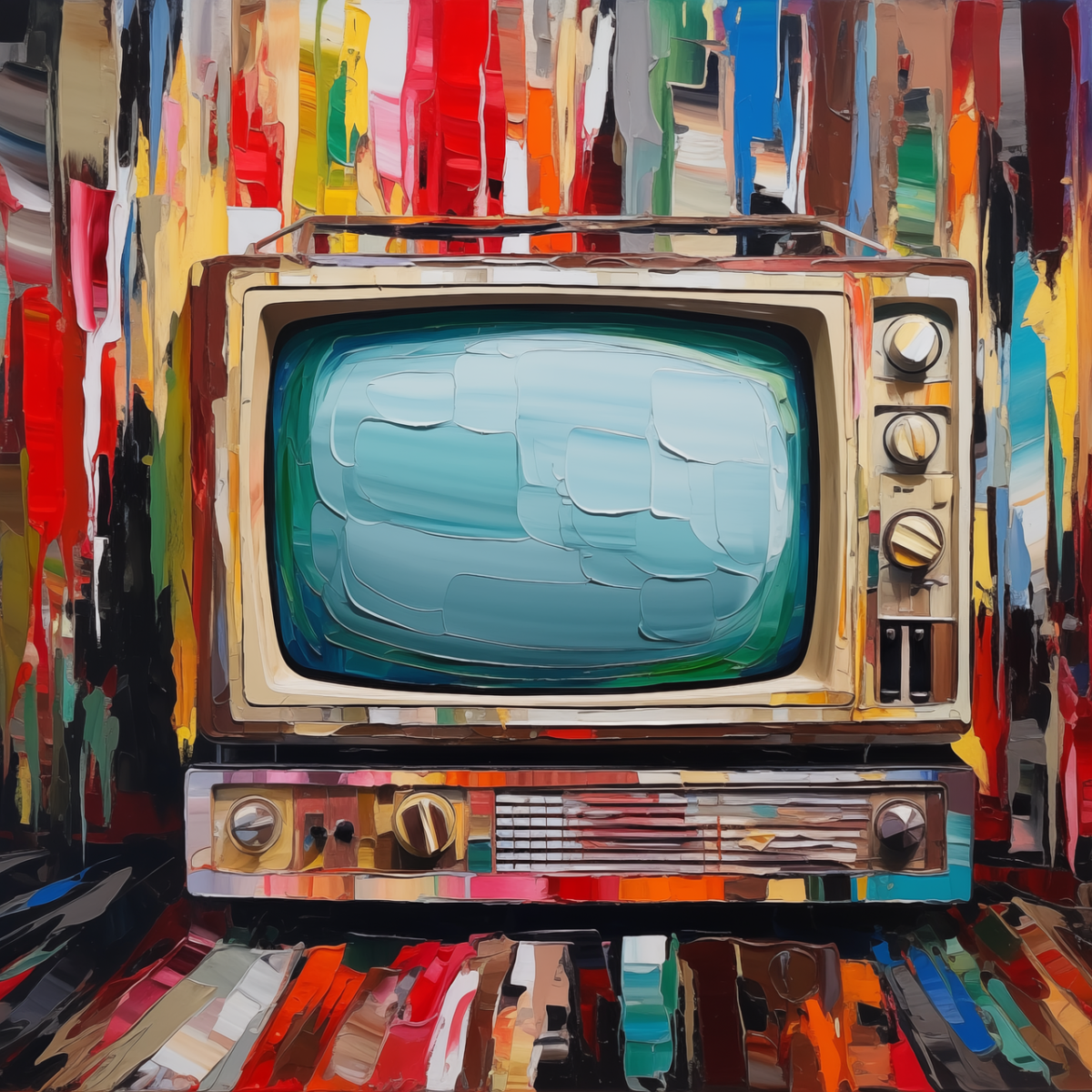
Television, once the central altar of the living room, became a kaleidoscope of fragments. Where before there was the "programming program" — a time shared by an entire nation — Today there is the dictatorship of "on demand". Philosophically, this transition marks the end of synchronous collective experience. We're becoming consumer islands, where each viewer inhabits a narrative bubble cured by recommendation algorithms. TV is no longer a window to the world, but a mirror that reflects only what we already like, eliminating the surprise factor and confrontation with the different.
Poetically, there is a melancholy beauty in the blue light emanating from the screens in lonely homes. The brightness of the TV now competes with the second screen of the smartphone, creating a divided and superficial attention. The television narrative adapted to this fragmentation, betting on frantic rhythms and constant hooks to avoid abandonment. Informatively, the streaming market reached its saturation point in 2026, forcing unprecedented consolidation. The platforms now use AI to predict not only what you want to watch, but at what exact moment of fatigue or euphoria you will open the app, even adjusting the color of the covers of the movies to attract your look.
Technically, evolution to 8K and HDR10+ brought a hyper-reality that challenges human biology. The image is so clear that the brain sometimes struggles to process depth, creating what some theorists call "aesthetics of excess." The future of TV lies in total integration with the smart house, where the screen disappears to become part of the surfaces, and the narrative expands beyond the edges of the television, interacting with lighting and ambient sound to create an absolute sensory immersion. Television, therefore, did not die; it just dissolved in the architecture of our everyday reality.


Leave a comment