
Imagine walking through a metropolis where traffic lights do not follow fixed stopwatches, but react in real time to the flow of pedestrians and autonomous vehicles. A city where power systems and water distribution are able to predict leaks and cure its own structural flaws even before any citizen notices a problem. This reality, which seemed restricted to science fiction pages, gains practical contours with the arrival and maturation of 6G technology. By transcending the barriers of connectivity we know, the next generation of mobile networks arrives to act as the real nervous system of the Internet of Things (IoT), transforming urban centers into living, hyper-connected and deeply intelligent ecosystems.
Overcoming Limits: The 5G Jump to the Terahertz Era
Although 5G has opened doors for initial automation, the demands of a truly intelligent city run into physical bandwidth limitations and simultaneous processing capacity. It is in this bottleneck that 6G redefines the technological board. Operating at Terahertz (THz) frequency, the new network does not just deliver an impressive speed — which can reach the mark of up to 1 Terabit per second —, but solves the biggest nightmare of the current urban infrastructure: the density of connections.
The 6G is capable of supporting up to 10 million connected devices per square kilometer. This quantum leap allows each public lamp, manhole, pollution sensor and shared vehicle to dialogue with each other without suffering from network congestion, enabling the concept of the Internet of All Things (IOE).
Integrated Sensing: The City to See Without Cameras
One of the biggest silent revolutions of this new architecture meets the name ISAC (Integrated Sensing and Communication, or Integrated Sensing and Communication). In previous networks, sending data and mapping the physical environment required totally different hardware and frequencies. In the 6G ecosystem, the radio signal itself acts as a biological radar.
The antennas and intelligent reflective surfaces spread across the buildings begin to map the movement, measure distances and monitor environmental conditions using the ricochet of the network waves themselves. In practice, urban intelligence can optimize road traffic or monitor large agglomerations for real-time public safety, without the need to install thousands of invasive cameras, preserving citizens' visual privacy while raising efficiency to the maximum level.
Impact on Sustainability: With 6G and sensors IoT of very low energy consumption, intelligent buildings manage their own electricity consumption and integrate renewable sources into the power grid in a predictive way, drastically reducing the footprint of urban carbon.
From Automatic Reaction to Auto-Repaired Infrastructure
The great key to life in cities will be the change from reactive public management to predictive governance. Thanks to the latency in the microseconds' home and the natively integrated Artificial Intelligence at the heart of the 6G network (the so-called Edge AI), massive data processing takes place on the edge, that is, right there on the street, without having to travel to a distant cloud server.
This gives rise to self-healing systems. If an energy transformer or a central water pipe presents an anomalous microvibration, the IoT sensors detect the pattern, the network AI diagnoses wear and the system automatically redirects the flow of resources through alternative pathways, triggering the maintenance team before a blackout or rationing occurs. The urban flow never stops; it adapts.
The Challenge in Horizon and the Future That Expects Us
The transition towards this hyperconnected utopia does not happen without friction. The design of these new metropolises requires massive investments in new antennas, rigorous cybersecurity solutions to shield government data and a mature ethical debate on citizens' privacy within an ecosystem that detects everything.
However, the horizon designed by the fusion between 6G and IoT points to a path without turning back. The smart cities of the future will no longer be piled up with concrete and asphalt monitored by computer screens; they will become dynamic, efficient and human environments, where technology ceases to be an accessory and becomes the oxygen that enables sustainability and collective well-being.
Tag: urbanism
-

The Invisible Fabric of Tomorrow: Like 6G and IoT are restructuring Smart Cities.
-
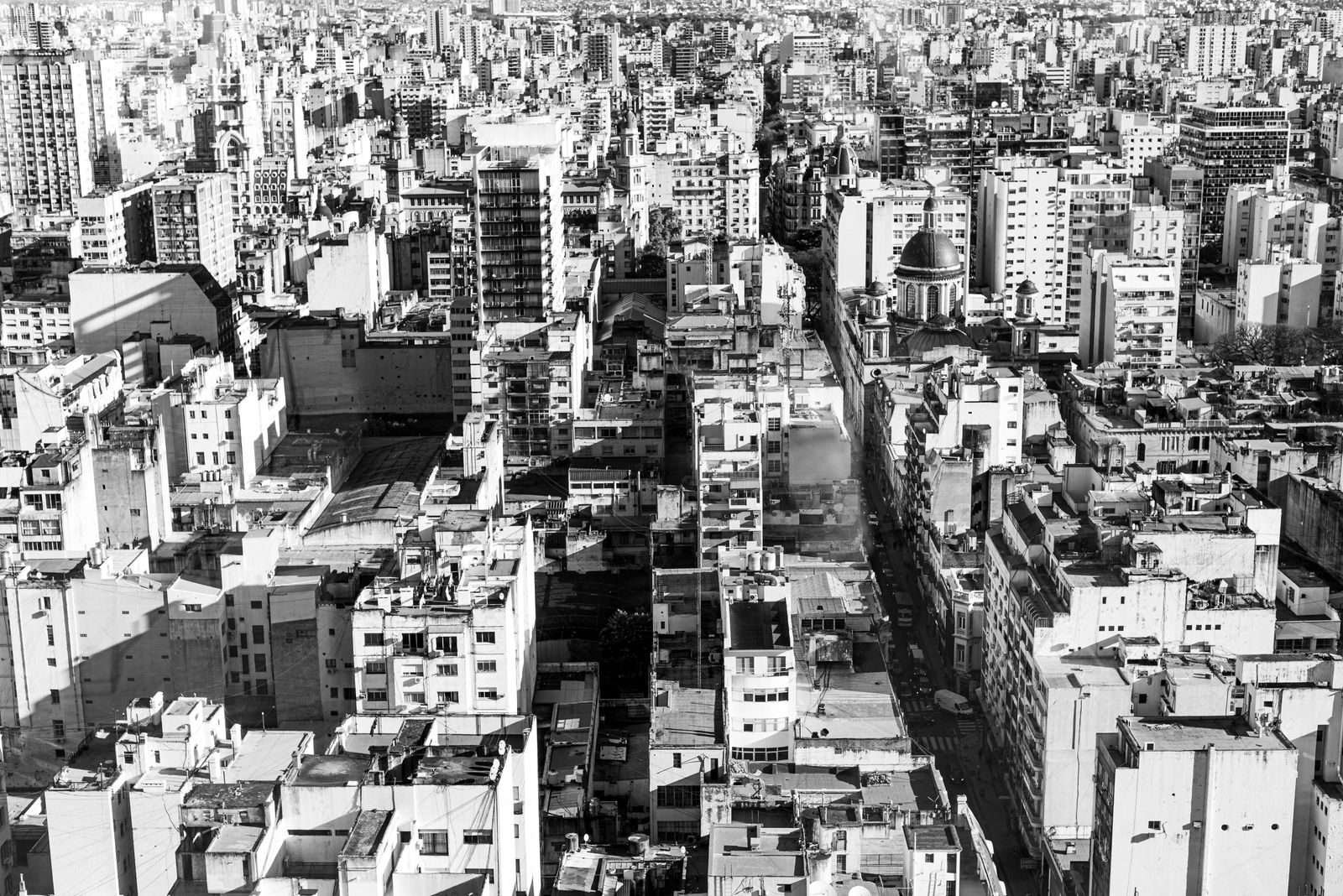
The shine of the Neons on the Broken Asphalt: The Paradox of Urban Distopia.
The future that once inhabited only the pages of science fiction or film screens seems, every day, more integrated with our present. When we think of the projections of a hypertechnological tomorrow, the mind draws colossal skyscrapers tearing up charged clouds, holographic ads covering entire facades and artificial intelligences shaping every aspect of everyday life. However, the true core of the dystopic concept lies not in the presence of technology, but in the abyss that opens between technical advancement and human and urban degradation. It is the classic axiom of the cyberpunk genre summed up brilliantly by writer William Gibson: "The future is already here — It's just not evenly distributed."
In this scenario of violent contrasts, technology advances at large paces as urban infrastructure and social fabric go into frank decay. The cities of the future dystopian function as fractured organisms. At the top, or in hypervigidated and exclusive areas, the elite enjoys advanced biotechnology, total automation and immersive virtual realities that offer a perfect escape from reality. On the streets below, however, the scenario is completely abandoned. The cracked asphalt divides space with exposed fiber optic cables, and public lighting fails is replaced by the incessant glow of corporate neons who sell products that the overwhelming majority of the population can never afford.
This urban decay is the physical reflection of deep social decay. As the state retreats or merges into the interests of monopolistic megacorporations, basic social guarantees disappear. Extreme automation and artificial intelligence, which could free humanity from degrading work, become tools of mass exclusion, pushing massive portions of the population to unemployment or to the precarious informality of a technological subsistence economy. Connectivity, ironically, does not generate unity; it generates isolation. Individuals navigate hyperconnected neural networks as they walk through superpopulous and unhealthy alleys, living a collective loneliness where real human contact is a luxury in extinction.
The urban environment also charges its price. The uncontrolled industrial advance and climate neglect transform the climate of metropolises into a perpetual cycle of acid rain, visual pollution and toxic mist. Nature is privatized; trees and clean air become commodities accessible only to those who can afford the air-conditioned summits of high-class neighborhoods. For ordinary citizens, survival requires adaptation to a hostile ecosystem, where obsolete air filtration devices and second-hand cybernetic prostheses are remedied analogically, creating an aesthetic of "high technology, low quality of life".
Looking at this dystopic future should not be an exercise of mere pessimism, but rather an urgent alert. Technological advancement, isolated from an ethical and social commitment, is not synonymous with progress; it is only the sophistication of inequality. As machines become more intelligent and efficient, the true measure of our development will remain the way we take care of the space we share and the people who inhabit it. After all, it's no use touching the stars with your fingertips if your feet remain stuck in the mud of a fractured society.

