
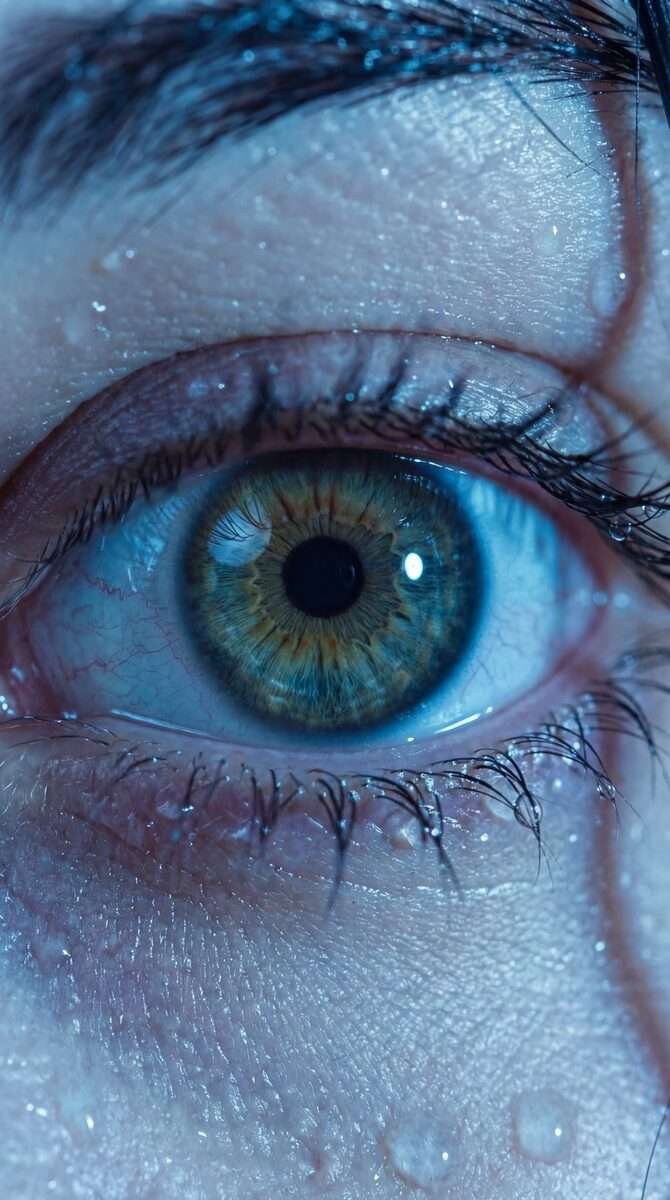

There are windows that don't open to streets, but to whole universes. A blue look, charged with emotion, is like the encounter of the ocean with the sky on the horizon: vast, mysterious and impossible to ignore. In it, words become unnecessary, because the brightness of the iris tells stories that the voice would never dare pronounce. In biobit.online, we explore how non-verbal communication is often the most honest channel of human connection we have.
The Psychology of Visual Contact
When we dive into the depth of such a look, we are confronted with our own shadows and lights. Science explains that prolonged visual contact releases oxytocin, the hormone of trust and affection, creating an invisible bridge between two consciousnesses. It is a mirror of the soul that invites us to silence and contemplation. In a world of fast and superficial connections, mediated by cold screens, stopping to decipher the poetry contained in a simple look is an act of resistance and humanity.
What Eyes Reveal About Being
Eyes don't just see; they talk. They reveal the weariness of the journey, the spark of hope and the depth of empathy. Learning to read what the eyes say, even before the first sound escapes from the lips, is an essential skill for those seeking personal evolution and emotional intelligence. This "look that speaks" reminds us that, behind each digital interaction, there is a soul thirsty for being seen and understood in its entirety.
Conclusion: The Invitation to Royal Connection
May we rescue the courage to look into the eyes. In your next conversation, try to perceive the nuances of color and emotion in each other's eyes. You will find that the truth is rarely in what is said, but in what appears through the iris. Continue your journey of self-discovery with us, exploring how the subtlest details of our biology can reveal the greatest truths about our behavior.


Leave a comment