I'm a vase, shaped by falls and mistakes,
A curious compound, standing among deserts.
Every crack, crack, slip I've lived,
It's carved landscape, only mine at last.
Not polished marble, not mold without fail,
But fragments harvested, made to hold.
For through these breaches, where light may enter,
A soft thread keeps fear from hovering.
With a serious spirit, slowly and with faith,
Good intentions make these pieces grow
In a whole, though marked and imperfect,
Connected by an end to hope of respect.
So I stand, testimony of grace,
A soul of flaps, in time and space.
My own being, failures woven with strength,
Illuminated by the light of intent to hold me.
Category: Literature
-

Where the Light can enter.
-
Inner Strength and Resilience
The path may rise, a jagged stone,
Or shadows stretch where light has flown.
But in your spirit, bright and keen,
A hidden strength, a vibrant scene.
Each block that bars, each winding chase,
You reshape with a knowing grace.
The wall alleys a lunching place,
A whiskey hop, a forward pace.
With every stump, every test,
You find the moment to invest
In finding chances, put to rest
The bear that binds, the doubt oppressed.
So run the course, with steady stride,
Where Hurdles Wait, and Fears resides.
For every challenge, deep inside,
The golden opening will abide.
A path may rise, a jagged stone,
Or shadows stretch where light has flown.
But in your spirit, bright and keen,
A hidden strength, a vibrant scene.
Each block that bars, each winding chase,
You reshape with a knowing grace.
The wall alleys a lunching place,
A whiskey hop, a forward pace.
With every stump, every test,
You find the moment to invest
In finding chances, put to rest
The bear that binds, the doubt oppressed.
So run the course, with steady stride,
Where Hurdles Wait, and Fears resides.
For every challenge, deep inside,
The golden opening will abide. -
Passion, Conflict and Heat
In a dystopic city, where life overcame freedom, there was an intense and contradictory love between Clara and Ezekiel. They knew each other since childhood, but the oppressive reality around them made them ever closer, as the shadows of society separated them.
Clara was a rebel artist, her color painting contrasted with the ashes of the city. In the secret murals he created, he poured out his emotions, revealing his inner struggle. Ezekiel, on the other hand, was a critical thinker, always questioning the rules imposed. Together, they formed an explosive duo that shone in the darkness of the world.
One night they met in an old warehouse where time seemed to stop. The place was full of art and light and the smell of fresh paint. Clara approached Ezekiel, his eyes reflected a burning passion. He pulled her close, her bodies heating up under the soft light. The tension in the air was palpable. Clara touched his face, his hands shaking.
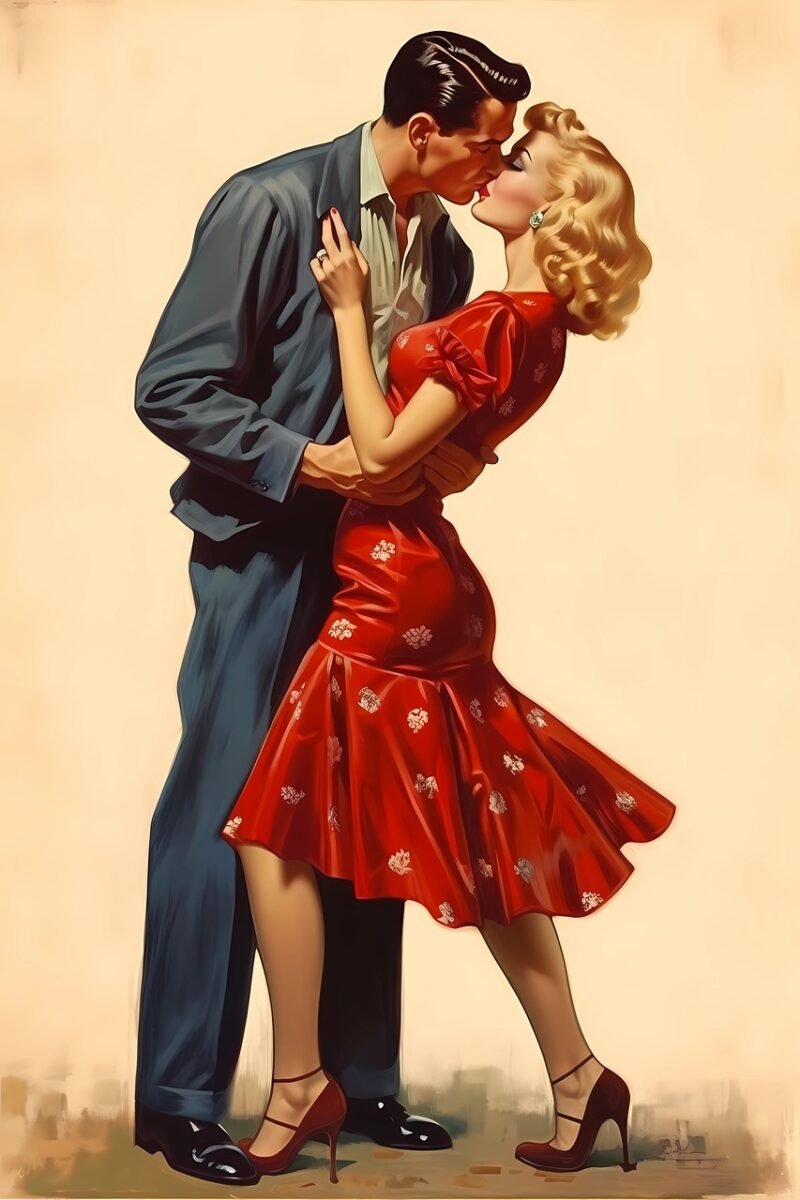
Ezekiel looked into her eyes and saw the promise of a different life, free from the chains that imprisoned them. They kissed, the warmth of her mouth burned in her skin, expanding the passion that united them. It was a bold kiss, in which they fought between love and desire, pain and freedom. The contradictory emotions generated a fire that consumed them.
But happiness didn't last long. The government considered them a threat. At a clandestine meeting, Ezekiel discussed the risk they would take. Clara was terrified, but her passion for Ezekiel spoke louder. She held your hand and said that together they could face any obstacle. The courage they felt for each other was like a fuel, burning their souls.
Nights have become a battlefield between freedom and oppression. Clara painted at dawn, Ezekiel wrote poems, both feeding on the adrenaline of the rebellion. The moments of intimacy were always saturated with conflict, but also with tenderness. After all, they were in love. In every touch, there was the promise of hope and the fear of loss.
In that grey city, Clara and Ezekiel continued their struggle, illuminating the darkness with their creations. Their relationship, incredibly intense and contradictory, challenged all standards, showing that true love can flourish even in the most hostile environments. -
The verse book that returned meaning to your journey
Carlos was 62 years old and a feeling that he could not find a name: after he retired, and with his wife, Maria, leaving for a disease that took little time, he felt that his life had broken down like an old role. The days all looked the same, a heavy silence lived in the corners of the house and the thoughts came to the mountains, confused, unordered, like dried leaves carried by the wind. He'd wake up, make up the bed, make coffee, look out the window and wonder, what's the point of all this, if there's no one else waiting for me? No account, no logic, no practical explanation could answer that question. The world seemed like a cold, meaningless place.
One day, when he got a forgotten drawer, he found a darkcover notebook that had been Maria’s. Expected recipes or household notes — But when he opened it, he discovered verses. She had been writing for years, never telling him: she spoke of the wind in the window, of the beauty of a shared coffee, of the longing I had imagined feeling, of the certainty that life, even with its pains, was worth living. As he read those words, Carlos felt something strange and soft happen within himself: suddenly, that pain that seemed formless, nameless and endless, gained voice. The chaos of your feelings began to organize. He was no longer alone in that sense of loss. — someone he loved had experienced similar concerns, and had managed to transform pain into something beautiful, that could be touched and read.
Gradually he began reading more: poems by Carlos Drummond de Andrade, by Cecília Meireles, by Manuel Bandeira — voices of our land, who spoke with their tongue, with their way of seeing the world. And poetry was doing its job, slowly, without hurry. Reading verses that described loneliness or the passage of time, he realized that he was not the only one to feel it: his personal pain became part of a larger story, an experience common to all human beings, and this brought a profound, almost liberating relief. By putting himself in the place of the poets, by feeling what they said, he began to look more carefully at the people around — for the neighbor who walked low, for the market attendant who smiled with effort — and understood that each one carried his own pains and desires, even if they did not say them. His ability to understand the other grew, without him realizing it: empathy became part of his daily life.
When the thoughts came confused and agitated, a certain verse brought clarity, as if a light lit up within it. And gradually, he was gaining strength to follow: he realized that loss does not erase what he lived, that longing is also a form of love, and that uncertainty is part of the way. Poetry has given him resilience: it has shown that generations have experienced difficulties like his own, and have managed to transform suffering into beauty and reflection.
Carlos reads a poem every morning today. He no longer pursues a grand sense or definite answers. He learned, with lyrical sensitivity, that the fullness of life is not in how much we conquer or how much we hurry, but in the intensity with which we live every small moment: the sun that enters through the window, the taste of coffee, the gentle memory of those we love. He found that poetry doesn't give all the answers — but it teaches us to see, feel and value our brief and precious passage through the world. And that, after all, is all we need to walk.
-
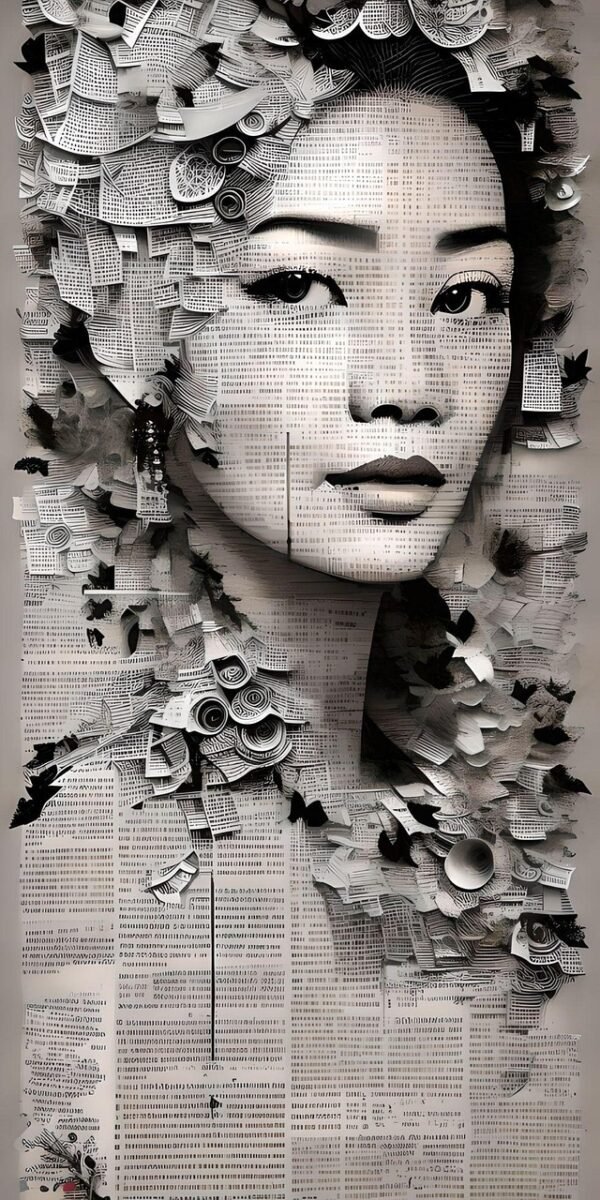
Poetry: The Art That Gives Sense to Our World Pass.
Living is, first of all, an experience full of mysteries, contradictions and questions that rarely find definitive answers. In the midst of the daily rush, among worries, passing joys and pains that seem to have no name, we often feel that our thoughts are scattered, like leaves carried by the wind. It is in this scenario that poetry appears as one of humanity's deepest and most necessary creations: a delicate but firm bridge that connects us to ourselves and to the world that surrounds us.
The poetic creation functions as a special tool of mediation between the individual and the whole complexity of existence. By choosing each word carefully, by giving rhythm and form to what before was just a vague feeling or a whirlwind of confused ideas, the poet manages to do something extraordinary: he orders the chaos that exists within each of us. It gives visible form to what is abstract, voice to what was silent and felt to what seemed unexplained. This organization is not just an aesthetic exercise — It brings a deep, almost liberating relief. The small and great pains of everyday life cease to be isolated sufferings and gain the dimension of shared reflection, transforming personal experiences into something that belongs to everyone. Poetry thus becomes a mirror in which we recognize our own search, our fears and our deepest desires.
And its benefits go far beyond the simple pleasure of reading or hearing beautiful verses. As we approach lyrical art, we undergo transformations that touch the most intimate of our being. By putting us in the place of those who wrote, or by feeling what a verse awakens in us, we naturally develop a greater capacity to understand the pains, desires and motivations of others. — our empathy expands, and we realize that despite the differences, we share the same human essence. When we find in a poem words for what we feel but cannot say, our thoughts are organized, ideas are clarified and confusion gives room for a sense of peace and clarity. And, above all, poetry helps us build resilience: by seeing that feelings such as loss, longing or uncertainty have been lived and transformed into beauty by so many people before us, we gain strength to face the losses and challenges that are inevitable part of our journey.
The sensitivity that poetry awakens in us also brings a precious lesson: it shows us that the fullness of a life is not measured by how much we conquer or run, but by the intensity with which we live each present moment. In a world that always pushes us into the future, that makes us chase after what we do not yet have and forget what is before us, lyrical art teaches us to stop, observe and feel. When we opened up to her — especially for the richness of our brazilian literature, which portrays with such truth our way of being — we realize how poetry can capture, with a precision that reason sometimes does not reach, the essence of our brief, but precious, passage through the world. -
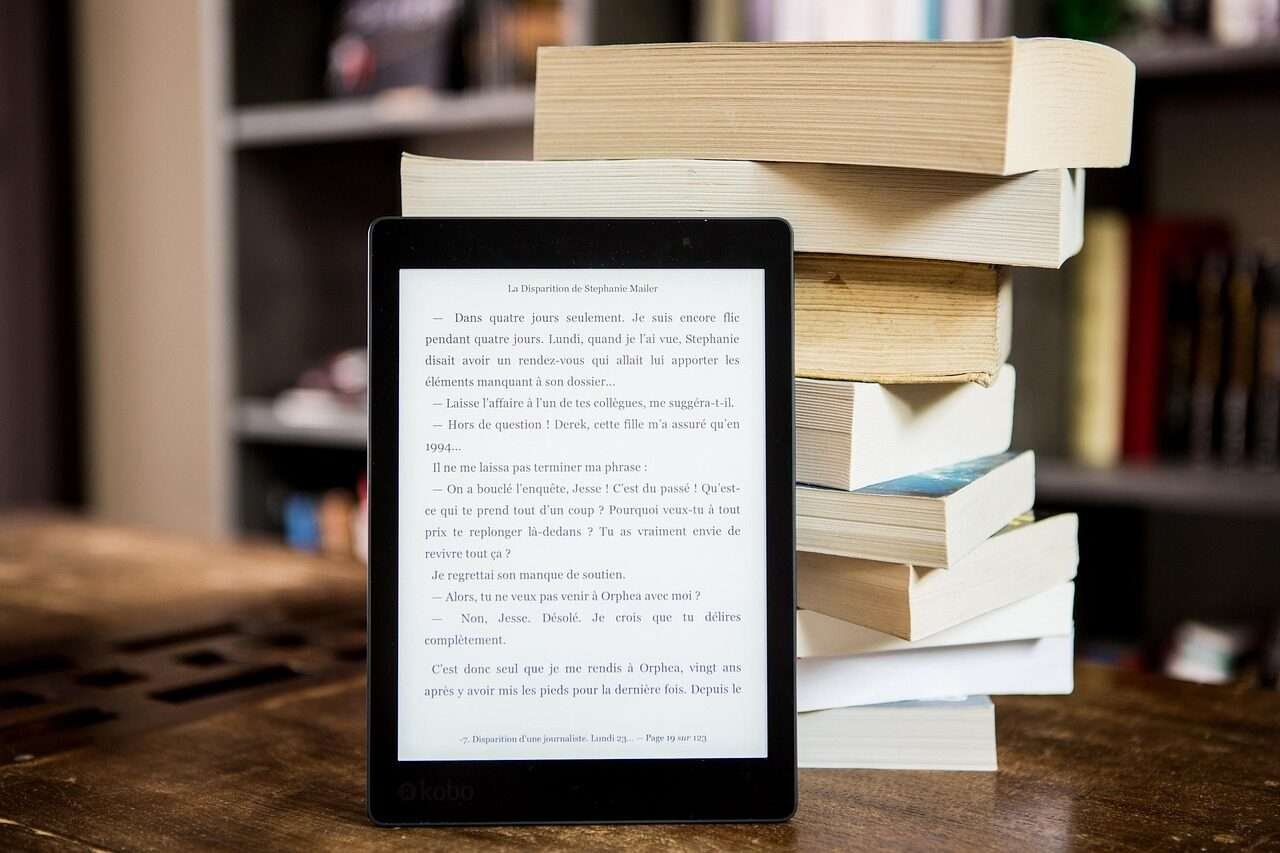
The Audiobooks and E-books Revolution in the Digital Age
Audiobooks and e-books radically changed the reading experience in the 21st century. The portability and accessibility of these formats allow the literature to be present at times of routine where it would be impossible to read before, as in traffic or during physical activities.
Accessibility and Inclusion
For people with visual impairment or dyslexia, digital books and audiobooks represent a revolution in literary inclusion. Source adjustment tools and professional narrations ensure that the pleasure of a good story is accessible to everyone.
Sustainability in the Editorial Market
The reduction in the use of paper and logistics costs makes digital format a more sustainable and economical option. The editorial market moves towards a hybrid model, where digital and physical coexist to meet different readers' profiles.
-
Literature and AI: How Technology Is Redefining Writing
Artificial intelligence is transforming the way we consume and produce literature. From algorithms that suggest your next favorite reading to tools that help writers in the creative process, technology has become a powerful ally in the universe of letters.
Collaborative Writing with AI
Contemporary writers are using language models to overcome creative blocking and explore new narrative structures. The AI does not replace the author, but acts as a co-pilot that offers infinite possibilities of unfolding to a plot.
The Future of Digital Libraries
With mass digitization, access to world rare and classic works became instantaneous. The algorithmic curatorship helps to discover literary pearls that would once be hidden on physical shelves, democratizing knowledge in an unprecedented way.
-

Scientific fiction: Literature That Anticipates the Future
Science fiction has always been a mirror of our hopes and fears for the technological future. From Isaac Asimov to William Gibson, authors of the genre anticipated innovations that are now part of our daily lives, such as the Internet and robotics.
Anticipating Realities
Literature often serves as an ethical testing field for new technologies. In reading about future societies, we are led to reflect on the impact of our current technological choices and how they will shape humanity in the coming generations.
Gender as Critical Tool
More than entertainment, contemporary science fiction addresses topics such as climate change, digital surveillance and transhumanism. It is an essential reading for those who want to understand the complexities of the modern world and the challenges to come.
-
Why Read Classics in a World of Algorithms?
Classical literature continues to resonate in the age of algorithms because it addresses the essence of the human condition. Shakespeare, Machado de Assis and Virginia Woolf offer insights into emotions and dilemmas that remain unchanged, regardless of the technology available.
Dialogue Between Times
Reading the classics today is establishing a dialogue with the past to understand the present. Many ancient works gain new layers of interpretation when analyzed from the perspective of digital society and new social configurations.
Resistance and Depth
In a world of quick and ephemeral content, immersion in a classic is an exercise of attention and depth. These works invite us to slow down and reflect, functioning as an antidote necessary to the superficiality of the information age.
-
Online Literary Communities: The BookTok Phenomenon and Beyond
Social media has created new literary phenomena, such as "BookTok" and "Bookstagram". These digital communities have the power to turn unknown books into global bestsellers overnight, changing the marketing dynamics of publishers.
Communities of Readers
Sharing video reviews and aesthetic photos of books has created a new engagement, especially among young audiences. Reading, often seen as a solitary activity, has become a vibrant and connected social experience.
New Ways to Narrat
Authors now interact directly with their readers, creating extra content and participating in online discussions. This proximity humanizes the literary process and creates a faithful and participatory fan base.
-
The Praise of Imperfection: Because the Pie Tree preserves its freedom.
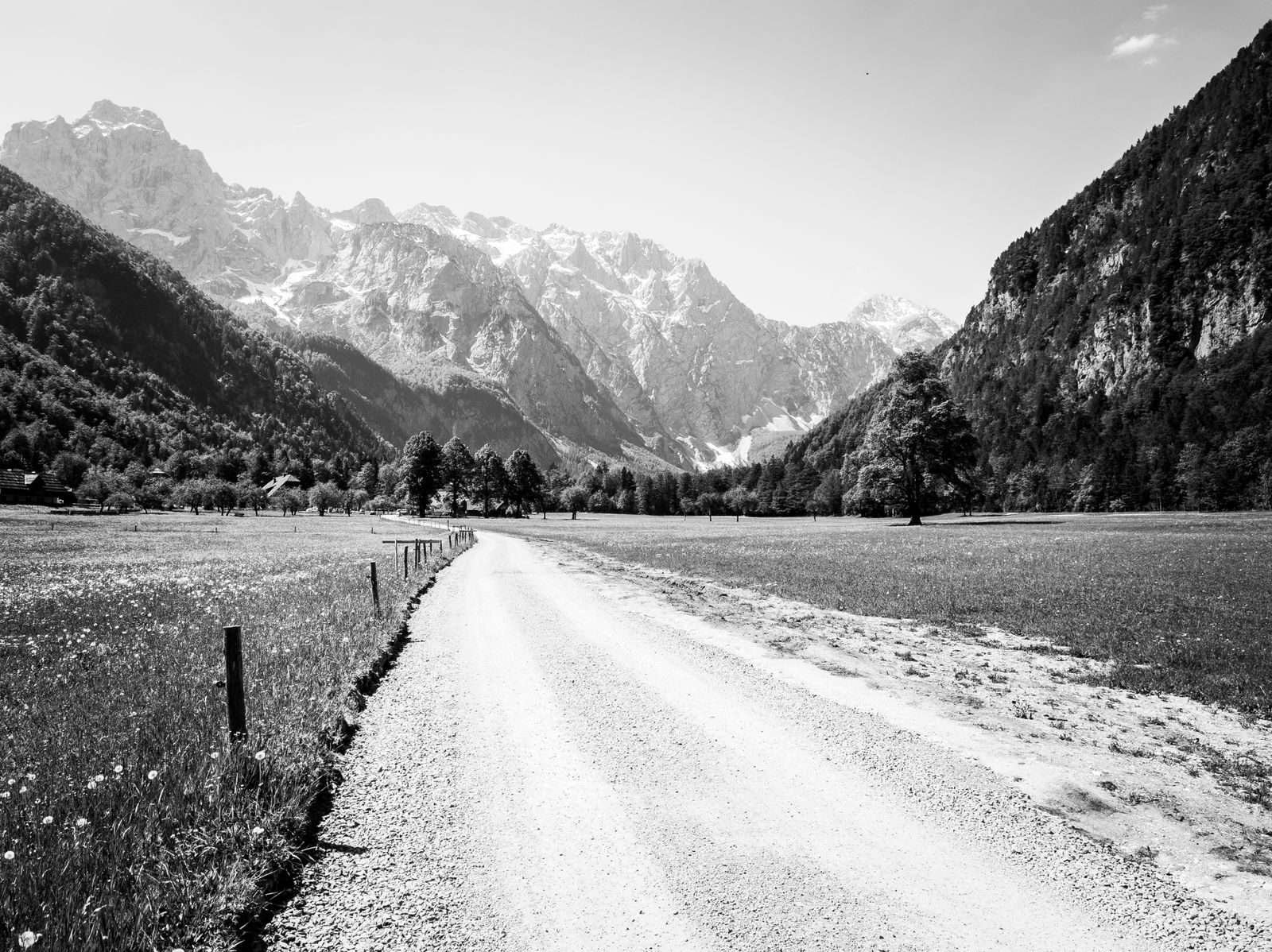
In the immense collection catalogue of the contemporary world, the straight line is the gold standard. We are taught, from very early on, that the value of a life is measured by its practical usefulness: by income, by impeccable curriculum, by quick response and by the almost superhuman ability to adapt to any requirement. They want us to be like perfect trees, straight and predictable trunks, ready for cutting. However, there is an ancient wisdom — rescuing metaphors from trees, animals and dreams — which reminds us of a comforting truth: the pie tree grows free, while the straight tree ends up in the hands of the carpenter.
This image deconstructs the rigidity of human certainties and our relentless pursuit of prestige. What the social and economic system calls "defect" or "utility" may actually be the greatest defense mechanism of an individual. The lack of immediate utility for the market becomes protection. While the straight symmetrical tree attracts the axe because it is considered "useable", the tree full of us and curves remains standing, fulfilling its natural cycle, giving shade and sheltering birds. She doesn't serve the carpenter, but she serves life.
The Pillars of Sacred Uselessness
To understand this philosophy of detachment and inner silence, we need to turn upside down the concepts of success that sell us daily. The freedom proposed by this metaphor is based on five fundamental pillars:
Appearing Utility vs. Own Value: The apparent usefulness is what the system validates as advantageous or productive. Self-worth, on the other hand, precedes any external approval; it exists whether you serve someone's interests or not.
Spontaneity and Wu Wei: Living with spontaneity means inhabiting nature itself without forcing an artificial form to fit in other people's ways. It is the concept of Wu Wei — to act in harmony with the natural flow of things, without the need to control everything by force or mental wear.
Disagreement of Fame: It means disfigure the idea that the whole life should be organized around positions, titles or social prestige.
Important: This perspective does not defend irresponsible passivity or contempt for daily commitments. What she questions is the neurotic obligation to fit absolutely every pattern just to be accepted. Preserving its essence requires accepting the price that not everyone will understand its way of living, thinking or choosing.
The Revolution in Routine: Return to Singularity
Bringing the wisdom of the crooked tree into everyday life does not require great dramatic ruptures, but small, firm and decisive choices. In practice, our freedom is protected when we exercise four essential movements:
Say no: Refuse tasks, invitations or social roles that nullify our personal limits and silence our mental health.
Avoid comparison: Understanding that life itself does not need (and should not) be measured by the fast pace or by the goals achieved by others.
Protect singularity: Recognizing once and for all that not every difference is a defect that needs to be corrected. Your knots and curves are part of your identity.
Reduce the rush: Accept processes and paths that do not generate immediate financial or practical results, but preserve their emotional balance.
At first, giving up the "perfection" required by the carpenter may seem a disadvantage. The world will suggest you're falling behind. But just look around to realize that what prevents someone from being "used" and chewed by the system is exactly what preserves their health, their peace of mind and their unique way of existing. In the theater of life, being a crooked tree is not a failure; it is the most sublime act of freedom. -
Your Eyes Pure Beauty
Your eyes, a wonder without parallel, I’d say,And your soft skin, sacred ground where light may play. A charm whiskers, a sweet plea, a secret untold,Silent seduction, my spirit you hold, bold.But I confess, my words are short, they’re vain,No poet’s grace, no versa without my brain. So let the grand rhythm, the heart’s own way,Be love our guide, come what may, every day.

