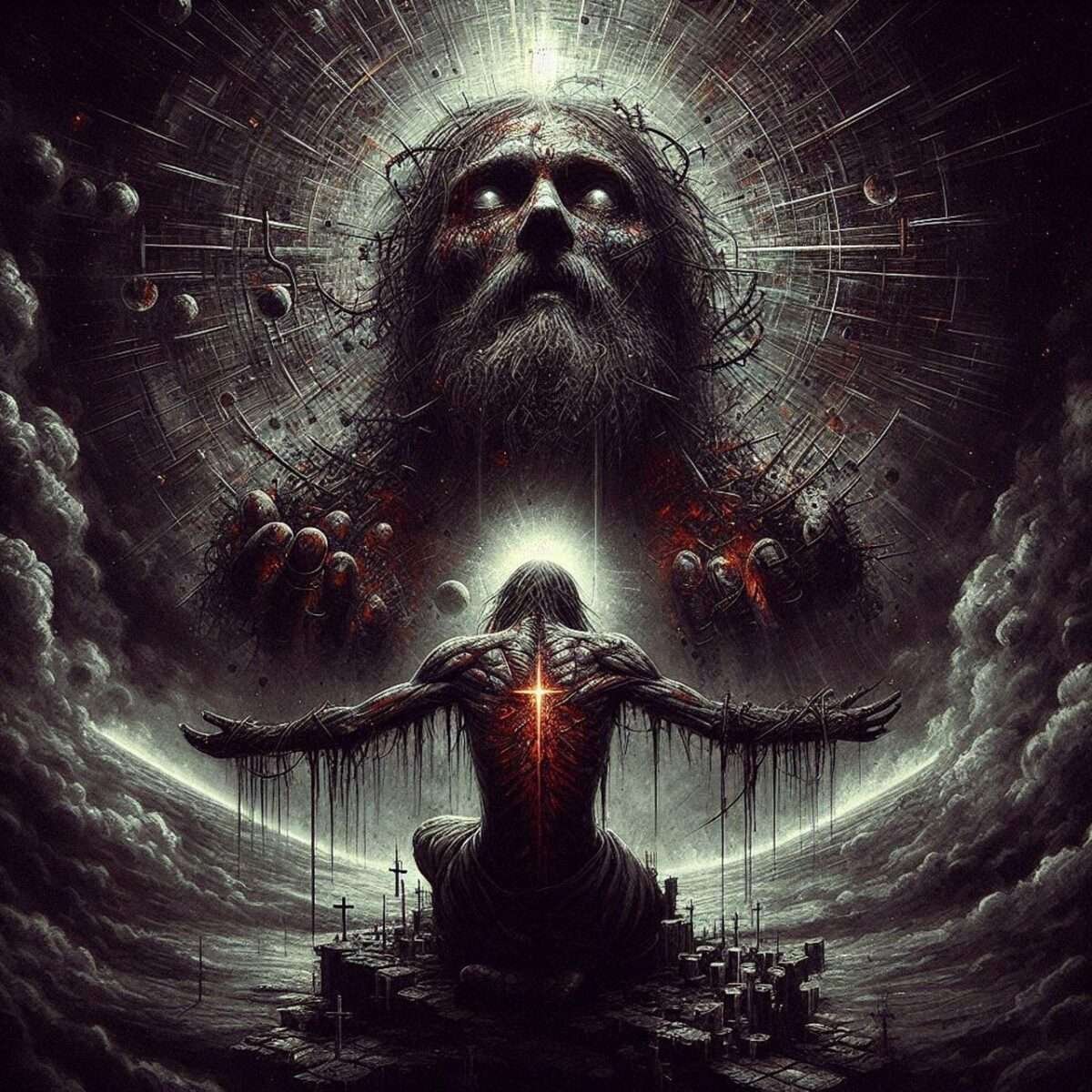
The Eros Awakening: How to Return the Magic of Changing the World to Philosophy
Category: Behavior and Consciousness
Explorações sobre a mente humana, o ego, o despertar da consciência e o comportamento na era digital.
-

The Noble Side of Failure: Why Wrong It's human, but carelessness is a choice.
There is an invisible but crucial line that separates the stumbling block from the inertia of those who just watch. In a culture that often idolizes immediate perfection, we were conditioned to fear error as if it were the final verdict on our ability. However, when we look more closely at the mechanics of learning and evolution, we discover a liberating truth: error is part of those who risk it. Mistake is not the opposite of success; it is indeed the trail left by courage.
When someone makes mistakes trying to get it right, the failure gets a completely different meaning. It ceases to be a failure and becomes a manifesto of intent. The error made in the arena of action reveals attempt, boldness and a deep will to change the status quo. It is the scientist who tests an invalid hypothesis, the entrepreneur who launches a product that needs adjustments or the professional who proposes an idea outside the box. In these scenarios, failure is the irrefutable proof that there was movement. Those who expose themselves to error are ultimately taking over the reins of evolution itself.
"Just don't miss someone who doesn't try. But one must know the stumbling block of those who run from the fall of those who walk with their eyes closed."
On the other hand, there is a conceptual and practical abyss between the error of boldness and the weight of slouch. While the first is born of excessive will, the second springs from the absence of care. Neglect, carelessness and carelessness are not the fruits of courage; they are clear symptoms of lack of responsibility for what we do. There is no nobility in the error resulting from "whatever", the lack of deliberate preparation or disrespect for time and expectations others. The carelessness does not build repertoire, it just destroys trust.
Thus, embracing error as part of the process does not mean adopting a complacent posture with mediocrity. It does mean celebrating the audacity of those who try and, at the same time, maintaining a high level of commitment and zeal for execution. Professional and personal maturity lies in understanding this difference. We must be generous with the mistakes that arise from our search for innovation, but relentless with the distraction that comes from our lack of commitment. After all, risking yourself responsibly is the only known way to turn failures into steps and potential into reality. -

The Soul Filter: Why Undirected Intelligence Is It Just a More Sophisticated Mistake?
The true greatness of a mind is not measured by the power of its engine, but by the direction in which it chooses to walk. In a world that often confuses intellectual noise with wisdom, one must rescue an uncomfortable truth: intelligence alone is a neutral tool. Without an ethical and methodological orientation, it runs the risk of becoming just a terribly more efficient way of making mistakes. After all, the same brilliant mind capable of unraveling mysteries and finding innovative answers has the exact same ability to sophisticate excuses, manipulate facts in a subtle way, and consequently expand collective and individual damage.
We live in the advent of Artificial Intelligence, an extension of our own desire for infinite processing. However, the AI is the definitive mirror of this neutrality: it amplifies what we deposit in it. If the "prompt" of our soul is corrupted by the ego, the result will be a dystopia of purposeless efficiency. The digital future requires us to be more than mere users of algorithms; it requires us to be the architects of a new ethics that filters the coldness of data through the warmth of human consciousness.
Therefore, virtue is not born from the simple act of thinking, but from the exact moment when reason ceases to serve pride and comes to serve truth, responsibility and conscious choice. When the intellect is shielded by the ego, it becomes a fortress of illusions. For it to become an instrument of evolution, reason needs discipline. Thinking well does not mean hoarding a disordered volume of ideas or displaying erudition; it means ordering the path of research so as not to get lost in confusing impressions and passing impulses. It is the elementary difference between a mind that is a data deposit and a mind that is a beacon of clarity.
To guide the reason for this safe path, philosophy and method offer us four practical pillars of mental discipline that become even more urgent in the era of instant information:
- Avoid accepting something unclear: The first step of intellectual honesty is to refuse automatism, not taking as true what can still be legitimately questioned. In times of "fake news" and recommendation algorithms, healthy skepticism is an act of soul preservation.
- Split Difficult Problems: Given the complexity of the modern world, disciplined thinking operates as a surgeon, separating a complex issue into smaller and more understandable parts so that they can be digested without the anxiety of the whole.
- Moving from simple to complex: Solid knowledge builds its reasoning by gradual steps, without hasty leaps or conclusions drawn from nothing. It is the building of a solid foundation on which the future can rest safely.
- Review the whole way: Finally, the conscious thinker takes inventory of his own journey, thoroughly checking whether nothing important was left out or neglected by the way. It's the existential debug required for evolution.
By structuring the mind under these rules, the human being begins to understand its role in reality in a much more integrated way. In simple terms, thought belongs to the field of mind, a free, abstract territory focused on the search for meaning, while the body occupies space, moves and actively participates in the material world. It is through the action of the body that the choices of the mind come to life. When disciplined reason and the search for truth guide the soul, the division between what we think and what we do in the physical world ceases to be an abyss and becomes a bridge — where intelligence finally turns into practical wisdom.
The future ahead will not be defined by the speed of our processors, but by the depth of our filters. Let BioBit.online be the space where this filtering happens, where technology finds its ethical direction and where every bit of information is weighed in the balance of consciousness. The invitation remains: do not be just intelligent; be wise.
-

The Power to Look Into The Eyes of Your Own Shadow: True Enlightenment Is Born of Discomfort.
It is a natural impulse of the human being to look at his own qualities. Celebrating virtues, talents and achievements is usually infinitely more comfortable and rewarding than facing fears, insecurities and weaknesses. We live, after all, in a culture that fiercely encourages the display of the best versions of ourselves. In social networks and even in close personal relationships, there is an almost automatic tendency to hide vulnerabilities and present only what seems admirable, safe and perfect. However, to achieve a truly deep understanding of oneself, one must have the courage to break through this polished surface and also face the aspects that we usually hide in the basement of the mind.
As psychologist Carl Jung well understood, no one lights up imagining figures of light, but making conscious the darkness itself. This "darkness" is nothing more than the so-called "shadow", a region of our psyche formed by emotions, desires, behaviors and characteristics that we often try to deny or repress by fear of rejection. The great danger lies in the fact that ignoring that part of the personality does not make it simply disappear. On the contrary: when repressed, the shadow continues to influence our attitudes, reactions and decisions completely unconsciously. It manifests itself in our chronic difficulty of admitting a mistake, in the disproportionate nuisance in the face of criticism, in the fear of recognizing feelings considered "negative" or in the almost childish tendency to blame others for problems that require, above all, an internal analysis.
Diving into this search does not mean in any way that we should live focused only on defects or martyring ourselves for our failures. The secret lies in developing an integrated awareness of all parts of one's personality, including — and mainly — those that cause discomfort. This welcoming and research process is the only real path to deeper levels of emotional maturity. The more a person understands his limitations, fears and internal contradictions, the greater and healthier his ability to deal with the outside world. In the end, authentic self-knowledge is not born from what we like to see in the mirror, but from the courage to light the light and illuminate the areas we spend our entire lives trying to keep in the shade. -
The Liberation of the Eye: Whoever Finds Their Own Value Stops Begging Approval.
The desire to be accepted, valued and praised is part of the deepest human experience. It's natural and healthy to enjoy each other's recognition. However, in an age marked intensely by social networks, virtual comparisons and the incessant search for literal and metaphorical "likes", we run the risk of falling into a dangerous trap: conditioning our well-being and our identity to external judgment. The real problem arises when the need for approval becomes the main source of support for our self-image. When this happens, we begin to live in a constant emotional dependence, transforming our self-esteem into a castle of letters that collapses at the slightest sign of criticism or indifference.
To break this cycle of insecurity and frustration, a turning point towards emotional autonomy is fundamental. True self-esteem is not born from the applause of the audience, but from the fertile ground of self-knowledge. The greater and deeper the connection we establish with our own value, the smaller our dependence on others' validation will be. Understanding one's own identity, recognizing one's own qualities with honesty and accepting limitations with compassion are the fundamental steps to build a genuinely healthy relationship with oneself. It is this internal dive that protects us from the excessive fear of criticism and paralysis of not being able to make decisions without the approval of others.
The key to an emotionally free life is not in isolation or pride, but in balance. External recognition and social support are important and welcome, but should never function as the only ruler to measure who we are. The most solid and resilient self-esteem is that built from the inside out, based on non-negotiable personal values, self-respect and daily self-acceptance. After all, authentic emotional freedom happens at this very moment of awakening: when a person finally recognizes his own value, he ceases to beg for recognition outside and begins to inhabit the certainty of who he really is. -

Historical Archive – Volume 1: The Fundamentals of Digital Awareness
Welcome to Volume 1 of the BioBit.online Historical Archive. This volume marks the beginning of our journey, where we establish the foundations of our curatorship: the intersection between technology, behavior and art. Here, we explore how digital advancement should not only be a race for performance, but an opportunity to expand human consciousness and our ability to create meaning.
The Digital Presence Manifesto
At this early stage, we discussed the importance of not becoming mere biological algorithms. Technology is an extension of our capabilities, but the essence of what we are lies in our ability to be present. The "Eternal Now" is not a mystical concept, but a practical need in a world that tries to kidnap our attention every second. Learning to silence external noise to hear your own intuition was the central theme that guided our first publications.
Selected Curated (Volume 1)
Below, we highlight the articles that served as the foundation for what BioBit.online is today:
- The Art of Living in Now – How presence transforms the perception of time.
- Technology and Humanity – Reflections on how to keep the soul in the code.
- The Awakening of Creativity – Digital art as a tool for personal evolution.
Conclusion: The Beginning of Evolution
To revisit Volume 1 is to understand that evolution is a continuous process. What began as a quest for balance became a community dedicated to conscious growth. May these initial words serve as inspiration for you to also begin your own journey of transformation, reminding you that each click and each choice shapes your digital and human future.