
There is an invisible but crucial line that separates the stumbling block from the inertia of those who just watch. In a culture that often idolizes immediate perfection, we were conditioned to fear error as if it were the final verdict on our ability. However, when we look more closely at the mechanics of learning and evolution, we discover a liberating truth: error is part of those who risk it. Mistake is not the opposite of success; it is indeed the trail left by courage.
Quando alguém erra tentando acertar, a falha ganha um significado completamente diferente. Ela deixa de ser um fracasso e passa a ser um manifesto de intenção. O erro cometido na arena da ação revela tentativa, ousadia e uma profunda vontade de mudar o status quo. É o cientista que testa uma hipótese inválida, o empreendedor que lança um produto que precisa de ajustes ou o profissional que propõe uma ideia fora da caixa. Nesses cenários, a falha é a prova irrefutável de que houve movimento. Quem se expõe ao erro está, em última análise, assumindo as rédeas da própria evolução.
“Só não erra quem não tenta. Mas é preciso saber distinguir o tropeço de quem corre do tombo de quem caminha de olhos fechados.”
Por outro lado, existe um abismo conceitual e prático entre o erro da ousadia e o peso do desleixo. Enquanto o primeiro nasce do excesso de vontade, o segundo brota da ausência de cuidado. A negligência, a desatenção e o descuido não são frutos da coragem; são sintomas claros da falta de responsabilidade com aquilo que fazemos. Não há nobreza no erro que resulta do “tanto faz”, da falta de preparo deliberada ou do desrespeito ao tempo e às expectativas alheias. O descuido não constrói repertório, apenas destrói a confiança.
Dessa forma, abraçar o erro como parte do processo não significa adotar uma postura complacente com a mediocridade. Significa, sim, celebrar a audácia de quem tenta e, ao mesmo tempo, manter um nível elevado de compromisso e zelo com a execução. A maturidade profissional e pessoal reside em entender essa diferença. Devemos ser generosos com os erros que nascem da nossa busca por inovação, mas implacáveis com a distração que nasce da nossa falta de compromisso. Afinal, arriscar-se com responsabilidade é a única forma conhecida de transformar falhas em degraus e potencial em realidade.
Autor: reas63
-

The Noble Side of Failure: Why Wrong It's human, but carelessness is a choice.
-

The Soul Filter: Why Undirected Intelligence Is It Just a More Sophisticated Mistake?
The true greatness of a mind is not measured by the power of its engine, but by the direction in which it chooses to walk. In a world that often confuses intellectual noise with wisdom, one must rescue an uncomfortable truth: intelligence alone is a neutral tool. Without an ethical and methodological orientation, it runs the risk of becoming just a terribly more efficient way of making mistakes. After all, the same brilliant mind capable of unraveling mysteries and finding innovative answers has the exact same ability to sophisticate excuses, manipulate facts in a subtle way, and consequently expand collective and individual damage.
We live in the advent of Artificial Intelligence, an extension of our own desire for infinite processing. However, the AI is the definitive mirror of this neutrality: it amplifies what we deposit in it. If the "prompt" of our soul is corrupted by the ego, the result will be a dystopia of purposeless efficiency. The digital future requires us to be more than mere users of algorithms; it requires us to be the architects of a new ethics that filters the coldness of data through the warmth of human consciousness.
Therefore, virtue is not born from the simple act of thinking, but from the exact moment when reason ceases to serve pride and comes to serve truth, responsibility and conscious choice. When the intellect is shielded by the ego, it becomes a fortress of illusions. For it to become an instrument of evolution, reason needs discipline. Thinking well does not mean hoarding a disordered volume of ideas or displaying erudition; it means ordering the path of research so as not to get lost in confusing impressions and passing impulses. It is the elementary difference between a mind that is a data deposit and a mind that is a beacon of clarity.
To guide the reason for this safe path, philosophy and method offer us four practical pillars of mental discipline that become even more urgent in the era of instant information:
- Avoid accepting something unclear: The first step of intellectual honesty is to refuse automatism, not taking as true what can still be legitimately questioned. In times of "fake news" and recommendation algorithms, healthy skepticism is an act of soul preservation.
- Split Difficult Problems: Given the complexity of the modern world, disciplined thinking operates as a surgeon, separating a complex issue into smaller and more understandable parts so that they can be digested without the anxiety of the whole.
- Moving from simple to complex: Solid knowledge builds its reasoning by gradual steps, without hasty leaps or conclusions drawn from nothing. It is the building of a solid foundation on which the future can rest safely.
- Review the whole way: Finally, the conscious thinker takes inventory of his own journey, thoroughly checking whether nothing important was left out or neglected by the way. It's the existential debug required for evolution.
By structuring the mind under these rules, the human being begins to understand its role in reality in a much more integrated way. In simple terms, thought belongs to the field of mind, a free, abstract territory focused on the search for meaning, while the body occupies space, moves and actively participates in the material world. It is through the action of the body that the choices of the mind come to life. When disciplined reason and the search for truth guide the soul, the division between what we think and what we do in the physical world ceases to be an abyss and becomes a bridge — where intelligence finally turns into practical wisdom.
The future ahead will not be defined by the speed of our processors, but by the depth of our filters. Let BioBit.online be the space where this filtering happens, where technology finds its ethical direction and where every bit of information is weighed in the balance of consciousness. The invitation remains: do not be just intelligent; be wise.
-

The Power to Look Into The Eyes of Your Own Shadow: True Enlightenment Is Born of Discomfort.
It is a natural impulse of the human being to look at his own qualities. Celebrating virtues, talents and achievements is usually infinitely more comfortable and rewarding than facing fears, insecurities and weaknesses. We live, after all, in a culture that fiercely encourages the display of the best versions of ourselves. In social networks and even in close personal relationships, there is an almost automatic tendency to hide vulnerabilities and present only what seems admirable, safe and perfect. However, to achieve a truly deep understanding of oneself, one must have the courage to break through this polished surface and also face the aspects that we usually hide in the basement of the mind.
As psychologist Carl Jung well understood, no one lights up imagining figures of light, but making conscious the darkness itself. This "darkness" is nothing more than the so-called "shadow", a region of our psyche formed by emotions, desires, behaviors and characteristics that we often try to deny or repress by fear of rejection. The great danger lies in the fact that ignoring that part of the personality does not make it simply disappear. On the contrary: when repressed, the shadow continues to influence our attitudes, reactions and decisions completely unconsciously. It manifests itself in our chronic difficulty of admitting a mistake, in the disproportionate nuisance in the face of criticism, in the fear of recognizing feelings considered "negative" or in the almost childish tendency to blame others for problems that require, above all, an internal analysis.
Diving into this search does not mean in any way that we should live focused only on defects or martyring ourselves for our failures. The secret lies in developing an integrated awareness of all parts of one's personality, including — and mainly — those that cause discomfort. This welcoming and research process is the only real path to deeper levels of emotional maturity. The more a person understands his limitations, fears and internal contradictions, the greater and healthier his ability to deal with the outside world. In the end, authentic self-knowledge is not born from what we like to see in the mirror, but from the courage to light the light and illuminate the areas we spend our entire lives trying to keep in the shade. -
The Liberation of the Eye: Whoever Finds Their Own Value Stops Begging Approval.
The desire to be accepted, valued and praised is part of the deepest human experience. It's natural and healthy to enjoy each other's recognition. However, in an age marked intensely by social networks, virtual comparisons and the incessant search for literal and metaphorical "likes", we run the risk of falling into a dangerous trap: conditioning our well-being and our identity to external judgment. The real problem arises when the need for approval becomes the main source of support for our self-image. When this happens, we begin to live in a constant emotional dependence, transforming our self-esteem into a castle of letters that collapses at the slightest sign of criticism or indifference.
To break this cycle of insecurity and frustration, a turning point towards emotional autonomy is fundamental. True self-esteem is not born from the applause of the audience, but from the fertile ground of self-knowledge. The greater and deeper the connection we establish with our own value, the smaller our dependence on others' validation will be. Understanding one's own identity, recognizing one's own qualities with honesty and accepting limitations with compassion are the fundamental steps to build a genuinely healthy relationship with oneself. It is this internal dive that protects us from the excessive fear of criticism and paralysis of not being able to make decisions without the approval of others.
The key to an emotionally free life is not in isolation or pride, but in balance. External recognition and social support are important and welcome, but should never function as the only ruler to measure who we are. The most solid and resilient self-esteem is that built from the inside out, based on non-negotiable personal values, self-respect and daily self-acceptance. After all, authentic emotional freedom happens at this very moment of awakening: when a person finally recognizes his own value, he ceases to beg for recognition outside and begins to inhabit the certainty of who he really is. -

The Invisible Character Test: Who are you? When there's nothing to gain.
In a world increasingly shaped by appearances and the relentless search for recognition, human relations run the risk of becoming mere business counters. It is easy and even strategic to distribute smiles, demonstrate kindness and offer attention when the person in front of us occupies a prominent position or has influence to leverage our goals. However, the true measure of a man is not in calculated cordiality, but in the way he chooses to treat those who can bring him no benefit. The real ethical challenge is to act with respect, dignity and empathy when the equation of personal interest zeros and there is absolutely nothing to gain in return.
Throughout the journey of life, we all establish connections with people who occupy the most different social, professional or economic positions. It is precisely in this tapestry of daily interactions that masks usually fall. The way someone reports to a cleaning officer, the patience shown with an elderly person, the look directed at a child or the courtesy extended to an unknown on the street reveal values much deeper than any inflamed speech or carefully constructed image on social networks. When behavior changes drastically according to the status or power of those ahead, what is manifested is not education, but an opportunism disguised as etiquette.
This reflection goes far beyond superficial manners; it touches the core of human integrity. True ethics manifests itself precisely in moments of invisibility, when no one is watching or when action will generate no kind of dividend or future favor. After all, character is not a grand and isolated event, but a solid construction shaped by small attitudes repeated daily. It is the small everyday gestures that function as the most faithful mirror of the soul. In the end, the real greatness of a person will never be based on the sum of his material achievements or his titles, but on the dignity with which he chooses to treat those who can offer him nothing in return other than his own humanity. -

The Praise of Imperfection: Because the Pie Tree preserves its freedom.
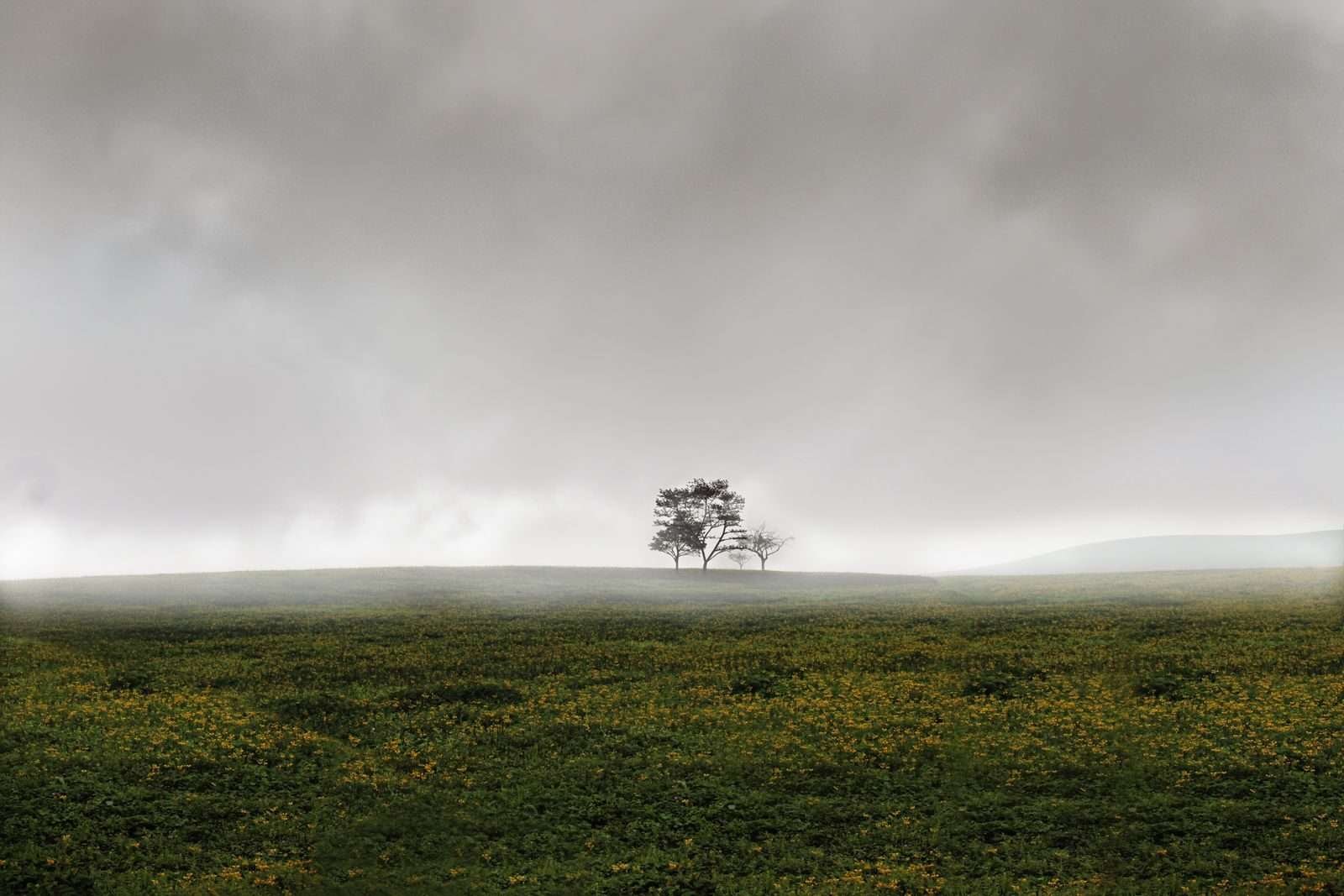
In the immense collection catalogue of the contemporary world, the straight line is the gold standard. We are taught, from very early on, that the value of a life is measured by its practical usefulness: by income, by impeccable curriculum, by quick response and by the almost superhuman ability to adapt to any requirement. They want us to be like perfect trees, straight and predictable trunks, ready for cutting. However, there is an ancient wisdom — rescuing metaphors from trees, animals and dreams — which reminds us of a comforting truth: the pie tree grows free, while the straight tree ends up in the hands of the carpenter.
This image deconstructs the rigidity of human certainties and our relentless pursuit of prestige. What the social and economic system calls "defect" or "utility" may actually be the greatest defense mechanism of an individual. The lack of immediate utility for the market becomes protection. While the straight symmetrical tree attracts the axe because it is considered "useable", the tree full of us and curves remains standing, fulfilling its natural cycle, giving shade and sheltering birds. She doesn't serve the carpenter, but she serves life.
The Pillars of Sacred Uselessness
To understand this philosophy of detachment and inner silence, we need to turn upside down the concepts of success that sell us daily. The freedom proposed by this metaphor is based on five fundamental pillars:
Appearing Utility vs. Own Value: The apparent usefulness is what the system validates as advantageous or productive. Self-worth, on the other hand, precedes any external approval; it exists whether you serve someone's interests or not.
Spontaneity and Wu Wei: Living with spontaneity means inhabiting nature itself without forcing an artificial form to fit in other people's ways. It is the concept of Wu Wei — to act in harmony with the natural flow of things, without the need to control everything by force or mental wear.
Disagreement of Fame: It means disfigure the idea that the whole life should be organized around positions, titles or social prestige.
Important: This perspective does not defend irresponsible passivity or contempt for daily commitments. What she questions is the neurotic obligation to fit absolutely every pattern just to be accepted. Preserving its essence requires accepting the price that not everyone will understand its way of living, thinking or choosing.
The Revolution in Routine: Return to Singularity
Bringing the wisdom of the crooked tree into everyday life does not require great dramatic ruptures, but small, firm and decisive choices. In practice, our freedom is protected when we exercise four essential movements:
Say no: Refuse tasks, invitations or social roles that nullify our personal limits and silence our mental health.
Avoid comparison: Understanding that life itself does not need (and should not) be measured by the fast pace or by the goals achieved by others.
Protect singularity: Recognizing once and for all that not every difference is a defect that needs to be corrected. Your knots and curves are part of your identity.
Reduce the rush: Accept processes and paths that do not generate immediate financial or practical results, but preserve their emotional balance.
At first, giving up the "perfection" required by the carpenter may seem a disadvantage. The world will suggest you're falling behind. But just look around to realize that what prevents someone from being "used" and chewed by the system is exactly what preserves their health, their peace of mind and their unique way of existing. In the theater of life, being a crooked tree is not a failure; it is the most sublime act of freedom. -

The Look That Speaks: The Depth of Connection Beyond Words

There are windows that don't open to streets, but to whole universes. A blue look, charged with emotion, is like the encounter of the ocean with the sky on the horizon: vast, mysterious and impossible to ignore. In it, words become unnecessary, because the brightness of the iris tells stories that the voice would never dare pronounce. In biobit.online, we explore how non-verbal communication is often the most honest channel of human connection we have.
The Psychology of Visual Contact
When we dive into the depth of such a look, we are confronted with our own shadows and lights. Science explains that prolonged visual contact releases oxytocin, the hormone of trust and affection, creating an invisible bridge between two consciousnesses. It is a mirror of the soul that invites us to silence and contemplation. In a world of fast and superficial connections, mediated by cold screens, stopping to decipher the poetry contained in a simple look is an act of resistance and humanity.
What Eyes Reveal About Being
Eyes don't just see; they talk. They reveal the weariness of the journey, the spark of hope and the depth of empathy. Learning to read what the eyes say, even before the first sound escapes from the lips, is an essential skill for those seeking personal evolution and emotional intelligence. This "look that speaks" reminds us that, behind each digital interaction, there is a soul thirsty for being seen and understood in its entirety.
Conclusion: The Invitation to Royal Connection
May we rescue the courage to look into the eyes. In your next conversation, try to perceive the nuances of color and emotion in each other's eyes. You will find that the truth is rarely in what is said, but in what appears through the iris. Continue your journey of self-discovery with us, exploring how the subtlest details of our biology can reveal the greatest truths about our behavior.
-

Historical Archive – Volume 6: Simplicity, Discipline and Balance at BioBit.online
Welcome to Volume 6 of BioBit.online Historical Archive. This volume represents the apex of a journey dedicated to exploring the human essence in a saturated world of digital noise. Here, not only do we list articles, but we celebrate the philosophy of simplicity as the greatest luxury in modern life. In an era where we are constantly bombarded by information, true discipline does not lie in accumulating, but in knowing what to subtract.
The Philosophy of Subtraction and Integral Balance
The art of living well today requires a visceral connection between mind and body. We are not just data processors; we are biological beings that pulse in harmony with the universe. When we ignore this unit, we lose purpose. This file is an invitation for you to rediscover the transformative force of detachment and the clarity that arises when we consciously decide to focus on what is essential.
Below, we present the pillars of this edition, cured to strengthen their self-confidence and emotional autonomy:
- The Art of Subtract: Simplicity as the ultimate luxury. – A reflection on how mental minimalism is the key to freedom.
- The Awakening of Unity: Mind and Body Connection. – How biological integration enhances our ability to act in the world.
As you navigate through these texts, remember: discipline is the bridge between your goals and achievement. Without it, talent is just wasted potential. May these words serve as a beacon for your journey of continuous evolution.
Note: This content is part of BioBit.online's historical collection, preserving the evolution of our digital thinking and curatorship over time.
-
Commented Retrospective – Volume 5: Science, Mind and the Future of Mankind
Volume 5 of the BioBit Historical File. online confronts the final frontier: the encounter between the rigorous science and the digital future of humanity. We live in an era where technology advances in quantum leaps, but our wisdom often remains stagnant. This archive seeks to be the bridge between technical data and the human soul, transforming the coldness of codes into existential poetry.
We discuss here how the human mind adapts or is lost in the neural networks of modernity. Science should not be a tool of dehumanization, but a beacon that illuminates the complexities of our behavior. The digital future is not something that happens to us, but something that we build with each click, every thought and every conscious choice of disconnection for the reunion with the real.
Science and the Future: The New Border of Being
- The Invisible Character Test – Who we are in the absence of social dividends.
- The Power to Look in the Shadow – Deep psychology as a tool for digital evolution.
This volume is an invitation to the vanguard of thought. Do not accept the future as an imposed destiny; mold it through the deep understanding of your own mind. Science is the map, but you're the traveler.
Volume 5 of the BioBit Historical File. online confronts the final frontier: the encounter between the rigorous science and the digital future of humanity. We live in an era where technology advances in quantum leaps, but our wisdom often remains stagnant. This archive seeks to be the bridge between technical data and the human soul, transforming the coldness of codes into existential poetry.
We discuss here how the human mind adapts or is lost in the neural networks of modernity. Science should not be a tool of dehumanization, but a beacon that illuminates the complexities of our behavior. The digital future is not something that happens to us, but something that we build with each click, every thought and every conscious choice of disconnection for the reunion with the real.
Science and the Future: The New Border of Being
- The Invisible Character Test – Who we are in the absence of social dividends.
- The Power to Look in the Shadow – Deep psychology as a tool for digital evolution.
This volume is an invitation to the vanguard of thought. Do not accept the future as an imposed destiny; mold it through the deep understanding of your own mind. Science is the map, but you're the traveler.
-
Commented Retrospective – Volume 4: Mentality of Success and Authentic Prosperity
In Volume 4 of our Historical Archive, we approach the mentality of success from an perspective that transcends material accumulation. True prosperity is a symphony between having and being, where external abundance is only the reflection of a mind rich in purpose and clarity.
Authentic Success
Authentic success is not a straight line of conquests, but a crooked tree that, in its uniqueness, finds the freedom to grow beyond the limits imposed by the social carpenter. Here we explore discipline as the tool that sculpts destiny.
Mentality and Prosperity: The Way of Autonomy
- The Compliment of Imperfection – Because being "useless" to the system can be your greatest salvation.
- The Soul Filter – The urgent need for an ethical compass in the intellect.
Navigate by this volume is a reset exercise. The prosperity we seek at BioBit. online is the one that allows the individual to flourish without losing its roots in truth and collective responsibility.
-
Commented Retrospective – Volume 3: Awakening, Ego and the Journey of Essence
Volume 3 of the BioBit Historical File. online is a portal to deep insight. Here, we dive into the ocean of being, where the currents of the ego often try to divert us from our purest essence.
The Awakening of Consciousness
Awakening is not a unique event, but a continuous process of removing the layers of illusion that we accumulate throughout digital and social life. It is the act of lighting a torch in the basement of the mind and discovering that what we feared as darkness was only the absence of our own conscious light.
The Journey of Essence: Selected Articles
- Unit Awakening – An exploration of the integration necessary for fullness.
- Clearing the Eye of Others – The end of begging by external validation.
This file is not just a record of the past, but a map to the future. By revisiting these texts, we invite you to question: who are you when the screens go out and silence becomes your only companion?
-
Retrospective Commented – Volume 2: Technology, Consciousness and Human Awakening
Welcome to Volume 2 of BioBit.online Historical Archive. This volume explores the fascinating intersection between technology, behavior and the search for consciousness. Through a commented curatorship, we analyze how digital innovation shapes our world perception.
Consciousness in the Digital Age
Nesta fase, mergulhamos em temas fundamentais como a natureza do sofrimento e o despertar da consciência. Discutimos como a “consciência além do pensamento” pode ser uma ferramenta de libertação e como o “eterno agora” se torna um refúgio necessário em uma sociedade hiperconectada.
The Self and Human Identity
Dedicamos uma série de artigos para desvendar o que é o ego realmente e como ele assume o controle de nossas vidas. Ao entender a liberdade da identificação e a transformação pela presença, abrimos caminho para viver em unidade e experimentar a alegria de ser.
Selected Curated (Volume 2)
- Consciousness Beyond Thought: The Key to Presence
- The Eternal Now: Living the Plenty of Being
- The Awakening of Consciousness: A New Perception
- Peace Overcoming Understanding: Inner Quietness
- Gratitude as a State of Being: Transforming Life
This second volume is an invitation to deep reflection on how technology and humanity converge. Dive into these articles to find clarity and purpose in your digital journey.

