
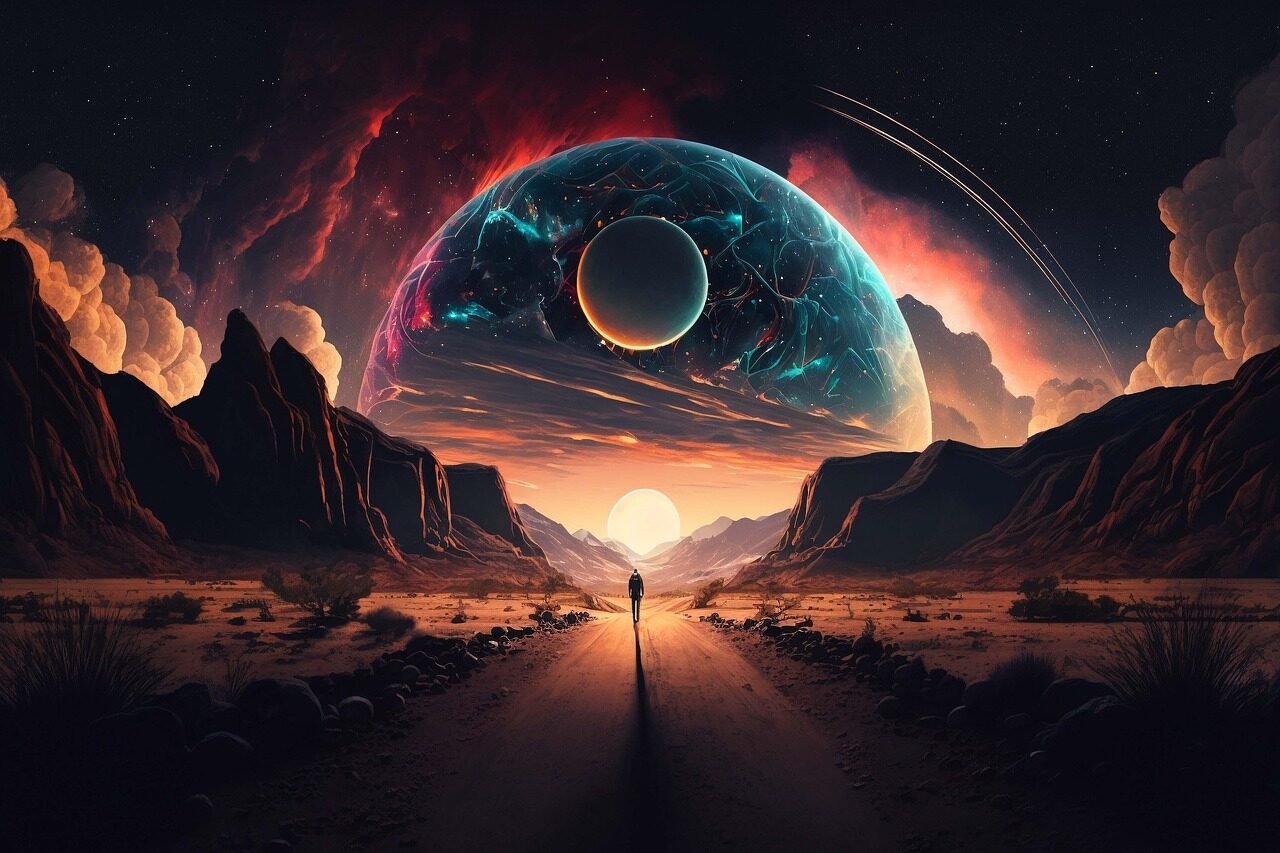
What does it mean to inhabit a world that has no physical extension, but which pulses with the vivacity of a shared reality? Modern open world games are not just software engineering feats; they are existing laboratories. As we cross the digital borders of vast continents generated procedurally, we are confronted with the loneliness of the hero and the immensity of the code. Philosophically, these spaces invite us to question the nature of free will: are we truly free in our choices, or are we just browsing through a tree of pre-determined decisions by invisible architects?
The poetry of these worlds lies in the unnecessary detail — the balance of the leaves of a tree that no one observes, the solar cycle that illuminates forgotten ruins. There is an inherent melancholy in knowing that each mountain on the horizon is a mathematical object, but that the emotion we feel when climbing it is genuinely human. It is the perfect synthesis between logos (the logic of the system) and pathos (the passion of experience). Informatively, the game industry now uses artificial intelligence systems to populate these worlds with dynamic ecosystems, where fauna and flora react autonomously, creating a sense of "presence" that was previously impossible.
Technically, we are seeing the transition to the Metaverse not as a social network, but as an overlap of realities. Last generation graphics engines allow light to behave physically correctly (Ray Tracing), bringing digital aesthetics closer to biological perception. The player is no longer a mere observer, but a co-author of the narrative. The future of the games points to a dissolution of the barriers between the "me" and the "avatar", where identity becomes fluid and entertainment becomes a spiritual journey through territories of pure imagination.


Leave a comment