
Financial education is one of the most powerful tools we can have, because it changes the way we see and use money. It is not about becoming an expert in economics or finance, but about learning enough to make decisions with security and independence. The more you study about it, the less vulnerable it is to scams, bad advice or impulsive choices. In addition, this knowledge can be shared with family and friends, creating a cycle of awareness and care about finances. Learning to deal with money is a life lesson — and an investment that brings returns forever.
Tag: work
-

Financial education: an inheritance for life.
-
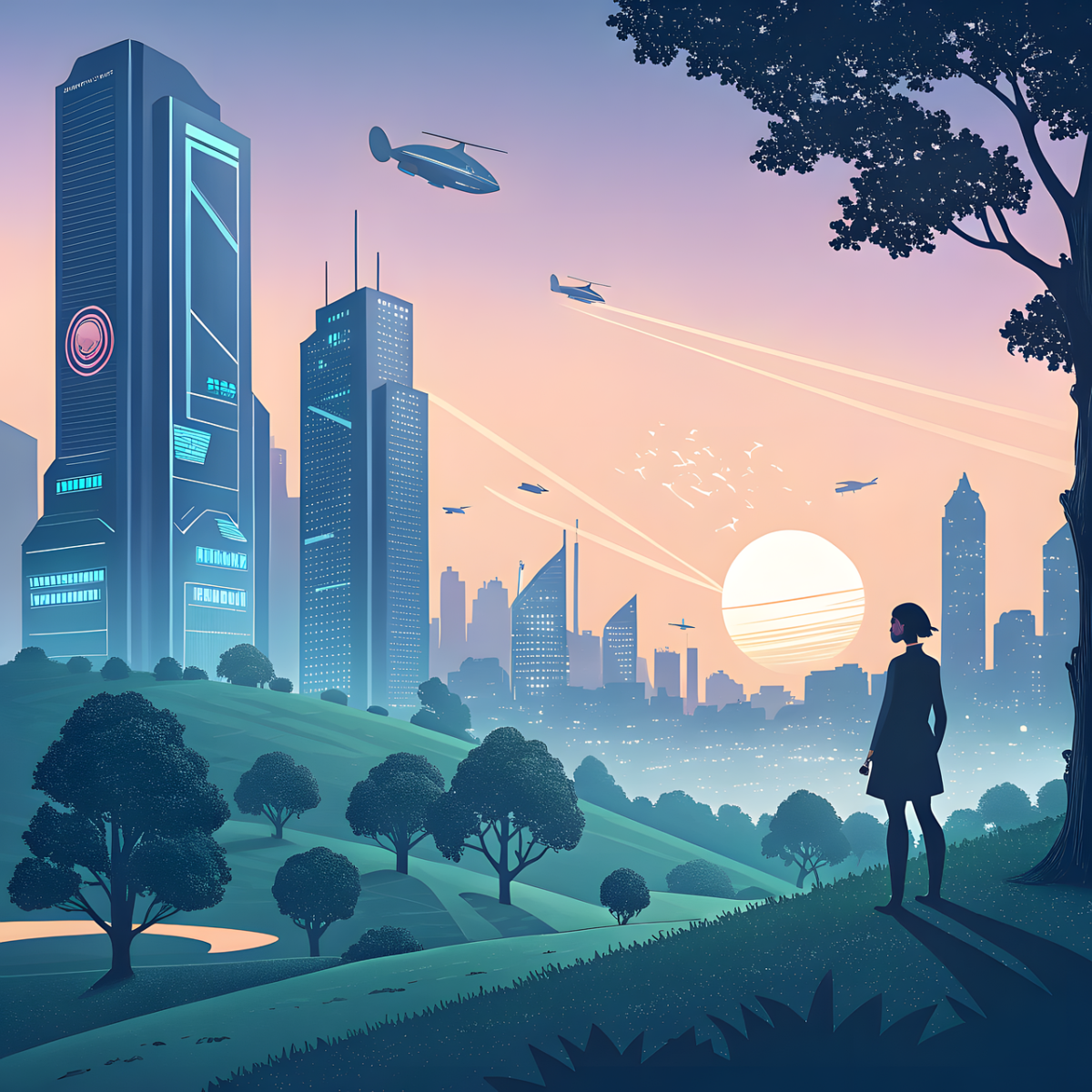
The Invisible Fabric of Tomorrow: Like 6G and IoT are restructuring Smart Cities.
Imagine walking through a metropolis where traffic lights do not follow fixed stopwatches, but react in real time to the flow of pedestrians and autonomous vehicles. A city where power systems and water distribution are able to predict leaks and cure its own structural flaws even before any citizen notices a problem. This reality, which seemed restricted to science fiction pages, gains practical contours with the arrival and maturation of 6G technology. By transcending the barriers of connectivity we know, the next generation of mobile networks arrives to act as the real nervous system of the Internet of Things (IoT), transforming urban centers into living, hyper-connected and deeply intelligent ecosystems.
Overcoming Limits: The 5G Jump to the Terahertz Era
Although 5G has opened doors for initial automation, the demands of a truly intelligent city run into physical bandwidth limitations and simultaneous processing capacity. It is in this bottleneck that 6G redefines the technological board. Operating at Terahertz (THz) frequency, the new network does not just deliver an impressive speed — which can reach the mark of up to 1 Terabit per second —, but solves the biggest nightmare of the current urban infrastructure: the density of connections.
The 6G is capable of supporting up to 10 million connected devices per square kilometer. This quantum leap allows each public lamp, manhole, pollution sensor and shared vehicle to dialogue with each other without suffering from network congestion, enabling the concept of the Internet of All Things (IOE).
Integrated Sensing: The City to See Without Cameras
One of the biggest silent revolutions of this new architecture meets the name ISAC (Integrated Sensing and Communication, or Integrated Sensing and Communication). In previous networks, sending data and mapping the physical environment required totally different hardware and frequencies. In the 6G ecosystem, the radio signal itself acts as a biological radar.
The antennas and intelligent reflective surfaces spread across the buildings begin to map the movement, measure distances and monitor environmental conditions using the ricochet of the network waves themselves. In practice, urban intelligence can optimize road traffic or monitor large agglomerations for real-time public safety, without the need to install thousands of invasive cameras, preserving citizens' visual privacy while raising efficiency to the maximum level.
Impact on Sustainability: With 6G and sensors IoT of very low energy consumption, intelligent buildings manage their own electricity consumption and integrate renewable sources into the power grid in a predictive way, drastically reducing the footprint of urban carbon.
From Automatic Reaction to Auto-Repaired Infrastructure
The great key to life in cities will be the change from reactive public management to predictive governance. Thanks to the latency in the microseconds' home and the natively integrated Artificial Intelligence at the heart of the 6G network (the so-called Edge AI), massive data processing takes place on the edge, that is, right there on the street, without having to travel to a distant cloud server.
This gives rise to self-healing systems. If an energy transformer or a central water pipe presents an anomalous microvibration, the IoT sensors detect the pattern, the network AI diagnoses wear and the system automatically redirects the flow of resources through alternative pathways, triggering the maintenance team before a blackout or rationing occurs. The urban flow never stops; it adapts.
The Challenge in Horizon and the Future That Expects Us
The transition towards this hyperconnected utopia does not happen without friction. The design of these new metropolises requires massive investments in new antennas, rigorous cybersecurity solutions to shield government data and a mature ethical debate on citizens' privacy within an ecosystem that detects everything.
However, the horizon designed by the fusion between 6G and IoT points to a path without turning back. The smart cities of the future will no longer be piled up with concrete and asphalt monitored by computer screens; they will become dynamic, efficient and human environments, where technology ceases to be an accessory and becomes the oxygen that enables sustainability and collective well-being. -
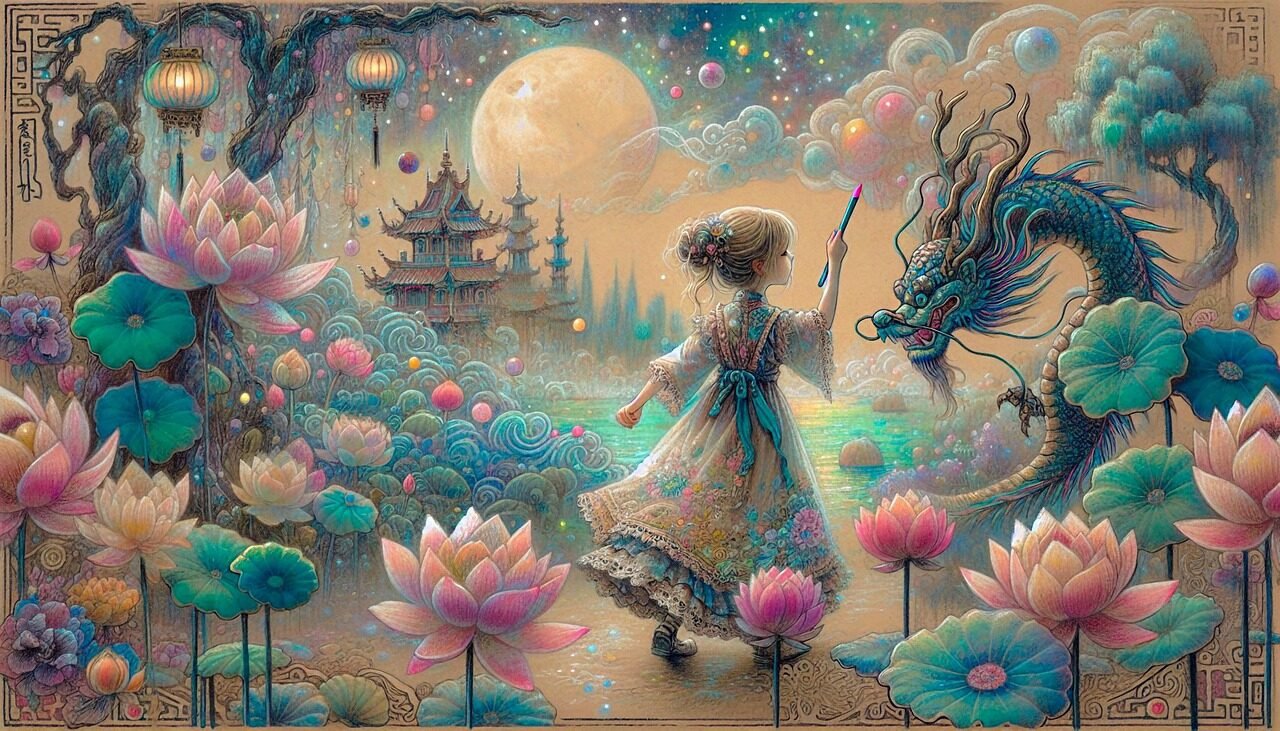
From Brush to Pixel: How Artificial Intelligence Can Be the Traditional Artist's New Ally.
The transition from fabric to glass screen has always been a land surrounded by hesitation for traditional artists. The smell of oil paint, texture of textured paper and watercolor unpredictability have a difficult physical magic to replicate. However, the current artistic scene presents a new frontier: the fusion of digital painting with the tools of Artificial Intelligence (IA). Far from being a threat to authenticity, AI can act as an incredibly versatile studio assistant, helping translate its classic baggage into the digital environment in a fluid and innovative way.
The Start Point: Scanning Your Identity
The biggest mistake a traditional artist makes when migrating to digital is trying to start over. Its greatest strength is its baggage: the understanding of color theory, anatomy, light and shadow. The migration process begins in the physical world.
Instead of fighting a blank canvas in painting software (such as Photoshop, Procreate or Krita), you can use your own graphite sketches or pen studies as a base. By scanning a linear design, integrated AI tools or image generation software (such as Midjourney or Stable Diffusion) can be used to test complex color schemes or dramatic illuminations in seconds, serving as an ultra-fast "painting study" that will guide your real digital brush strokes.
AI as Copilot of Creation and Concept
In the traditional method, changing the composition of a work in the middle of the process may mean losing work days. In the digital environment supported by AI, this creative block is dissolved. The role of AI here is that of co-creator in the planning phase, using concepts such as:
Generation of Custom References: Do you need to paint a Renaissance armor under the sunset on Mars? Instead of spending hours at Pinterest, you can guide AI to generate exact references that combine these elements, serving as inspiration for your manual painting.
Style Variation: You can feed an AI with an authorial sketch and ask it to design how that image would be if it was influenced by Impressionism or Baroque, opening up new aesthetic perspectives before you even choose digital brushes.
Mental note: The AI generates the suggestion, but the execution, refinement and human sensitivity of the final brushstroke remain entirely theirs. It accelerates the brain; you command the hand.
The Hybrid Workflow in Practice
To structure this transition in a theoretical way, we can divide the ideal workflow into four clear stages, uniting the best of both worlds:
Human Spark (Analogical): Creation of the concept, thumbnails and structural pencil drawing on paper.
The Horizon Expansion (IA): Upload from the sketch to an AI tool. Use of Img2Img techniques (image for image) with text commands (prompts) to generate atmosphere variations, color palette and textures.
Digital Structure (Software): Import of the original sketch and the best variations of AI to separate layers in your digital painting software.
Human Painting (Digital): Using a scanning table to paint on top, correct distortions that the AI usually commits (such as hands anatomy or confusing perspectives) and apply its unique personal style.
Overcoming Prejudice and Embracing Evolution
Historically, every major technological transition caused discomfort. The photograph was already seen as the end of the painting, and the appearance of Photoshop itself generated heated debates in the 1990s. Artificial intelligence is just another tool on your desktop — a digital pigment that responds to conceptual commands.
By migrating to digital painting with the support of AI, you are not abandoning your traditional art; you are expanding your studio to a dimension where experimentation time is instantaneous and the possibilities of creation are virtually endless. The brush changed, the canvas evolved, but the mind behind the work remains yours. -

The Art of the Body Escape: How to Hack Traditional Work and Live on Your Own Terms.
The biggest lie we were told was that we should spend forty years working forty hours a week to only then enjoy life in a late and tired retirement. This traditional model from 9 a.m. to 5 p.m., inherited from the industrial age, transformed time into our scarce currency and stress into an acceptable lifestyle. However, a counterculture of digital nomads and intelligent entrepreneurs proved that there is a revolutionary alternative: lifestyle design. The goal is not to accumulate fortunes to spend in the future, but to maximize your freedom in the present, reducing the workload to the essential minimum while you create a structure that automatically generates income.
The first step to break with the currents of the cubicle is to understand the crucial difference between being productive and being busy. Society idolizes occupation, but lifestyle design focuses on relentless efficiency through the application of the Pareto Law, the famous 80/20 principle. In the world of business and careers, 80% of economic results come from only 20% of our efforts and customers. By identifying and obsessively focusing on this vital slice — and eliminate or delegate the other 80% of bureaucratic tasks and useless meetings —, you regain control of your calendar without losing billing. Time stops being a roof and becomes a choice.
Once the agenda is cleared, the gear of freedom rests on two modern pillars: automation and global outsourcing. Instead of managing every micro-detail of your business or function, the goal is to build a "muse" — a lean digital business model, focused on automated infoproducts or services, that works autonomously. What cannot be automated by software should be outsourced to virtual assistants around the world. Delegating repetitive or operational tasks to qualified professionals in different time zones allows your company to operate 24 hours a day, while you devote yourself exclusively to what really matters or simply to living.
"Wealth is not measured by the bank balance, but by the amount of options you have about how and where to spend your time."
This drastic change of routine enables the most liberating concept of this philosophy: the mini-retirements. Instead of concentrating all rest at the end of life, the proposal is to distribute periods of months of leisure, travel and learning throughout your productive journey. Moving temporarily to Thailand, learning a new language in Europe or dedicating to an artistic project becomes the rule, not the exception. By breaking the pact of chronic corporate suffering, you cease to be a system worker to become the author, designer and director of your own destiny.

