
How the awareness of our finitude rescues the urgency of living in the present and rebuilds the meaning of our day.
We truly awaken to life at the very moment when we understand, with almost painful clarity, that lost time can never be recovered. It's an invisible breath that pushes us forward. However, most of us spend years in a row postponing crucial decisions, engaging deep dreams and ignoring the rapid and silent passage of hours. True awakening is not an abstract intellectual event; it occurs in the flesh, when we realize that the days accumulated in the past do not return, demanding of us an urgent appreciation of the brevity of now.
When we allow our attention to be consumed entirely by everyday distractions and empty concerns that saturate the modern world, we silently neglect our own existence. The price of this inattention is high: a painful late repentance about the real finitude of our human journey. Sudden awareness of wasted years generates a profound emotional impact, capable of reorganizing our internal priorities. This perception acts as an electric shock, a strong warning to abandon anesthetic procrastination and focus solely on what really matters: living the present with clarity.
"Closing the cycle of eternal postponement demands confronting, first of all, the sweet illusion that we will have infinite time available."
The Gear of Postponing and Awakened Consciousness
Many of us live immersed in automatic routines, accepting some kind of existential sleepwalking. Under this state of numbness, we indefinitely postpone our most valuable relationships, the most cherished personal projects and the words that should be said today. This lack of conscious attention undermines our future in a cruel way, ensuring that the weight of temporal waste is only felt when we are already facing inevitable repentance.
When we finally accept the irreversible reality of the past days, we manage to gather the necessary forces to act with determination, transforming old and vague intentions into real attitudes of immediate change. It is this profound turn of mind that removes remorse and brings invigorating clarity to everyday life. Instead of passively lamenting the opportunities lost in the fog of the past, the focus of the individual moves energetically to the construction of an active and intentional present.
The Pillars of a Balanced Existence
The search for a truly integrated and balanced life requires a continuous exercise of self-examination. Evaluating where we place our daily focus helps us filter out noise, eliminate sterile distractions, and direct our vital energy to purposes that bring real personal meaning. Each daily decision, however minor, acts directly in the molding of our destiny. By wisely selecting the human connections and projects we choose to cultivate, we avoid the accumulation of frustrations and ensure that the coming years are fully enjoyed.
This practical transition that the new mental posture imposes in our routine is structured into three major complementary movements:
Absolute Presence in Now: The immediate increase in focus at the present time. The mind ceases to oscillate between the melancholy of the past and anxiety for the future, anchored in the only concrete reality available.
Surfluous Abandonment: The complete disposal of superficial concerns and irrelevant modern noises. There is room for the cultivation of authentic, deep and lasting relationships.
Curated Energy and Focus: Daily and conscious assessment of where we deposit our vital energy. The choices come to be governed by a mental lucidity that prioritizes internal growth and real bonds.
The old philosophical reflections therefore invite us to resume the reins of our destiny with full responsibility. Valuing the present ceases to be a mere cliché or a distant theoretical concept to consolidate itself as an indispensable daily practice. In facing our own finitude, we do not find despair, but absolute freedom to make every second of our brief and beautiful existence truly worthwhile.
Tag: # Wisdom
-

The Awakening of Lost Time
-
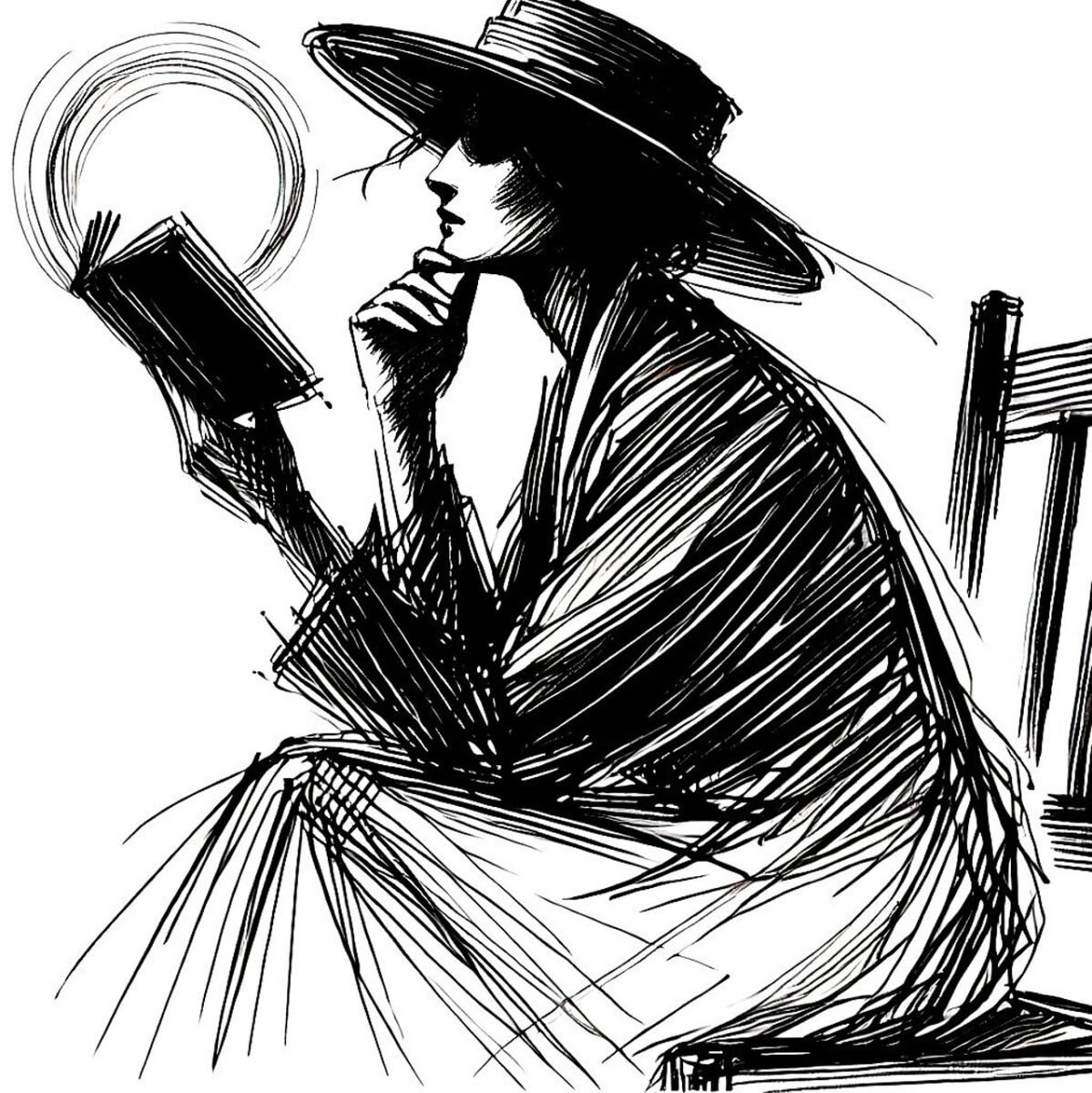
The verse book that returned meaning to your journey
Carlos was 62 years old and a feeling that he could not find a name: after he retired, and with his wife, Maria, leaving for a disease that took little time, he felt that his life had broken down like an old role. The days all looked the same, a heavy silence lived in the corners of the house and the thoughts came to the mountains, confused, unordered, like dried leaves carried by the wind. He'd wake up, make up the bed, make coffee, look out the window and wonder, what's the point of all this, if there's no one else waiting for me? No account, no logic, no practical explanation could answer that question. The world seemed like a cold, meaningless place.
One day, when he got a forgotten drawer, he found a darkcover notebook that had been Maria’s. Expected recipes or household notes — But when he opened it, he discovered verses. She had been writing for years, never telling him: she spoke of the wind in the window, of the beauty of a shared coffee, of the longing I had imagined feeling, of the certainty that life, even with its pains, was worth living. As he read those words, Carlos felt something strange and soft happen within himself: suddenly, that pain that seemed formless, nameless and endless, gained voice. The chaos of your feelings began to organize. He was no longer alone in that sense of loss. — someone he loved had experienced similar concerns, and had managed to transform pain into something beautiful, that could be touched and read.
Gradually he began reading more: poems by Carlos Drummond de Andrade, by Cecília Meireles, by Manuel Bandeira — voices of our land, who spoke with their tongue, with their way of seeing the world. And poetry was doing its job, slowly, without hurry. Reading verses that described loneliness or the passage of time, he realized that he was not the only one to feel it: his personal pain became part of a larger story, an experience common to all human beings, and this brought a profound, almost liberating relief. By putting himself in the place of the poets, by feeling what they said, he began to look more carefully at the people around — for the neighbor who walked low, for the market attendant who smiled with effort — and understood that each one carried his own pains and desires, even if they did not say them. His ability to understand the other grew, without him realizing it: empathy became part of his daily life.
When the thoughts came confused and agitated, a certain verse brought clarity, as if a light lit up within it. And gradually, he was gaining strength to follow: he realized that loss does not erase what he lived, that longing is also a form of love, and that uncertainty is part of the way. Poetry has given him resilience: it has shown that generations have experienced difficulties like his own, and have managed to transform suffering into beauty and reflection.
Carlos reads a poem every morning today. He no longer pursues a grand sense or definite answers. He learned, with lyrical sensitivity, that the fullness of life is not in how much we conquer or how much we hurry, but in the intensity with which we live every small moment: the sun that enters through the window, the taste of coffee, the gentle memory of those we love. He found that poetry doesn't give all the answers — but it teaches us to see, feel and value our brief and precious passage through the world. And that, after all, is all we need to walk.
-

The Soul Filter: Why Undirected Intelligence Is It Just a More Sophisticated Mistake?
The true greatness of a mind is not measured by the power of its engine, but by the direction in which it chooses to walk. In a world that often confuses intellectual noise with wisdom, one must rescue an uncomfortable truth: intelligence alone is a neutral tool. Without an ethical and methodological orientation, it runs the risk of becoming just a terribly more efficient way of making mistakes. After all, the same brilliant mind capable of unraveling mysteries and finding innovative answers has the exact same ability to sophisticate excuses, manipulate facts in a subtle way, and consequently expand collective and individual damage.
We live in the advent of Artificial Intelligence, an extension of our own desire for infinite processing. However, the AI is the definitive mirror of this neutrality: it amplifies what we deposit in it. If the "prompt" of our soul is corrupted by the ego, the result will be a dystopia of purposeless efficiency. The digital future requires us to be more than mere users of algorithms; it requires us to be the architects of a new ethics that filters the coldness of data through the warmth of human consciousness.
Therefore, virtue is not born from the simple act of thinking, but from the exact moment when reason ceases to serve pride and comes to serve truth, responsibility and conscious choice. When the intellect is shielded by the ego, it becomes a fortress of illusions. For it to become an instrument of evolution, reason needs discipline. Thinking well does not mean hoarding a disordered volume of ideas or displaying erudition; it means ordering the path of research so as not to get lost in confusing impressions and passing impulses. It is the elementary difference between a mind that is a data deposit and a mind that is a beacon of clarity.
To guide the reason for this safe path, philosophy and method offer us four practical pillars of mental discipline that become even more urgent in the era of instant information:
- Avoid accepting something unclear: The first step of intellectual honesty is to refuse automatism, not taking as true what can still be legitimately questioned. In times of "fake news" and recommendation algorithms, healthy skepticism is an act of soul preservation.
- Split Difficult Problems: Given the complexity of the modern world, disciplined thinking operates as a surgeon, separating a complex issue into smaller and more understandable parts so that they can be digested without the anxiety of the whole.
- Moving from simple to complex: Solid knowledge builds its reasoning by gradual steps, without hasty leaps or conclusions drawn from nothing. It is the building of a solid foundation on which the future can rest safely.
- Review the whole way: Finally, the conscious thinker takes inventory of his own journey, thoroughly checking whether nothing important was left out or neglected by the way. It's the existential debug required for evolution.
By structuring the mind under these rules, the human being begins to understand its role in reality in a much more integrated way. In simple terms, thought belongs to the field of mind, a free, abstract territory focused on the search for meaning, while the body occupies space, moves and actively participates in the material world. It is through the action of the body that the choices of the mind come to life. When disciplined reason and the search for truth guide the soul, the division between what we think and what we do in the physical world ceases to be an abyss and becomes a bridge — where intelligence finally turns into practical wisdom.
The future ahead will not be defined by the speed of our processors, but by the depth of our filters. Let BioBit.online be the space where this filtering happens, where technology finds its ethical direction and where every bit of information is weighed in the balance of consciousness. The invitation remains: do not be just intelligent; be wise.