


Tag: #Psychology
-

The Breathed Glass Effect: Why Delivering Facts Never Saves a Discussion.
We were raised with a comforting myth: that the human brain functions as a perfectly programmed spreadsheet, where logical truth and indisputable data always win the debate at the end. It's a beautiful, almost heroic image. But if you ever tried to disarm a heated discussion at the dinner table by presenting a chart, or tried to convince that obstinate coworker just by stacking "the facts," you've realized the shock of reality. In practice, cold logic rarely survives the heat of the moment.
The truth is that we are not machines that think and happen to feel; we are machines that feel and occasionally think. When a conflict settles, whether in the corporate environment or in the intimacy of the home, what is at stake is almost never the mathematical precision of arguments. Emotional intelligence shows us that behind every stubbornness or defensive reaction, there is a maze of insecurities, validation desires and personal stories that data simply cannot access.
When we ignore this dynamic and try to "win" a debate purely by intellectual insistence, the other person's brain does not interpret it as an invitation to reflection, but as a threat. The immediate response is not agreement, but resistance. This is why the decisions we make and the memories we keep from others are not shaped by the rigor of their premises, but by how we feel during interaction. A logically perfect argument, but delivered without empathy, is just an unpleasant noise.
To really build bridges and solve impasses, we need to change the tool. Instead of lifting barriers with absolute certainty, the smartest way is to disarm the defenses by listening to what is between the lines. Validating the feeling of the other does not necessarily mean agreeing with his version of the facts, but recognizing his humanity in the process. When people feel heard and secure, the guard goes low and only then does reason gain room to sit at the table. In the end, true persuasion is not an exercise of intellectual force, but a subtle art of emotional connection. -
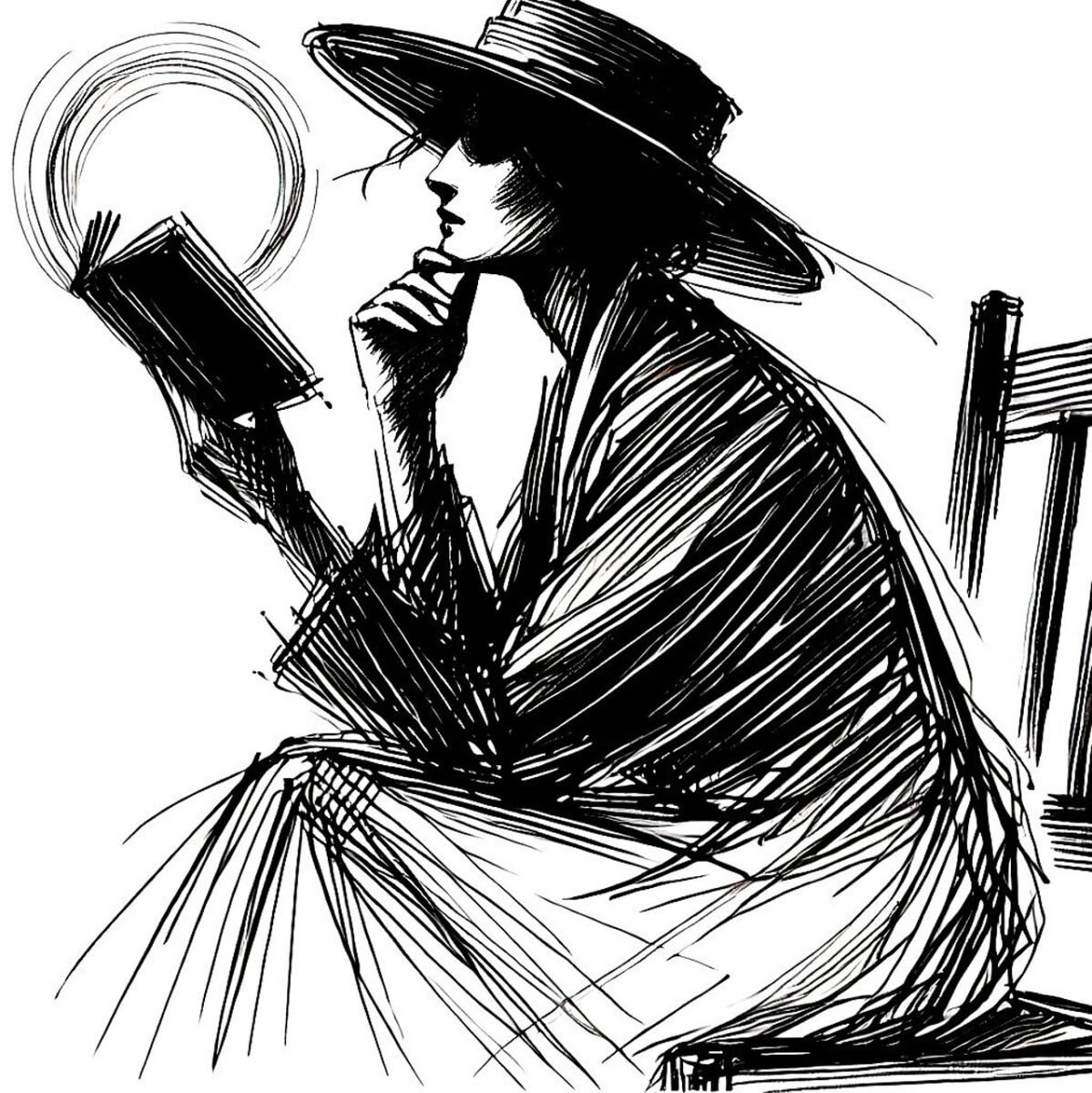
The verse book that returned meaning to your journey
Carlos was 62 years old and a feeling that he could not find a name: after he retired, and with his wife, Maria, leaving for a disease that took little time, he felt that his life had broken down like an old role. The days all looked the same, a heavy silence lived in the corners of the house and the thoughts came to the mountains, confused, unordered, like dried leaves carried by the wind. He'd wake up, make up the bed, make coffee, look out the window and wonder, what's the point of all this, if there's no one else waiting for me? No account, no logic, no practical explanation could answer that question. The world seemed like a cold, meaningless place.
One day, when he got a forgotten drawer, he found a darkcover notebook that had been Maria’s. Expected recipes or household notes — But when he opened it, he discovered verses. She had been writing for years, never telling him: she spoke of the wind in the window, of the beauty of a shared coffee, of the longing I had imagined feeling, of the certainty that life, even with its pains, was worth living. As he read those words, Carlos felt something strange and soft happen within himself: suddenly, that pain that seemed formless, nameless and endless, gained voice. The chaos of your feelings began to organize. He was no longer alone in that sense of loss. — someone he loved had experienced similar concerns, and had managed to transform pain into something beautiful, that could be touched and read.
Gradually he began reading more: poems by Carlos Drummond de Andrade, by Cecília Meireles, by Manuel Bandeira — voices of our land, who spoke with their tongue, with their way of seeing the world. And poetry was doing its job, slowly, without hurry. Reading verses that described loneliness or the passage of time, he realized that he was not the only one to feel it: his personal pain became part of a larger story, an experience common to all human beings, and this brought a profound, almost liberating relief. By putting himself in the place of the poets, by feeling what they said, he began to look more carefully at the people around — for the neighbor who walked low, for the market attendant who smiled with effort — and understood that each one carried his own pains and desires, even if they did not say them. His ability to understand the other grew, without him realizing it: empathy became part of his daily life.
When the thoughts came confused and agitated, a certain verse brought clarity, as if a light lit up within it. And gradually, he was gaining strength to follow: he realized that loss does not erase what he lived, that longing is also a form of love, and that uncertainty is part of the way. Poetry has given him resilience: it has shown that generations have experienced difficulties like his own, and have managed to transform suffering into beauty and reflection.
Carlos reads a poem every morning today. He no longer pursues a grand sense or definite answers. He learned, with lyrical sensitivity, that the fullness of life is not in how much we conquer or how much we hurry, but in the intensity with which we live every small moment: the sun that enters through the window, the taste of coffee, the gentle memory of those we love. He found that poetry doesn't give all the answers — but it teaches us to see, feel and value our brief and precious passage through the world. And that, after all, is all we need to walk.
-

The Power to Look Into The Eyes of Your Own Shadow: True Enlightenment Is Born of Discomfort.
It is a natural impulse of the human being to look at his own qualities. Celebrating virtues, talents and achievements is usually infinitely more comfortable and rewarding than facing fears, insecurities and weaknesses. We live, after all, in a culture that fiercely encourages the display of the best versions of ourselves. In social networks and even in close personal relationships, there is an almost automatic tendency to hide vulnerabilities and present only what seems admirable, safe and perfect. However, to achieve a truly deep understanding of oneself, one must have the courage to break through this polished surface and also face the aspects that we usually hide in the basement of the mind.
As psychologist Carl Jung well understood, no one lights up imagining figures of light, but making conscious the darkness itself. This "darkness" is nothing more than the so-called "shadow", a region of our psyche formed by emotions, desires, behaviors and characteristics that we often try to deny or repress by fear of rejection. The great danger lies in the fact that ignoring that part of the personality does not make it simply disappear. On the contrary: when repressed, the shadow continues to influence our attitudes, reactions and decisions completely unconsciously. It manifests itself in our chronic difficulty of admitting a mistake, in the disproportionate nuisance in the face of criticism, in the fear of recognizing feelings considered "negative" or in the almost childish tendency to blame others for problems that require, above all, an internal analysis.
Diving into this search does not mean in any way that we should live focused only on defects or martyring ourselves for our failures. The secret lies in developing an integrated awareness of all parts of one's personality, including — and mainly — those that cause discomfort. This welcoming and research process is the only real path to deeper levels of emotional maturity. The more a person understands his limitations, fears and internal contradictions, the greater and healthier his ability to deal with the outside world. In the end, authentic self-knowledge is not born from what we like to see in the mirror, but from the courage to light the light and illuminate the areas we spend our entire lives trying to keep in the shade.

