Tag: # Human mind
-

The Strongest Muscle of the Soul: Why Bowing to Help is the True Exercise of Strength.
There is a silent wisdom that challenges our modern obsession with individual strength, lonely conquests and tireless search for a top where we often find ourselves isolated. We usually associate the word "strengthening" with physical effort, muscle endurance or emotional shielding that protects us from the outside world. However, the most vigorous and transforming exercise that the human heart can perform does not require weights, appliances or competitions. It happens in the subtle and deeply courageous movement of bowing to reach out to those who are fallen.
This gesture of leaning toward the other has no relation to weakness; on the contrary, it is the maximum expression of inner force. Bowing, in the noblest sense of metaphor, requires us to abandon any pedestal of superiority or indifference. It means looking into the eyes of those who go through a moment of vulnerability, not from top to bottom with a look of pity, but from equal to equal, recognizing the intrinsic dignity of that person. It is to understand that the fall of the other is human and that our stability in the present is only temporary.
As we stoop to raise someone, we activate an invisible gear that shapes our character. This daily exercise develops empathy — that rare ability to tune with other people's pain without hurry —, patience to simply listen without judging and moral courage to act, even when the flow of the world pushes us to move forward and ignore what happens next. The heart strengthens precisely in this training, expanding its ability to feel and care in a society that so often values emotional anesthesia.
The beauty of this movement is that it translates into extraordinarily simple and showless attitudes. It is not about seeking public recognition or turning the suffering of others into a stage for self-exaltation. True solidarity is manifested in the silence of listening attentive to a friend who is burdened, in the time dedicated to accompany a family member in a difficult consultation or in the delicacy of respecting the silence of those who still cannot verbalize their own pain. It's these little anchors of presence and accompaniment that hold someone's world when everything around it seems to fall apart.
In the end, human greatness is measured by our ability to respond to the fragility of others. When we choose not to look away, when we turn abstract compassion into concrete action and real presence, our whole community rises. Strengthening the heart is understanding that our own humanity is only fully realized when we become the support that the other needs to stand up again. -

The Breathed Glass Effect: Why Delivering Facts Never Saves a Discussion.
We were raised with a comforting myth: that the human brain functions as a perfectly programmed spreadsheet, where logical truth and indisputable data always win the debate at the end. It's a beautiful, almost heroic image. But if you ever tried to disarm a heated discussion at the dinner table by presenting a chart, or tried to convince that obstinate coworker just by stacking "the facts," you've realized the shock of reality. In practice, cold logic rarely survives the heat of the moment.
The truth is that we are not machines that think and happen to feel; we are machines that feel and occasionally think. When a conflict settles, whether in the corporate environment or in the intimacy of the home, what is at stake is almost never the mathematical precision of arguments. Emotional intelligence shows us that behind every stubbornness or defensive reaction, there is a maze of insecurities, validation desires and personal stories that data simply cannot access.
When we ignore this dynamic and try to "win" a debate purely by intellectual insistence, the other person's brain does not interpret it as an invitation to reflection, but as a threat. The immediate response is not agreement, but resistance. This is why the decisions we make and the memories we keep from others are not shaped by the rigor of their premises, but by how we feel during interaction. A logically perfect argument, but delivered without empathy, is just an unpleasant noise.
To really build bridges and solve impasses, we need to change the tool. Instead of lifting barriers with absolute certainty, the smartest way is to disarm the defenses by listening to what is between the lines. Validating the feeling of the other does not necessarily mean agreeing with his version of the facts, but recognizing his humanity in the process. When people feel heard and secure, the guard goes low and only then does reason gain room to sit at the table. In the end, true persuasion is not an exercise of intellectual force, but a subtle art of emotional connection. -
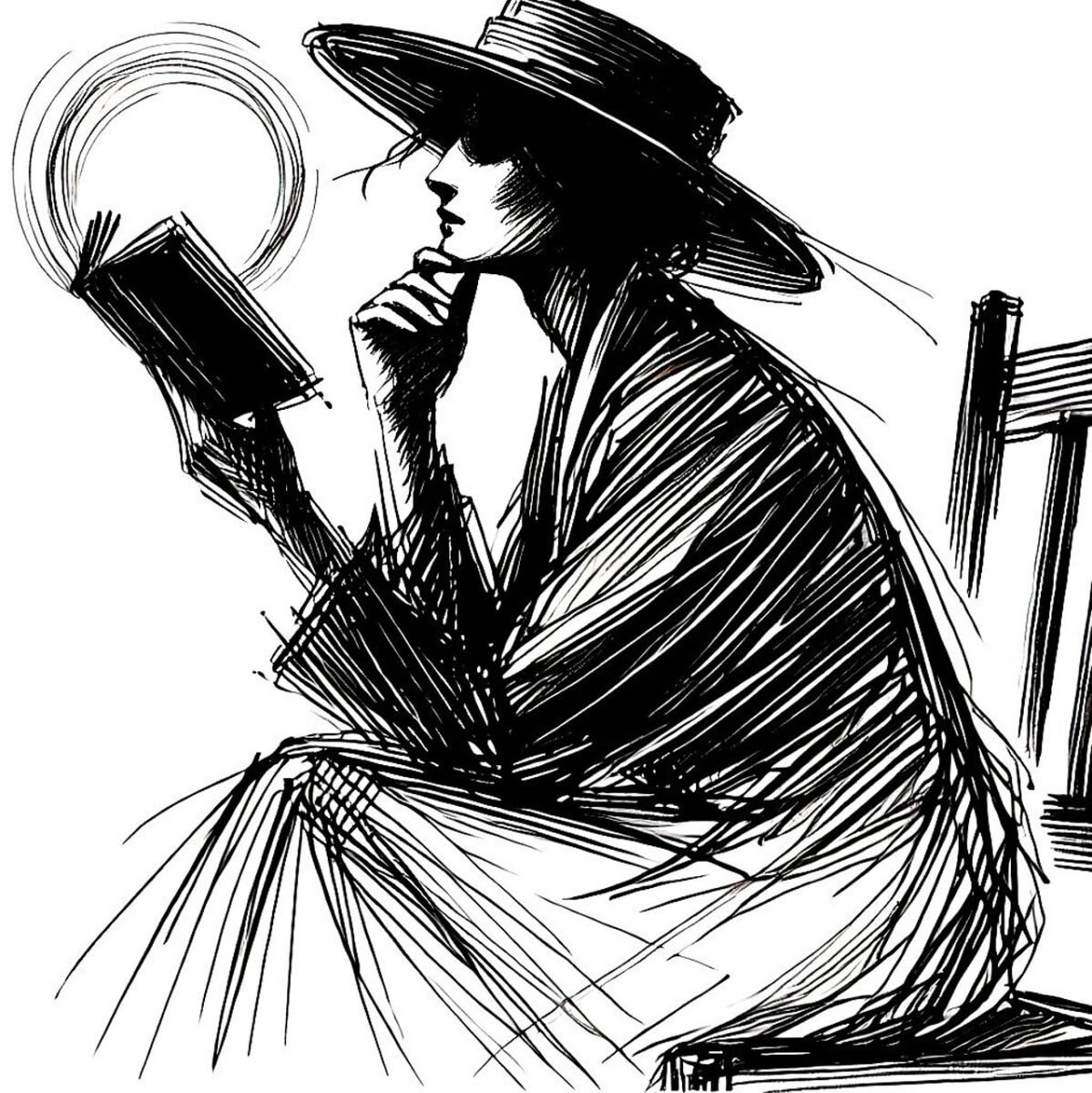
The verse book that returned meaning to your journey
Carlos was 62 years old and a feeling that he could not find a name: after he retired, and with his wife, Maria, leaving for a disease that took little time, he felt that his life had broken down like an old role. The days all looked the same, a heavy silence lived in the corners of the house and the thoughts came to the mountains, confused, unordered, like dried leaves carried by the wind. He'd wake up, make up the bed, make coffee, look out the window and wonder, what's the point of all this, if there's no one else waiting for me? No account, no logic, no practical explanation could answer that question. The world seemed like a cold, meaningless place.
One day, when he got a forgotten drawer, he found a darkcover notebook that had been Maria’s. Expected recipes or household notes — But when he opened it, he discovered verses. She had been writing for years, never telling him: she spoke of the wind in the window, of the beauty of a shared coffee, of the longing I had imagined feeling, of the certainty that life, even with its pains, was worth living. As he read those words, Carlos felt something strange and soft happen within himself: suddenly, that pain that seemed formless, nameless and endless, gained voice. The chaos of your feelings began to organize. He was no longer alone in that sense of loss. — someone he loved had experienced similar concerns, and had managed to transform pain into something beautiful, that could be touched and read.
Gradually he began reading more: poems by Carlos Drummond de Andrade, by Cecília Meireles, by Manuel Bandeira — voices of our land, who spoke with their tongue, with their way of seeing the world. And poetry was doing its job, slowly, without hurry. Reading verses that described loneliness or the passage of time, he realized that he was not the only one to feel it: his personal pain became part of a larger story, an experience common to all human beings, and this brought a profound, almost liberating relief. By putting himself in the place of the poets, by feeling what they said, he began to look more carefully at the people around — for the neighbor who walked low, for the market attendant who smiled with effort — and understood that each one carried his own pains and desires, even if they did not say them. His ability to understand the other grew, without him realizing it: empathy became part of his daily life.
When the thoughts came confused and agitated, a certain verse brought clarity, as if a light lit up within it. And gradually, he was gaining strength to follow: he realized that loss does not erase what he lived, that longing is also a form of love, and that uncertainty is part of the way. Poetry has given him resilience: it has shown that generations have experienced difficulties like his own, and have managed to transform suffering into beauty and reflection.
Carlos reads a poem every morning today. He no longer pursues a grand sense or definite answers. He learned, with lyrical sensitivity, that the fullness of life is not in how much we conquer or how much we hurry, but in the intensity with which we live every small moment: the sun that enters through the window, the taste of coffee, the gentle memory of those we love. He found that poetry doesn't give all the answers — but it teaches us to see, feel and value our brief and precious passage through the world. And that, after all, is all we need to walk.
-

The Soul Filter: Why Undirected Intelligence Is It Just a More Sophisticated Mistake?
The true greatness of a mind is not measured by the power of its engine, but by the direction in which it chooses to walk. In a world that often confuses intellectual noise with wisdom, one must rescue an uncomfortable truth: intelligence alone is a neutral tool. Without an ethical and methodological orientation, it runs the risk of becoming just a terribly more efficient way of making mistakes. After all, the same brilliant mind capable of unraveling mysteries and finding innovative answers has the exact same ability to sophisticate excuses, manipulate facts in a subtle way, and consequently expand collective and individual damage.
We live in the advent of Artificial Intelligence, an extension of our own desire for infinite processing. However, the AI is the definitive mirror of this neutrality: it amplifies what we deposit in it. If the "prompt" of our soul is corrupted by the ego, the result will be a dystopia of purposeless efficiency. The digital future requires us to be more than mere users of algorithms; it requires us to be the architects of a new ethics that filters the coldness of data through the warmth of human consciousness.
Therefore, virtue is not born from the simple act of thinking, but from the exact moment when reason ceases to serve pride and comes to serve truth, responsibility and conscious choice. When the intellect is shielded by the ego, it becomes a fortress of illusions. For it to become an instrument of evolution, reason needs discipline. Thinking well does not mean hoarding a disordered volume of ideas or displaying erudition; it means ordering the path of research so as not to get lost in confusing impressions and passing impulses. It is the elementary difference between a mind that is a data deposit and a mind that is a beacon of clarity.
To guide the reason for this safe path, philosophy and method offer us four practical pillars of mental discipline that become even more urgent in the era of instant information:
- Avoid accepting something unclear: The first step of intellectual honesty is to refuse automatism, not taking as true what can still be legitimately questioned. In times of "fake news" and recommendation algorithms, healthy skepticism is an act of soul preservation.
- Split Difficult Problems: Given the complexity of the modern world, disciplined thinking operates as a surgeon, separating a complex issue into smaller and more understandable parts so that they can be digested without the anxiety of the whole.
- Moving from simple to complex: Solid knowledge builds its reasoning by gradual steps, without hasty leaps or conclusions drawn from nothing. It is the building of a solid foundation on which the future can rest safely.
- Review the whole way: Finally, the conscious thinker takes inventory of his own journey, thoroughly checking whether nothing important was left out or neglected by the way. It's the existential debug required for evolution.
By structuring the mind under these rules, the human being begins to understand its role in reality in a much more integrated way. In simple terms, thought belongs to the field of mind, a free, abstract territory focused on the search for meaning, while the body occupies space, moves and actively participates in the material world. It is through the action of the body that the choices of the mind come to life. When disciplined reason and the search for truth guide the soul, the division between what we think and what we do in the physical world ceases to be an abyss and becomes a bridge — where intelligence finally turns into practical wisdom.
The future ahead will not be defined by the speed of our processors, but by the depth of our filters. Let BioBit.online be the space where this filtering happens, where technology finds its ethical direction and where every bit of information is weighed in the balance of consciousness. The invitation remains: do not be just intelligent; be wise.