
Tag: #Emotional intelligence
-

The Silent Art of Being Heard: Why Connection Overcomes Volume.
There is a very common illusion in how we communicate: the idea that if we increase the tone of voice, the clarity of the message or the intensity of our arguments, we will finally be understood. We spend immense energy trying to shape our words to cross invisible barriers, not realizing that the problem is rarely in the frequency of our voice, but in the disposition of those who listen.
The truth is simple and relentless: anyone who does not want to hear you will not hear you even if you scream. The cry, in most cases, produces the opposite effect to the desired one. Instead of opening doors, it triggers defense mechanisms, erects walls and turns conversations into battlefields. When the other's mind is closed by prejudice, disinterest or emotional noise, communication fails not by lack of sound, but by lack of reception.
On the other hand, there is an almost palpable magic in true tune. Whoever really wants to understand you will understand you even if you don't say a word. This deep understanding does not depend on the lexicon or perfect oratory; it dwells in small gestures, in attentive eyes, in empathy and in shared silence. It is the presence that speaks louder than any elaborate speech.
Learning to recognize this difference is a liberating exercise of emotional maturity. It means stopping spending arguments where there is no fertile soil for listening and starting to value the spaces where our essence is welcomed effortlessly. In the end, communicating well is not about winning a debate or convincing the uninterested, but about finding and cultivating the connections where the sound — And the silence — They make sense. -

The Art of Inhabiting Your Own Skin: Why Time Does Not Expect Our Apologies.
There is an invisible but deeply painful line between the safety of a predictable path and the weight of a life that does not belong to us. We often treat time as an infinite currency, a savings that we can spend pleasing third parties, postponing to a distant Monday our most legitimate wishes. However, finitude is relentless. When we realize that time is the scarcest resource we have, the idea of wasting it living someone else's expectations is no longer just a strategic error and becomes a silent form of neglect with their existence.
Living under someone else's book usually comes dressed as prudence. It is the career that brings pride to the family, the lifestyle that draws applause on social networks or the automatic repetition of decisions considered correct by all around us — except by whom, in fact, you will have to sustain them on a daily basis. This process of annulment rarely occurs through an authoritarian imposition; it settles in the silent repetition of small daily silences. From concession to concession, to preserve approval, status or an empty image of success, we end up building an impeccable facade, but without any resident inside.
To walk an authentic path, however, does not require a dramatic break with the world or a rebellion without cause. Not all external influence is harmful. Wise advice, solid traditions and good examples are fundamental to mature our choices. The real danger is not in listening to the other, but in systematically abandoning their own values in exchange for a temporary acceptance. True authenticity requires the courage to examine the heart and intuition with extreme responsibility, distinguishing what is a consistent desire from what is just a passing reaction or a whim. It's an invitation to look inside and investigate your own dissatisfaction before it crystallizes into decades of resentment.
To begin this return movement to oneself, it is worth confronting the mirror with honest questions, but without the urgency of ready answers. It is necessary to question whether today's choices still correspond to current values, or whether we are just maintaining a character by force of habit. It is worth reflecting whether we would continue in the same direction if external approval suddenly disappeared, or if the fear we feel in the face of change indicates a real danger or just the natural discomfort of stepping on unknown soil. Often, the answer is not in a leap into the abyss, but in small practical experiences: a parallel study, an established limit without fuss or an honest conversation that allows testing a new direction with your feet on the ground.
This change of posture is rarely understood immediately by the people around, and everything is fine. The search for autonomy usually begins discreetly, away from the spotlight, in the intimacy of our daily decisions. The warning that our existence is finite should not bear the burden of guilt for what has gone on, but rather return dignity and importance to the present moment. Given the finitude of time, the noise of social demands loses the volume and size. What really remains is the question of how we use today. By accepting the limit of our day, ironically, we reduce the rush to prove our worth to the world. Finally, we have gained the necessary calm to choose commitments that deserve our energy and wisdom to abandon the disputes that only serve to keep us away from who we really are. -

The Art of High Flying: Why Mind Discipline Overcomes the Natual Talent.
There is a persistent myth that the great deeds of mankind belong exclusively to the predestined. We look at who has reached the top and, almost by instinct, we attribute success to an untouchable "natural talent". However, behind any high and sustainable flight, there is rarely only one natural gift. What really holds the top is an invisible and daily gear: the decision to train the mind, insist with purpose and turn every turbulence into wisdom.
Flying high, after all, is a long-term construction. Talent can open the first doors, but it is the mental discipline that keeps us in the air when the opposing currents begin to blow.
This preparation begins with the development of a silent mental power: the almost surgical ability to maintain clarity and serenity even when we are under very high pressure. While the untrained mind is lost in the chaos of the moment, the prepared mind breathes deeply and finds the north. This calm is not passive; it is the fertile ground from which instinct springs. What we call "instinct" is nothing more than an ultra-speed response that our brain delivers after thousands of hours of constant repetition and practice. It is the sharp reflection of those who have been there many times.
For this machine to work, however, it takes an inexhaustible fuel: determination. She is the obstinate willingness to insist exactly when the result insists on not coming first. It is what makes us rise after a fall and view error not as a sentence of failure, but as pure experience. Each scar, victory or defeat accumulates a learning that no textbook can teach.
When determination ceases to be a punctual effort and becomes a daily habit, something magical happens in our perception: the challenges lose that imponence of insurmountable walls and become seen as mere curves in the path.
The path remains winding, but our ability to fly changes completely.
None of this, however, gains traction without focus. In a world designed to fragment our attention every second, the ability to eliminate distractions and keep your eye fixed on the ultimate goal functions as a magnifying lens that concentrates all our energy on a single point. The focus is what keeps the wind from moving us off course.
In the end, excellence is not an isolated event, but a continuous process of stoning. Less magical inspiration, more conscious perspiration. As we silence the external noise and assume the responsibility of training our minds every day, we discover that the sky was never the limit — It was just the starting point. -
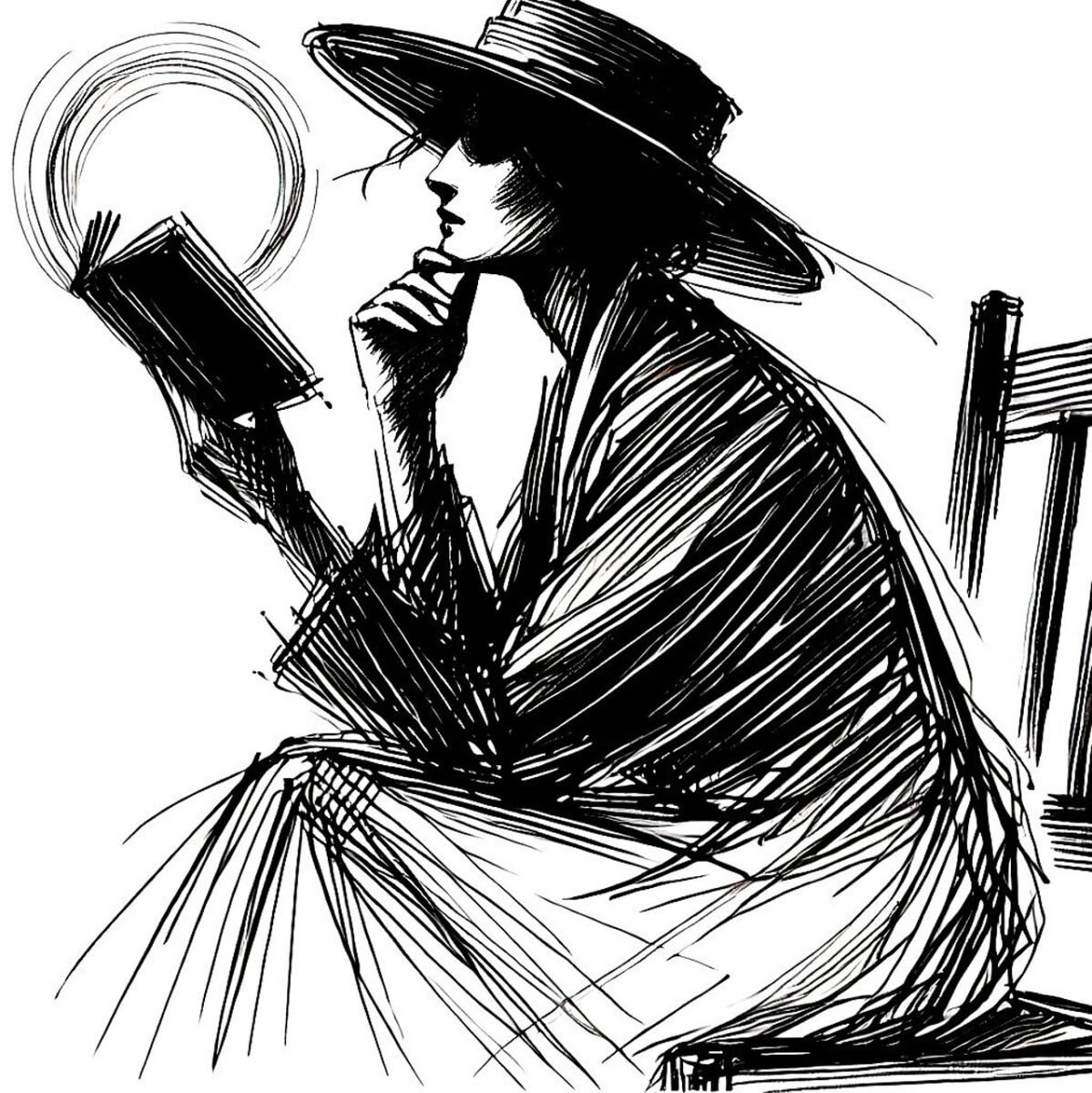
The verse book that returned meaning to your journey
Carlos was 62 years old and a feeling that he could not find a name: after he retired, and with his wife, Maria, leaving for a disease that took little time, he felt that his life had broken down like an old role. The days all looked the same, a heavy silence lived in the corners of the house and the thoughts came to the mountains, confused, unordered, like dried leaves carried by the wind. He'd wake up, make up the bed, make coffee, look out the window and wonder, what's the point of all this, if there's no one else waiting for me? No account, no logic, no practical explanation could answer that question. The world seemed like a cold, meaningless place.
One day, when he got a forgotten drawer, he found a darkcover notebook that had been Maria’s. Expected recipes or household notes — But when he opened it, he discovered verses. She had been writing for years, never telling him: she spoke of the wind in the window, of the beauty of a shared coffee, of the longing I had imagined feeling, of the certainty that life, even with its pains, was worth living. As he read those words, Carlos felt something strange and soft happen within himself: suddenly, that pain that seemed formless, nameless and endless, gained voice. The chaos of your feelings began to organize. He was no longer alone in that sense of loss. — someone he loved had experienced similar concerns, and had managed to transform pain into something beautiful, that could be touched and read.
Gradually he began reading more: poems by Carlos Drummond de Andrade, by Cecília Meireles, by Manuel Bandeira — voices of our land, who spoke with their tongue, with their way of seeing the world. And poetry was doing its job, slowly, without hurry. Reading verses that described loneliness or the passage of time, he realized that he was not the only one to feel it: his personal pain became part of a larger story, an experience common to all human beings, and this brought a profound, almost liberating relief. By putting himself in the place of the poets, by feeling what they said, he began to look more carefully at the people around — for the neighbor who walked low, for the market attendant who smiled with effort — and understood that each one carried his own pains and desires, even if they did not say them. His ability to understand the other grew, without him realizing it: empathy became part of his daily life.
When the thoughts came confused and agitated, a certain verse brought clarity, as if a light lit up within it. And gradually, he was gaining strength to follow: he realized that loss does not erase what he lived, that longing is also a form of love, and that uncertainty is part of the way. Poetry has given him resilience: it has shown that generations have experienced difficulties like his own, and have managed to transform suffering into beauty and reflection.
Carlos reads a poem every morning today. He no longer pursues a grand sense or definite answers. He learned, with lyrical sensitivity, that the fullness of life is not in how much we conquer or how much we hurry, but in the intensity with which we live every small moment: the sun that enters through the window, the taste of coffee, the gentle memory of those we love. He found that poetry doesn't give all the answers — but it teaches us to see, feel and value our brief and precious passage through the world. And that, after all, is all we need to walk.
-
The Soul Filter: Why Undirected Intelligence Is It Just a More Sophisticated Mistake?
The true greatness of a mind is not measured by the power of its engine, but by the direction in which it chooses to walk. In a world that often confuses intellectual noise with wisdom, one must rescue an uncomfortable truth: intelligence alone is a neutral tool. Without an ethical and methodological orientation, it runs the risk of becoming just a terribly more efficient way of making mistakes. After all, the same brilliant mind capable of unraveling mysteries and finding innovative answers has the exact same ability to sophisticate excuses, manipulate facts in a subtle way, and consequently expand collective and individual damage.
We live in the advent of Artificial Intelligence, an extension of our own desire for infinite processing. However, the AI is the definitive mirror of this neutrality: it amplifies what we deposit in it. If the "prompt" of our soul is corrupted by the ego, the result will be a dystopia of purposeless efficiency. The digital future requires us to be more than mere users of algorithms; it requires us to be the architects of a new ethics that filters the coldness of data through the warmth of human consciousness.
Therefore, virtue is not born from the simple act of thinking, but from the exact moment when reason ceases to serve pride and comes to serve truth, responsibility and conscious choice. When the intellect is shielded by the ego, it becomes a fortress of illusions. For it to become an instrument of evolution, reason needs discipline. Thinking well does not mean hoarding a disordered volume of ideas or displaying erudition; it means ordering the path of research so as not to get lost in confusing impressions and passing impulses. It is the elementary difference between a mind that is a data deposit and a mind that is a beacon of clarity.
To guide the reason for this safe path, philosophy and method offer us four practical pillars of mental discipline that become even more urgent in the era of instant information:
- Avoid accepting something unclear: The first step of intellectual honesty is to refuse automatism, not taking as true what can still be legitimately questioned. In times of "fake news" and recommendation algorithms, healthy skepticism is an act of soul preservation.
- Split Difficult Problems: Given the complexity of the modern world, disciplined thinking operates as a surgeon, separating a complex issue into smaller and more understandable parts so that they can be digested without the anxiety of the whole.
- Moving from simple to complex: Solid knowledge builds its reasoning by gradual steps, without hasty leaps or conclusions drawn from nothing. It is the building of a solid foundation on which the future can rest safely.
- Review the whole way: Finally, the conscious thinker takes inventory of his own journey, thoroughly checking whether nothing important was left out or neglected by the way. It's the existential debug required for evolution.
By structuring the mind under these rules, the human being begins to understand its role in reality in a much more integrated way. In simple terms, thought belongs to the field of mind, a free, abstract territory focused on the search for meaning, while the body occupies space, moves and actively participates in the material world. It is through the action of the body that the choices of the mind come to life. When disciplined reason and the search for truth guide the soul, the division between what we think and what we do in the physical world ceases to be an abyss and becomes a bridge — where intelligence finally turns into practical wisdom.
The future ahead will not be defined by the speed of our processors, but by the depth of our filters. Let BioBit.online be the space where this filtering happens, where technology finds its ethical direction and where every bit of information is weighed in the balance of consciousness. The invitation remains: do not be just intelligent; be wise.
-

The Power to Look Into The Eyes of Your Own Shadow: True Enlightenment Is Born of Discomfort.
It is a natural impulse of the human being to look at his own qualities. Celebrating virtues, talents and achievements is usually infinitely more comfortable and rewarding than facing fears, insecurities and weaknesses. We live, after all, in a culture that fiercely encourages the display of the best versions of ourselves. In social networks and even in close personal relationships, there is an almost automatic tendency to hide vulnerabilities and present only what seems admirable, safe and perfect. However, to achieve a truly deep understanding of oneself, one must have the courage to break through this polished surface and also face the aspects that we usually hide in the basement of the mind.
As psychologist Carl Jung well understood, no one lights up imagining figures of light, but making conscious the darkness itself. This "darkness" is nothing more than the so-called "shadow", a region of our psyche formed by emotions, desires, behaviors and characteristics that we often try to deny or repress by fear of rejection. The great danger lies in the fact that ignoring that part of the personality does not make it simply disappear. On the contrary: when repressed, the shadow continues to influence our attitudes, reactions and decisions completely unconsciously. It manifests itself in our chronic difficulty of admitting a mistake, in the disproportionate nuisance in the face of criticism, in the fear of recognizing feelings considered "negative" or in the almost childish tendency to blame others for problems that require, above all, an internal analysis.
Diving into this search does not mean in any way that we should live focused only on defects or martyring ourselves for our failures. The secret lies in developing an integrated awareness of all parts of one's personality, including — and mainly — those that cause discomfort. This welcoming and research process is the only real path to deeper levels of emotional maturity. The more a person understands his limitations, fears and internal contradictions, the greater and healthier his ability to deal with the outside world. In the end, authentic self-knowledge is not born from what we like to see in the mirror, but from the courage to light the light and illuminate the areas we spend our entire lives trying to keep in the shade. -
The Liberation of the Eye: Whoever Finds Their Own Value Stops Begging Approval.
The desire to be accepted, valued and praised is part of the deepest human experience. It's natural and healthy to enjoy each other's recognition. However, in an age marked intensely by social networks, virtual comparisons and the incessant search for literal and metaphorical "likes", we run the risk of falling into a dangerous trap: conditioning our well-being and our identity to external judgment. The real problem arises when the need for approval becomes the main source of support for our self-image. When this happens, we begin to live in a constant emotional dependence, transforming our self-esteem into a castle of letters that collapses at the slightest sign of criticism or indifference.
To break this cycle of insecurity and frustration, a turning point towards emotional autonomy is fundamental. True self-esteem is not born from the applause of the audience, but from the fertile ground of self-knowledge. The greater and deeper the connection we establish with our own value, the smaller our dependence on others' validation will be. Understanding one's own identity, recognizing one's own qualities with honesty and accepting limitations with compassion are the fundamental steps to build a genuinely healthy relationship with oneself. It is this internal dive that protects us from the excessive fear of criticism and paralysis of not being able to make decisions without the approval of others.
The key to an emotionally free life is not in isolation or pride, but in balance. External recognition and social support are important and welcome, but should never function as the only ruler to measure who we are. The most solid and resilient self-esteem is that built from the inside out, based on non-negotiable personal values, self-respect and daily self-acceptance. After all, authentic emotional freedom happens at this very moment of awakening: when a person finally recognizes his own value, he ceases to beg for recognition outside and begins to inhabit the certainty of who he really is.