Tag: # Character
-

When Care Cages: The Subtle Limit Between Demonstrating Love and Exercise Power
At the beginning of a two-way story, excessive attention usually comes in disguised as romance. An out-of-hour call to find out where you are, an apparently naive question about a new friend, or an over-appointed opinion about your career choices. It's easy, very easy, to look at this scenario with pink lenses and whisper to yourself: "How beautiful, this person really cares about me."
However, as the days advance and initial enthusiasm gives way to routine, the line that separates affection from control begins to prove dangerously tenuous. What seemed like protection starts to sound like charging, and the legitimate interest becomes a silent court, where you need to constantly justify who you are, who you talk to, and what you do with time itself.
It is at this point that we need to pause painfully, but necessary, to face an uncomfortable truth: who controls their friendships, their choices and their freedom is not showing love, but a profound need for power.
The dynamics of control rarely begins aggressively. It infiltrates the cracks of the relationship, fueled by insecurities masked with zeal. The partner or partner does not ask you to stay away from your childhood friends overnight; instead, it points subtle defects in them, creates an unpleasant atmosphere before the encounters or makes you feel guilty for not having reserved that moment just for the couple. Little by little, your world shrinks, the walls get closer, and when you realize it, your support network dissolves and your decisions go through the other's approval filter first.
This search for dominance is not a symptom of intense love; it is the opposite of it. It is the reflection of a weakened ego that needs to transform the partner into a consumer good, a property maintained under constant surveillance to stop anxiety itself.
True love walks in a completely opposite direction. He is not born of possession, but of unrestricted respect, of genuine trust and, above all, of the recognition of the individuality of one’s love. To love someone means to look at its essence, with all its ramifications, friends, dreams and weirdness, and say: "I want you to fly high, and I'm glad to see you fly."
Real affection nourishes itself from the desire to see the other grow, expand its horizons and reach its best version. He celebrates individual achievements and understands that the happiness of the partner outside the relationship is not a threat, but a reason for shared joy. To transform those we love into a reflection adapted to calm our own internal ghosts is not to love; it is to imprison.
Freedom is not the opposite of commitment — It is the only ground where true commitment can flourish. Choosing to be with someone every day is only of real value when you have the full freedom to leave or walk around the world with your own legs. When control takes over, the choice ceases to exist and submission enters the scene.
Preserving your friendships, your hobbies, your autonomy and your voice is not a selfish attitude; it is the fundamental pillar that keeps your identity intact. If to maintain a relationship you need to decrease in size, give up who you are or live under the shadow of someone else's monitoring, the price charged is too high. Healthy relationships do not require you to renounce your freedom to prove loyalty. Genuine love is a safe haven, not a cage. -
The Subtle Art of Drawing Own Existence: Like the Environment, the Past and Intuition Mold Who We Are.
There is an invisible architecture supporting each of our daily choices. We often believe that we are moved exclusively by the willpower, that our decisions come out of a vacuum of pure rationality and that the future is only a direct consequence of what we plan on paper. However, human life is a considerably denser tissue, woven by threads we often ignore: the spaces we inhabit, the meanings we attribute to our pains and the ability to listen to what pure logic usually discards.
Understanding this dynamic requires, first of all, looking carefully at the places and presences that surround us. There is a silent phenomenon called influence by resonance, a form of deep learning that does not depend on theoretical explanations or deliberate imitation. It is essentially simple permanence. You become, inevitably and gradually, the environments you frequent, the routines you repeat and the people you share your daily life with. Willpower is a finite resource; the environment, on the other hand, works without pause. If the structure around you plays against its essence, daily resistance becomes an exhaustive burden.
This same sensitivity needs to be directed inside, especially when we look at the path marks. For many thinkers throughout history, the past is inflexible in its facts, but absolutely plastic in its meanings. This is where one of the deepest tools of self-knowledge lies: the ability to reframe painful episodes without falling into the trap of denial. Resigning a wound does not mean pretending that the blow did not exist, nor to make it up with a naive and artificial optimism. It means facing the raw fact and at the same time deciding what effect it will have on your present. Scars cease to be monuments to suffering and become portals of maturity when we ask ourselves the fundamental question: what sense do I choose to extract from it today?
Living with consciousness is transforming apparent boundaries into thresholds, exchanging opaque walls for doors that open to the unknown.
Deepening this perception also requires expanding what we allow ourselves to notice. Daily life is sprinkled with synchronicities, intuitions that arrive ready without warning and dreams that insist on following the waking state. To ignore these signs by pure attachment to rational rigor is to smallen the experience itself. Paying attention to a coincidence that reorganizes paths or recording a recurring feeling is not abandoning reason, but recognizing that our mind captures patterns much faster than our language can translate. It is to resist the automatic impulse to discard the intangible and allow the limit of logic to become a threshold for new discoveries.
To navigate this ocean of perceptions without being lost, it is indispensable to build an internal compass, a true personal pantheon. We all carry references. — are historical figures, real mentors, literary characters or philosophical concepts. When we leave these diffuse references, they act in the shadow. However, by knowingly naming who we admire and mapping accurately what virtues these figures represent — be courage in the face of uncertainty, unnegotiable integrity or a serene way of being in the world —We turned passive inspiration into active guide. In times of crisis, this pantheon is evoked, offering clarity on which posture to adopt.
With a conscious environment, an integrated past, an awakening intuition and a well-defined pantheon, decision-making gains a completely new dimension. To decide wisely is not to act by impulse nor to be paralyzed by fear of the unknown, but to dwell in the field of possible futures before choosing one of them. It means testing the scenarios internally, anticipating the weight of repentance or the relief of coherence, and realizing which invisible forces are inflating our fears.
This posture does not eliminate the uncertainties inherent in life, but returns the role to the one who decides. Instead of just reacting to the circumstances as a drifting boat, you begin to navigate with an enlarged map, aware that each choice is ultimately the deliberate act of sculpting reality itself. -

Support the Animal Cause: Your Money Save Life Donation!
🐾
Each rescue, veterinary treatment and meal is only possible thanks to the generosity of those who care. Often, the costs of castrations, vaccines, exams and emergency hospitalizations outweigh the resources available, and direct financial assistance is the fastest and most effective means of ensuring the necessary care for street animals.
How to contribute:
You can easily and quickly make your donation using the keys below:
Pix: reas63@hotmail.com
PayPal: reas63@hotmail.com
Their collaboration guarantees food, medication, and a dignified new beginning for those who have only love to give.
Any value makes a huge difference in the life of a rescued pet. Thank you so much for supporting this cause! -
The Silent Art of Being Heard: Why Connection Overcomes Volume.
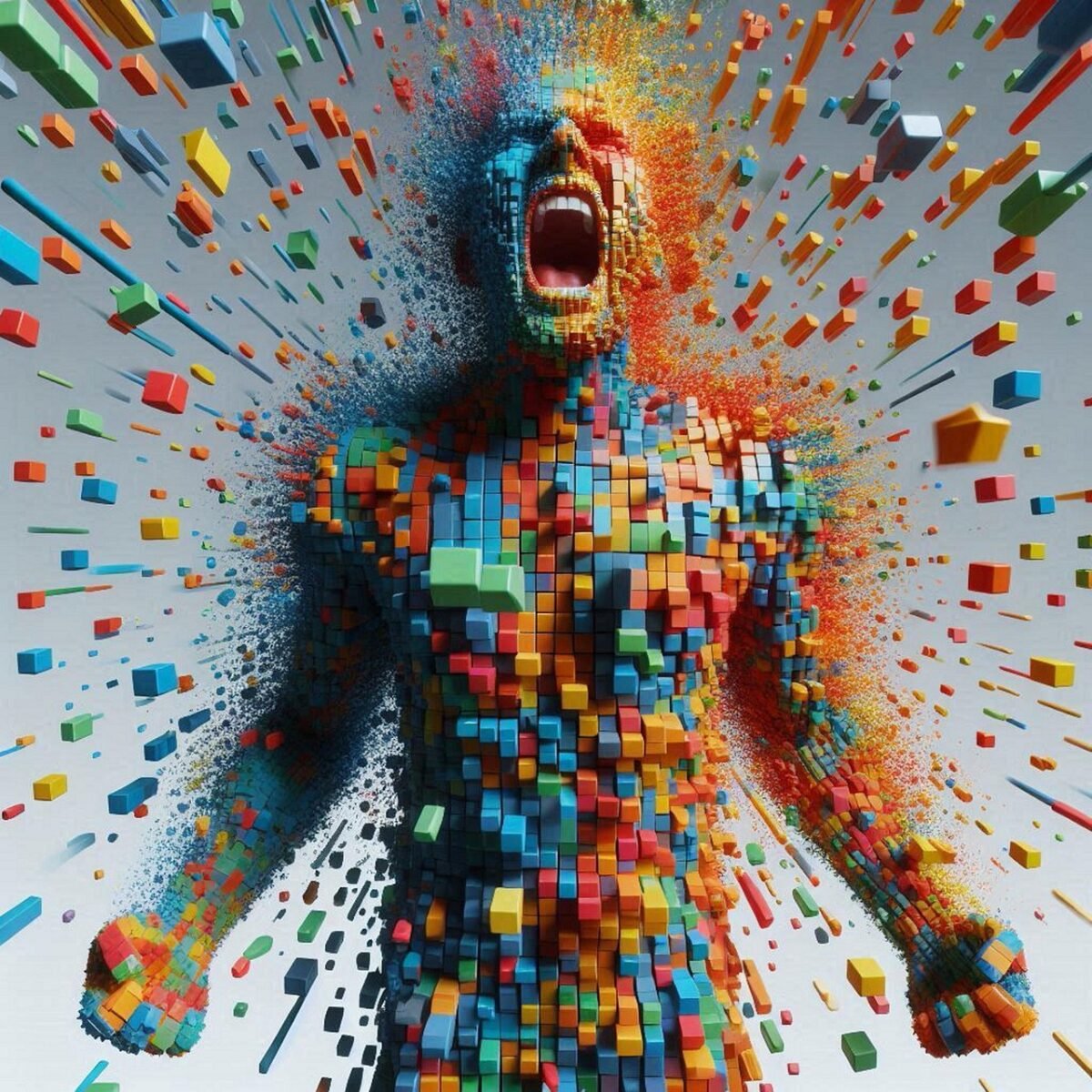
There is a very common illusion in how we communicate: the idea that if we increase the tone of voice, the clarity of the message or the intensity of our arguments, we will finally be understood. We spend immense energy trying to shape our words to cross invisible barriers, not realizing that the problem is rarely in the frequency of our voice, but in the disposition of those who listen.
The truth is simple and relentless: anyone who does not want to hear you will not hear you even if you scream. The cry, in most cases, produces the opposite effect to the desired one. Instead of opening doors, it triggers defense mechanisms, erects walls and turns conversations into battlefields. When the other's mind is closed by prejudice, disinterest or emotional noise, communication fails not by lack of sound, but by lack of reception.
On the other hand, there is an almost palpable magic in true tune. Whoever really wants to understand you will understand you even if you don't say a word. This deep understanding does not depend on the lexicon or perfect oratory; it dwells in small gestures, in attentive eyes, in empathy and in shared silence. It is the presence that speaks louder than any elaborate speech.
Learning to recognize this difference is a liberating exercise of emotional maturity. It means stopping spending arguments where there is no fertile soil for listening and starting to value the spaces where our essence is welcomed effortlessly. In the end, communicating well is not about winning a debate or convincing the uninterested, but about finding and cultivating the connections where the sound — And the silence — They make sense. -
The Invisible Lens: Why Our Largest Discoveries Happen From the Inside.
We often cross oceans, accumulate stamps on passports and pursue distant horizons in the hope that a geographical change will cure boredom or the restlessness of the soul. However, the real transformation movement rarely requires a suitcase. The great human crossing is not to accumulate new landscapes under the feet, but to allow our own vision to suffer a metamorphosis. It's about learning to see with new eyes. When we change the lens by which we filter the world, the most familiar living room or the quietest routine gain contours of unexplored territory.
This lens, however, is shaped by what we carry in the chest — especially for our memories, which are anything but static and dusty files from a computer. To remember the past is not to rescue a tape recorded exactly as things happened; it is in fact a continuous act of recreation. We rewrote our own history to every memory, coloring yesterday with the inks of what we are today. That's why the only true paradises are the ones we've already lost. The loss involves the past in a mist of nostalgia that the brute reality could never sustain, transforming the absence into an untouchable and idealized beauty.
This incessant search for what is not within our reach inevitably extends to our relations. There is an uncomfortable and fascinating truth in the fact that we only love fully what we do not possess entirely. The moment we believe we have completely deciphered and mastered the other, the mystery fades and desire tends to fall asleep. Love feeds on space between us, the eternal attempt to understand a territory that insists on remaining partially wild and mysterious.
And if the search for the other is complex, the search for itself goes through even more winding paths, often paved by pain. No one leaves existence unharmed, and the attempt to shield the heart from suffering is a useless effort. We're only cured of a pain after we've had the courage to experience it completely. Although happiness is excellent for the body, keeping us light and vibrant, it is sadness that silently expands the boundaries of our spirit. It is in the gathering of grief that we are forced to mature, to question certainties and to rebuild our internal structures.
In this journey of self-discovery, art and literature appear as sacred portals. Opening a book is putting one's foot on the threshold of spiritual life; reading invites us to enter unknown worlds, but it alone does not constitute our spirituality. She's the map, not the territory. The true book, the one capable of changing the course of a life, already exists written latently within each of us. The external writer works only as a translator of feelings that we already had, but we still did not know how to name.
For those who venture to create, whether writing or shaping their own lives, there is a brutal difference in posture. One who is limited to being a mere passive observer of reality operates at a much lower level than one who decides, in fact, to create. Watching is recording what already exists; creating is giving soul, depth and meaning to the chaos of the world. At the end of the day, to live fully is not to watch one's existence pass through the window, but to assume the role of creator of one's own narrative, using every loss, every flash of love and every new perspective to sculpt a truly conscious life. -
The Art of Disarming the Past: How to Heal Without Needing to Forget.
There is a silent and almost cruel myth surrounding our quest for emotional well-being: the idea that, in order to be well, we need to forget what hurt us. We charge ourselves a kind of selective amnesia, as if overcoming a pain depended on our ability to delete entire chapters of our own history. However, when we try to force this forgetfulness, what usually arises is not relief, but a heavy charge, accompanied by a feeling of frustration and failure.
The truth behind psychology and human experience points to a much more welcoming path. Healing does not mean erasing the past, but regaining the freedom to live the present without old pains continuing to dictate the rules of the game.
The body speaks what memory tries to silence
Our trajectory is made of marks. Some bring the warmth of good memories; others leave deep scars. When we experience traumatic or excessively difficult experiences, these experiences are not just kept in a mental drawer. They settle in the body, alter our nervous system and shape the way we react to the world.
In everyday life, this "active past" manifests itself in subtle but persistent ways:
That unexplained tightness to the chest in the face of a new situation;
The almost instinctive barrier we lift when someone tries to get close;
A disproportionately intense reaction to a silly comment or the constant feeling that danger is just around the corner.
These behaviors are not manufacturing defects. These are defense mechanisms of an organism that has learned to survive, but that continues to operate in a state of alert. So the simplistic "just move on" advice usually fails. It is not a lack of willpower; it is an emotional baggage that still needs to be disarmed and understood, and not just ignored.
The myth of the blank leaf and the trap of guilt
The stubborn search for a blank sheet creates invisible guilt. Many people suffer twice: the first for the original pain, and the second for feeling unable to forget it. Understanding that our history is cumulative frees us from this burden. We are inevitably the sum of all that we live.
True emotional health does not require us to cut pieces of ourselves. The most healthy and sustainable way is to learn to live with history itself. When we look back and we can face our most difficult episodes without them triggering the same internal storm as before, we realize that the healing process is happening. The fact loses the power to define us.
To heal is to be able to look at your own scar and remember what happened, without having to revive the pain of the cut.
Returning command to present
The therapeutic process and the path of self-knowledge are not linear. There will be days of clarity and days when the shadows will appear denser. And it's okay. The ultimate goal was never perfection or immunity from pain, but rather the conquest of autonomy.
As we welcome our vulnerabilities and seek proper support, we begin to rebuild our sense of internal security. We learn to identify our triggers and gradually create a space between the stimulus of the past and our response in the present. That is where our freedom lies.
In the end, the cure doesn't change the facts that happened back there, but it drastically alters the weight they have today. It allows the past to finally take its place: that of a memory that is part of who we are, not that of the commander of our lives. -

The Strongest Muscle of the Soul: Why Bowing to Help is the True Exercise of Strength.
There is a silent wisdom that challenges our modern obsession with individual strength, lonely conquests and tireless search for a top where we often find ourselves isolated. We usually associate the word "strengthening" with physical effort, muscle endurance or emotional shielding that protects us from the outside world. However, the most vigorous and transforming exercise that the human heart can perform does not require weights, appliances or competitions. It happens in the subtle and deeply courageous movement of bowing to reach out to those who are fallen.
This gesture of leaning toward the other has no relation to weakness; on the contrary, it is the maximum expression of inner force. Bowing, in the noblest sense of metaphor, requires us to abandon any pedestal of superiority or indifference. It means looking into the eyes of those who go through a moment of vulnerability, not from top to bottom with a look of pity, but from equal to equal, recognizing the intrinsic dignity of that person. It is to understand that the fall of the other is human and that our stability in the present is only temporary.
As we stoop to raise someone, we activate an invisible gear that shapes our character. This daily exercise develops empathy — that rare ability to tune with other people's pain without hurry —, patience to simply listen without judging and moral courage to act, even when the flow of the world pushes us to move forward and ignore what happens next. The heart strengthens precisely in this training, expanding its ability to feel and care in a society that so often values emotional anesthesia.
The beauty of this movement is that it translates into extraordinarily simple and showless attitudes. It is not about seeking public recognition or turning the suffering of others into a stage for self-exaltation. True solidarity is manifested in the silence of listening attentive to a friend who is burdened, in the time dedicated to accompany a family member in a difficult consultation or in the delicacy of respecting the silence of those who still cannot verbalize their own pain. It's these little anchors of presence and accompaniment that hold someone's world when everything around it seems to fall apart.
In the end, human greatness is measured by our ability to respond to the fragility of others. When we choose not to look away, when we turn abstract compassion into concrete action and real presence, our whole community rises. Strengthening the heart is understanding that our own humanity is only fully realized when we become the support that the other needs to stand up again. -
The Survival Manual No One Gives Us: Silent Truths to Live With Lighterness.
We grew up with the strange illusion that, at some point in adulthood, everything will fit in perfectly. We expect a clear script, a magic formula or at least a detailed instruction manual. But the truth is that life looks much more like a patchwork quilt sewn into the improvisation. In the midst of this daily chaos, maturity does not come with great mystical revelations, but with the silent acceptance of some fundamental truths that make the journey infinitely lighter.
The Disengagement of Control and the Illusion of the Perfect Scenario
The first great liberation happens when we finally decide to abandon the illusion that there is perfection. We spent years trying to shape impeccable careers, relationships without grooves and millimetrically calculated routines, just to find out that the beauty of life is precisely in what escapes the script.
When we stop demanding the impossible of ourselves, it is much easier to embrace the fact that not everything depends on you. There is tremendous strength in recognizing one's own limits and giving to chance what we cannot control. If the wind changes direction, the choice is not to stop the wind, but to adjust the candles.
In this process of releasing the reins, we also understand that human relations are dynamic. Accepting that people change — and that we too have changed — That's what keeps us from holding hurt for expectations that belong to the past. The paths cross, transform and sometimes distance themselves. And it's okay. New beginnings are part of life, and every blank page that opens up is just a new opportunity to rewrite our own history, without the weight of what is left behind.
Energy Filters: Time, Limits and the Value of Silence
As the years pass, our tolerance for unnecessary noise decreases dramatically. We begin to realize with surgical clarity that time is our most valuable resource — And the one thing we can't really recover or buy. With this subtle urgency knocking on the door, we learn to say no much more naturally.
Establishing barriers is not selfishness; understanding what limits are needed is, in fact, the greatest act of self-love that we can practice. It is this filter that protects us from wearing ourselves out in sterile debates and toxic dynamics. Along with the limits comes the liberating discernment that not every opinion matters. The internet court and other people's trials lose power when you take over the reins of your own narrative.
It is at this point in the walk that a golden key turns in our minds: the absolute certainty that peace is worth much more than reason. Discussing to prove a point almost always costs too much for our mental health. Letting others think what they want and choose silence is not cowardice, it is pure strategic wisdom.
Return to Essential and Time Rhythm
Finally, when all the dust from the big charges settles, the focus turns to what really sustains our existence in everyday life. We stopped seeking major pyrotechnic events to validate our existence and began to find true happiness in the little things: the smell of fresh coffee in the morning, an uncompromising conversation with those we love or the simple comfort of a weekend without compromises.
If tiredness hits and the fog of uncertainty covers the horizon, there is no need for despair. Anxiety loves to create catastrophic scenarios about tomorrow, but life itself takes care to calm the moods. Just take a deep breath and accept that some answers simply come with time. Not everything needs to be resolved today, not every doubt needs an end now. Sometimes the best thing to do is just keep walking and let time do what it knows best: heal, lighten and organize everything in its proper place. -

The Invisible Character Test: Who are you? When there's nothing to gain.
In a world increasingly shaped by appearances and the relentless search for recognition, human relations run the risk of becoming mere business counters. It is easy and even strategic to distribute smiles, demonstrate kindness and offer attention when the person in front of us occupies a prominent position or has influence to leverage our goals. However, the true measure of a man is not in calculated cordiality, but in the way he chooses to treat those who can bring him no benefit. The real ethical challenge is to act with respect, dignity and empathy when the equation of personal interest zeros and there is absolutely nothing to gain in return.
Throughout the journey of life, we all establish connections with people who occupy the most different social, professional or economic positions. It is precisely in this tapestry of daily interactions that masks usually fall. The way someone reports to a cleaning officer, the patience shown with an elderly person, the look directed at a child or the courtesy extended to an unknown on the street reveal values much deeper than any inflamed speech or carefully constructed image on social networks. When behavior changes drastically according to the status or power of those ahead, what is manifested is not education, but an opportunism disguised as etiquette.
This reflection goes far beyond superficial manners; it touches the core of human integrity. True ethics manifests itself precisely in moments of invisibility, when no one is watching or when action will generate no kind of dividend or future favor. After all, character is not a grand and isolated event, but a solid construction shaped by small attitudes repeated daily. It is the small everyday gestures that function as the most faithful mirror of the soul. In the end, the real greatness of a person will never be based on the sum of his material achievements or his titles, but on the dignity with which he chooses to treat those who can offer him nothing in return other than his own humanity. -
The Future of Cities It's in the past: The Urban Mining Revolution.
The Future of Cities It's in the past: The Urban Mining Revolution
In the bowels of contemporary metropolises, a new line of prospectors is changing the way we see human development. They don't use picks in deep mines, neither do they seek gold shafts in untouched lands. Armed with architectural plants, detailed inventories and a clinical look at the hidden value, these professionals practice the urban mining. The concept is as simple as revolutionary: to transform old buildings, destined for demolition, into the most valuable raw material of the future.
The Rescue of Architectural Treasures
Imagine a traditional construction site. The common scenario involves dust and the roar of excavators reducing decades of history to a heap of confused debris. Urban mining proposes the absolute opposite. Before heavy machinery gets on the scene, material hunters come in. Their work is a meticulous historical and ecological rescue. Experts search every floor to save everything that has reuse potential.
The spectrum of recovered treasures is vast. In a single expedition, it is possible to rescue from luxury relics, such as Murano glass fixtures and massive oak floors, to the robustness of a handmade decorative masonry. Absolutely everything matters. From doors and windows to hydraulic tiles and structural beams, recovered materials gain a new life, challenging the construction sector to mitigate its environmental impact.
Direct Reuse vs. Recycling: The Great Difference
To understand the true goal of circular economy, we need to differentiate common waste management practices:
- Direct Reuse (Upcycling): The component retains its original integrity and function, saving 100% of the energy that would be spent to manufacture a new part.
- Lowest Quality Recycling: The resulting product is of lower quality than the original material.
- Downcycling: The material is reused with severe value loss, as when noble concrete becomes only paving base.
The main objective of urban mining is to stop the downcycling. It is a question of understanding that a wooden beam of law or a period tile are not "entulho", but valuable assets that deserve to be a leading role in new architectural projects.
Technology and Digital Sustainability
Technology plays a crucial role in this revolution. 3D modeling software and cloud databases allow cataloging recovered materials, creating a "digital market for urban resources". No biobit.online, we explore how this digitization of physical matter allows architects anywhere in the world to access historical pieces for their projects, uniting the efficiency of the bit to the solidity of the stone.
By connecting the past and the future, urban mining proves that sustainability does not need to be minimalist or dull. On the contrary: it brings personality and history to the new constructions. When an old building becomes raw material, we not only clean the planet; we keep alive the very soul of urban identity.

