


Category: Photography
-
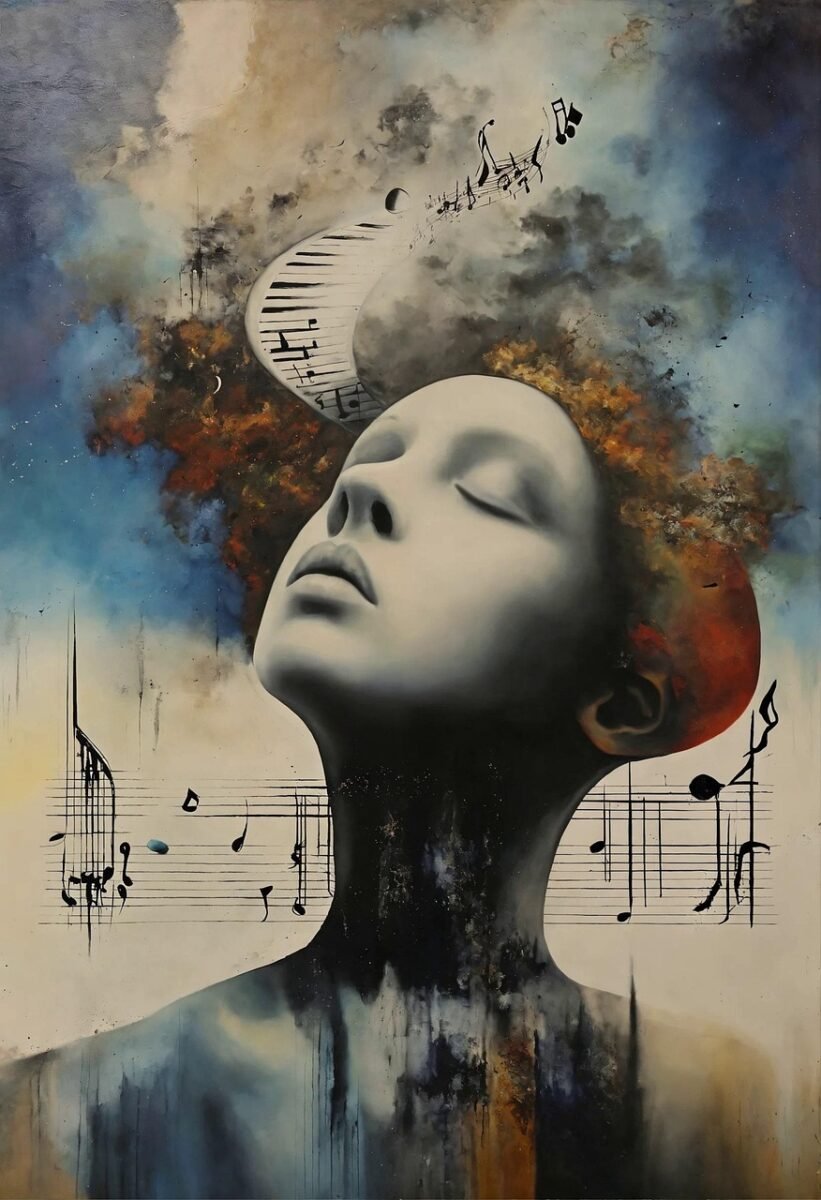
Music as Therapy: The Healing Power of Sleeping Frequencies
Music is one of the oldest and most powerful forms of therapy, capable of directly influencing our nervous system and our emotional state. Philosophically, music as therapy is based on the idea that sound is a vibrational force that can restore the lost harmony in body and mind. Through the sound frequencies, we can access deep layers of our subconscious, facilitating the release of traumas and promoting well-being. Music is not just entertainment; it is a remedy for the soul, a universal language that heals where words fail.
Poetically, music is the invisible embrace that sustains us in moments of pain and light that amplifies our joy. Each note is a drop of balm, each chord is a step towards healing. When we allow ourselves to be bathed by sound, our internal wounds begin to heal at the rhythm of melody. The music of reas63 seeks to be this space of reception and transformation, where ethereal frequencies and pulsating rhythms create a sound sanctuary so that the listener can find himself again and renew himself, transforming the vibration of the air into inner peace.
Informatively, music therapy is a recognized scientific discipline that uses musical interventions to achieve personalized therapeutic goals. Studies show that listening to certain frequencies, such as Solfeggio frequencies, can reduce cortisol, improve sleep quality and increase neuroplasticity. At BioBit.online, we explore the benefits of soundscapes and the conscious use of music in daily routine, offering playlists and guides so you can use the power of sound to improve your mental and emotional health.
Music heals because it resonates with life itself. Integrating sound consciously into your journey is opening the doors to a form of deep, accessible and infinitely beautiful therapy.
-

The Evolution of Synthesizers: From Analog Heat to Digital Precision
The history of synthesizers is the journey of electricity becoming music, a revolution that forever altered the sound spectrum of humanity. Philosophically, the transition from analog to digital reflects our search for control and precision: while analog synthesizers celebrate organic imperfection and electrical instability, digitals offer endless possibilities for manipulation and storage. Both represent different ways of interacting with sound physics, where the technique becomes the tool to materialize the auditory imaginary.
Poetically, an analog synthesizer is a living organism, whose oscillators breathe and vary with heat, creating textures that seem to come from the earth itself. The digital synthesizer, on the other hand, is an architecture of light and crystal, capable of simulating whole sound universes or creating timbres that never existed in the natural world. The beauty of sound synthesis lies in the ability to carve the air, transforming voltages and codes into pure emotion. In the music of reas63, the fusion of these two eras creates a sound that is, at the same time, nostalgic and futuristic, a bridge between the heat of the past and the clarity of the future.
Informatively, the evolution of synthesizers passed through the large modular systems of Moog, the polyphonic revolution of the 1970s, the digital era of DX7 and the current omnipresence of VST plugins. Each technology has brought new musical languages, from progressive rock to techno and environment. At BioBit.online, we explore the different synthesis methods — subtractive, additive, FM and granular — and how the choice between hardware and software impacts the creative process and the sound identity of a contemporary music producer.
Synthesizing sound is the supreme act of musical creation. It is proof that, with the right technology, we can give voice to our deepest dreams and turn electricity into eternal beauty.
-

Rhythm Psychology: Why does Beat make us dance?
The rhythm is the fundamental pulse of music, an atavic force that connects us to our biological origins. Philosophically, rhythm is the organization of time through sound, creating an order that resonates with the natural cycles of life, such as heart beat and breathing. The rhythm psychology explains why certain cadences make us dance: the human brain is programmed to predict rhythmic patterns, and the musical pleasure arises from the tension between the expectation and the realization (or surprise) of these patterns, connecting the body and the mind in a synchronized movement.
Poetically, the beat is the drum of the soul, an invitation to the trance and to the celebration of existence. When rhythm dominates us, the barriers of the ego dissolve and we become part of something greater, a collective vibration that transcends words. The rhythm is the language that the body understands without needing translation, a moving poetry that transforms silence into a vital pulse. In the music of reas63, rhythm is the backbone that sustains ethereal melodies, ensuring that the sound journey always has a firm ground for the feet, while the mind flies.
Informatively, the study of rhythmic "entrainment" shows how the brain synchronizes its neural waves with external auditory stimuli, facilitating motor coordination and dopamine release. In music production, the use of syncopes, polyrhythmias and groove are essential techniques to create movement and emotion. At BioBit.online, we explore how digital technology allows you to manipulate rhythmic time with mathematical precision, but we also discuss the importance of maintaining human "imperfection" that gives soul and balance to electronic compositions.
The rhythm is what makes us feel alive in time. Understanding your psychology is discovering the secret of the deep connection that music establishes with our physical and emotional nature.
-

The Art of Mixing: Balancing Frequencies and Feelings
Mixing is the stage of musical production where technique and intuition merge to give clarity and impact to a work. Philosophically, mixing is an exercise of balance and hierarchy: it is about deciding which element should shine at each moment, ensuring that the whole is greater than the sum of the parts. It is the art of creating space for each instrument to breathe, reflecting the harmony we seek in life itself, where different voices and frequencies must coexist without cancelling.
Poetically, mixing is like painting with sound, using the frequency spectrum as a three-dimensional screen. The mixing engineer is an air sculptor who shapes the depth, width and height of the auditory experience. A good mixing not only organizes sound; it guides the emotion of the listener, creating moments of tension and relief, proximity and distance. It is the final touch that transforms a raw recording into a sensory journey, where the perfect balance between the deep bass and the crystal treble makes music vibrate directly into the soul.
Informatively, the mixing process involves the use of tools such as equalization (EQ), compression, reverberation and delay. Equalization allows sculpting the timbre of each track, while compression controls the dynamics to ensure consistency. The creative use of spatial effects defines the virtual room where music happens. At BioBit.online, we explore the backstage of the production of reas63, revealing how meticulous attention to the details of mixing is essential to convey the emotional intention of each authorial composition.
Mixing is finding order in sound chaos. It is proof that technical precision, when in the service of art, is what allows musical emotion to reach its maximum potential.
-

Synthesizers and Emotion: The Search for Perfect Timbre
In the production of electronic music, the synthesizer is much more than a wave generator; it is an emotional sculpture instrument. Philosophically, the quest for the perfect timbre is a journey to find the exact frequency that resonates with the human soul. Each waveform — be it an aggressive saw or a gentle sinusoidal — carries a distinct affective burden. The timbre is the "color" of sound, and choosing the right texture is what differentiates a cold sequence of bits from a composition that pulses with life and feeling.
Poetically, synthesizing is like extracting light from electricity. It is the act of shaping electronic chaos until it becomes a melancholic whisper or a cry of euphoria. The perfect timbre is the one that seems to have existed forever, hoping only to be discovered by the touch of the musician. It is the search for a sound that is not only heard, but that feels in the skin, a vibration that goes through space and time to touch the inner of the listener. In the music of reas63, the synthesizers are the poets who narrate stories without words, where each modulation is a verse of pure emotion.
Informatively, sound synthesis involves the domain of parameters such as oscillators, filters, envelopes and LFOs. Subtractive, additive, FM and granular synthesis offer endless palettes for creating unique textures. The search for the perfect timbre often goes through the balance between digital precision and the organic instability of analog circuits. At BioBit.online, we discussed how synthesizer technology evolved to allow independent artists to create complex and deeply personal sound universes, transforming electricity into an unprecedented artistic expression tool.
Timbre is the soul of electronic music. Finding it is an act of patience and sensitivity, where the technique bends before the human need to express the inexpressible.
-

Sound Geometry: How Mathematics Structures Musical Emotion
Music is often described as the most emotional of arts, but its foundation is strictly mathematical. Philosophically, the geometry of sound reflects the hidden order of the universe, where proportions and frequencies create the harmony we perceive as beauty. Pythagoras already stated that "there is geometry in the hum of the strings", suggesting that music is the bridge between the intelligible world of numbers and the sensitive world of emotions. Understanding this structure does not diminish the mystery of art, but reveals the deep intelligence that governs our feeling.
Poetically, each chord is an invisible polygon drawn in the air, and each melody is a line that draws the map of an emotion. Mathematics is the skeleton upon which the flesh of music is sustained; without the accuracy of the rhythm and logic of the scales, emotion would only be a informed cry. The beauty of an authorial composition lies in the tension between the cold perfection of numbers and the warm imperfection of human interpretation. It's like math is the language the universe uses to whisper secrets directly to our heart, turning equations into shivers.
Informatively, the relationship between music and mathematics is manifested through the harmonic series, musical intervals based on numerical reasons, and the rhythmic structure that organizes time. In contemporary music production, algorithms and sequencers use complex mathematical concepts to generate innovative textures and sound patterns. Studies indicate that musical training strengthens the areas of the brain responsible for logical and mathematical reasoning, demonstrating that artistic practice and scientific thinking are faces of the same coin. At BioBit.online, we explore how this fusion manifests itself in the creations of reas63, where technical precision serves as a stage for emotional expression.
The geometry of sound teaches us that emotion has a structure and the universe has a rhythm. As we listen to music, we are actually listening to math sing.
-

The Rhythm of Earth: Organic Elements in Electronic Composition
Electronic music is often associated with the coldness of machines and the accuracy of algorithms. Philosophically, however, the true mastery of electronic production lies in the ability to infuse the "ghost into the machine" — the human and organic essence that pulses under the layers of synthesis. The rhythm of the earth, when transposed into digital domain, becomes a celebration of our ancestral connection with nature, proving that technology can be a resonance tool with the living world, and not just an escape from it.
Poetically, using organic elements in electronic composition is like planting a forest inside a computer. It is the sound of rain processed by an resonance filter, or the heart beat transformed into a deep, hypnotic bum. These sounds bring a texture of "sacred imperfection" that pure senoid waves cannot replicate. It is the melody of the wind that merges with the arpeggio of the synthesizer, creating a sound landscape where the ancestor and the futurist dance in perfect harmony. Music then becomes a vibrant ecosystem of sensations.
Informatively, the field recording technique allows capturing sound textures from the environment — like the rustling of leaves, the sound of water or urban noise — to be integrated into musical production. Through granular processing and rhythmic manipulation, these organic elements confer a unique sound depth and signature to the tracks. Psychoacoustic studies suggest that nature's familiar sounds have a relaxing and immersive effect on the listener, making the musical experience richer and more emotionally connected.
At BioBit.online, we explore how artists like reas63 use this fusion to create deep sound experiences. The rhythm of the earth in electronic music reminds us that even at the height of the digital age, our hearts continue to beat the compass of nature.
-

The Light That Detains Time: Philosophy of Photographic Look
Photography is, in essence, a silent dialogue with light. Philosophically, the act of photographing is a human attempt to suspend the inexorable flow of time, isolating an early second of eternity. It is not just a matter of recording what is seen, but of interpreting reality through a subjective clipping that reveals both the object and the observer. It is the materialization of Roland Barthes' "this was", an irrefutable proof of existence and transience.
Poetically, light is the ink with which the photographer writes visual verses. Every shadow is a secret kept, and every glow is a revelation. To photograph is to learn to see the extraordinary in everyday life, is to find the sacred geometry in a leaf that falls or deep melancholy in a fleeting look. It is a form of speechless poetry, where the silence of the image screams truths that language often fails to capture. The camera is not a capture tool, but a perception portal.
Informatively, the evolution of photography, from daguerreotype to high-resolution digital sensors, democratized the image, but also brought challenges about the veracity of the record. The photographic technique involves the domain of the exposure triad — aperture, speed and ISO — and understanding the composition, such as the rule of the thirds and the golden proportion. In the contemporary context, digital photography allows endless manipulations, which forces us to reflect on the ethics of the image and the role of the photographer as a witness or creator of alternative realities.
At BioBit.online, we see photography as an extension of our world curatorship. The light that holds time invites us to slow down and contemplate the ephemeral beauty that surrounds us, turning the look into a tool of awakening and awareness.
-

The Soul Frequency: How Music Translates the Ineffable
Author music is not only a sequence of notes organized in a temporal grid; it is the materialization of an internal landscape that would otherwise remain invisible. Philosophically, the act of composing is an attempt to translate the ineffable, transforming abstract feelings into frequencies that can be shared and felt by others. It is an exercise of vulnerability where the artist undresses his defenses to expose his crudest truth.
Poetically, every melody is a thread of Ariadne that guides us through the maze of our own emotions. An authoral song is a fragment of captured time, an echo of a moment that refuses to pass. It vibrates in the space between silence and sound, creating an invisible bridge between the soul of those who create and those who listen. It is the language that the heart uses when words become too insufficient or too heavy.
Informatively, musical creation involves complex neurological processes that activate areas of the brain linked to memory, emotion and motor coordination. Studies indicate that authorial music plays a significant therapeutic role, helping to regulate mood and strengthen personal identity. In the current context, independent and authorial production gained strength with digital tools, allowing artists to reach global audiences without the need for traditional intermediaries.
As we dive into the music of reas63, for example, we perceive this fusion between technique and pure emotion. Author music invites us to stop, listen and, above all, feel the resonance of life in each chord. It is a constant reminder that despite technology, the essence of art remains deeply human and organic.